

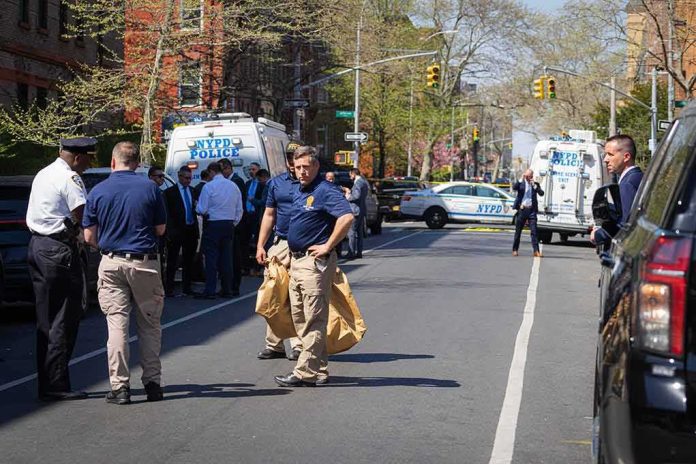
A man shouting “Allahu Akbar” stabbed an Asian man and a Jewish man on Manhattan’s Upper West Side, and the political fight over what fueled the attack is exposing once again how New York’s leaders talk more than they fix what is making people feel unsafe.
Story Snapshot
- A 51-year-old suspect stabbed an Asian man and a Jewish man near Central Park after allegedly yelling “Allahu Akbar,” and police are probing hate-crime motives.
- New York City Jewish leaders and some officials say overheated anti-Israel and anti-Jewish rhetoric from Mayor Zohran Mamdani is helping fuel attacks.
- The mayor and other leaders condemned the stabbings, but critics argue their words are too soft, too slow, and ignore a wider pattern of rising antisemitic violence.
- The case highlights a deeper problem both left and right see: government reacts with press conferences and blame, while ordinary New Yorkers still feel the streets belong to criminals and extremists.
What Happened During the Upper West Side Stabbings
On Thursday afternoon, police say 51-year-old Raul Morales stabbed two men in separate attacks on Manhattan’s Upper West Side, near Central Park. Investigators report witnesses heard Morales shout “Allahu Akbar” during both assaults, a phrase in Arabic meaning “God is greatest.” One victim is an Asian man stabbed in the back, the other a Jewish man who had just left a synagogue and was stabbed in the chest. Both survived and were taken to local hospitals in stable condition. Officers arrested Morales soon after, and he now faces attempted murder and assault charges, with hate-crime enhancements added for the attack on the Jewish victim.
New York City Police Commissioner Jessica Tisch said the New York Police Department (NYPD) is investigating the case as a possible hate crime and is still working to understand Morales’s motive. Early findings from the NYPD suggest mental health may also have played a role in the rampage, which unfolded in broad daylight on busy streets where families and workers walk every day. The commissioner stressed that shouting “Allahu Akbar” by itself does not prove motive, but that pairing it with targeting an Asian man and a visibly Jewish man raises serious questions about bias and religious hatred that detectives must now sort out.
Leaders Condemn the Attack but Clash Over the Rhetoric Behind It
Mayor Zohran Mamdani, Governor Kathy Hochul, and other officials quickly condemned the stabbings as hateful violence and praised the NYPD’s fast arrest. Yet many Jewish leaders in New York say these statements are not enough and accuse the mayor of helping create the climate that made such attacks more likely. They point to his strong anti-Israel language since the Gaza war and argue that constant talk of Israel as an oppressor bleeds into anger at local Jewish communities, most of whom have no role in foreign policy. Some Israeli officials have even directly blamed Mamdani’s rhetoric for “fanning the flames” that led to this stabbing.
Critics on the right and within parts of the Jewish community see a pattern: sharp public attacks on Israel, softer language when Jews at home are victimized, and quick efforts to mention mental health whenever an assailant uses religious or political slogans. They say this mix lets leaders look compassionate while ducking hard choices on policing, prosecution, and street disorder that would make the city safer. At the same time, some progressive voices warn against tying every violent act by a Muslim or Arab man to terrorism, arguing that rushing to label attacks as jihad or “Islamic” hatred can fuel backlash against Muslim communities who also fear rising violence.
Rising Antisemitic Violence and Fear Among New Yorkers
For many Jewish New Yorkers, this stabbing is not an isolated shock but another entry in a disturbing list. Recent incidents include a suspect who allegedly shouted “free Palestine” before stabbing a Jewish man near a major Jewish center, and another attacker who reportedly yelled “I’m going to kill a Jew today” while stabbing a man in the chest in broad daylight. Police have also hunted suspects who made anti-Jewish statements while attacking victims, with the NYPD Hate Crimes Task Force taking on several of these cases. Together, these events feed a mounting sense that antisemitic hostility has moved from online and protests into street-level violence.
✡️ Jewish Leaders to NYC Mayor: Tone Down Anti-Israel Rhetoric After Stabbing
Jewish leaders and elected officials are urging New York City Mayor Zohran Mamdani to moderate his rhetoric on Israel following the stabbing of a Jewish man on Manhattan’s Upper West Side.
— Leah_לאה (@Weisslbj333Leah) July 24, 2026
Community leaders say the constant vilification of Jews and Israel in public debate has emboldened bigots who now feel free to act out their hatred. One New York State assemblyman warned at a recent press event that overheated rhetoric can tip unstable or angry individuals toward real-world attacks on Jews. At rallies after the Upper West Side stabbings, Jewish, Muslim, and Asian leaders stood together to denounce hate, but many attendees voiced a shared fear: even when the city organizes such events, ordinary people still feel the government is behind the curve, reacting after each tragedy instead of preventing the next one.
Why This Case Taps Into Broader Anger at Government Failure
This case hits a nerve far beyond New York because it mirrors a national story many Americans now know too well. People on the right look at scenes of random stabbings and blame long-standing failures on crime, border security, and mental health, saying elites care more about ideology than safety. People on the left see growing hate against minorities and Jews and fault leaders who flirt with extreme rhetoric, then offer only brief sympathy when words turn into blood. Both sides, though, share one core frustration: they see government talking while the streets grow more dangerous.
When a man can walk near Central Park, shout a religious slogan, stab two strangers—including a clearly Jewish worshipper—and only then trigger serious debate about hate crimes, many conclude the system is upside down. The Upper West Side attack shows how fast violent acts now turn into a fight over whose rhetoric is to blame, while the slower work of fixing policing, mental health care, and social trust lags behind. For readers watching from across the country, the lesson is hard to miss: unless leaders of every party treat safety and equal protection as more than talking points, the gap between their press conferences and ordinary people’s fear will only grow.
Sources:
youtube.com, cbsnews.com, foxnews.com, rt.com, apnews.com, ktla.com, jpost.com, c-span.org, timesofisrael.com, nypost.com