

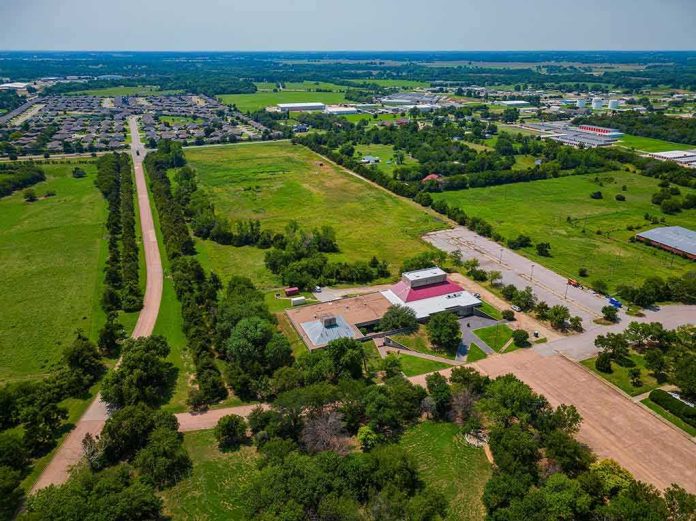
A quiet Long Island block just became the latest flashpoint over how much control ordinary neighbors really have when powerful institutions remake their communities.
Story Snapshot
- A former Catholic seminary in Bay Shore was sold to a Muslim nonprofit planning an all-boys Islamic boarding school and mosque.
- Neighbors say they are fighting a zoning battle, not a religious one, warning the plan will overwhelm a quiet residential street.
- The United American Muslim Association (UAMA) and its attorney insist the project is legal and similar to past religious use of the site.
- The Town of Islip has held a packed public hearing but has not yet released clear evidence or a final ruling on traffic or code impacts.
What Is Being Planned For The Bay Shore Property?
The property at 26 South Saxon Avenue in Bay Shore once housed a Catholic boarding school and later a retreat center for priests. It sits on about 13 to 14.6 acres with a large 70,000‑plus‑square‑foot building and waterfront access. In 2026, the United American Muslim Association bought the site for about $5.2 million and announced plans to reopen it as Bayshore Academy, an Islamic boarding school and mosque for middle and high school boys. The group also wants early childhood education and community programs on the campus.
🕌✨Quiet suburb. Major change.
An all-boys Islamic boarding school is being pushed into the heart of Long Island — and almost no one is talking about it.
𝑾𝒉𝒚 𝒕𝒉𝒆 𝒉𝒖𝒔𝒉?
The UA Muslim Association just bought a 13-acre former Catholic seminary in Bay Shore —Islip, for… pic.twitter.com/JDqcR2MGQj
— Tosca Austen (@ToscaAusten) July 25, 2026
UAMA’s plan calls for housing up to about 120 boys on campus, along with staff, worship space, classrooms, and other services. Supporters describe it as a religious and educational campus, not a commercial business, and say it revives a similar use to the old Catholic seminary and boarding school that operated there from the 1920s to the early 1970s. The scale of the project makes it very different from ordinary single-family homes on nearby blocks, which is part of why the plan has stirred such intense debate.
Why Are Local Residents So Upset?
Many Bay Shore residents on and around South Saxon Avenue say their main concern is zoning, land use, and neighborhood impact, not the religion involved. They argue that turning a quiet street of single-family homes into the edge of a busy boarding school campus will bring more traffic, noise, and daily activity than the area can safely handle. People at public meetings said they do not want “120 high school kids living here, roaming the area,” and they fear traffic jams and disruption from school events and mosque gatherings.
Neighbors have organized under the banner “Saxon Says No,” posting “No Boarding School” signs on lawns and building a social media campaign. Their public statement warns that the proposed use is “far more intensive” than what fits a quiet residential neighborhood and could set a precedent that affects other former religious campuses in the Town of Islip. They say zoning laws exist to protect quality of life and should be applied fairly, with full review, special permits, or other approvals when a use goes beyond what the current rules allow. They claim an overnight dorm may be illegal under codes for that block.
How Are Supporters And Officials Responding?
Supporters of the school, including the group’s attorney Samuel L. Bifulco, argue the plan is “perfectly legal” under town code and that strict rules for students will prevent nuisance. They stress that this is a religious boarding school, not a nightclub or factory, and point out that the property long housed a Catholic boarding school and retreat, so institutional religious use is not new there. They frame the debate as a test of fairness and equal treatment, asking residents to be open-minded toward a Muslim group using a site much like Catholic groups did for decades.
🚨DEATH TO AMERICA SCHOOL🚨
It’s worse than most people realize.
A historic Catholic seminary in Bay Shore, Long Island — 70,000 square feet on 14.6 acres, founded in 1926 — was just sold for $5.2 million to the United American Muslim Association (UAMA).
UAMA is the North…— Summer (@EclipeByDeath) July 25, 2026
The Town of Islip has held a public hearing before its Zoning Board of Appeals on a variance request tied to whether boarding can count as a permitted accessory use to a parochial school in a residential district. Newsday reported about 600 people came to one meeting, showing how intense and emotional the fight has become. However, town officials have said it is their policy not to comment on pending land use applications, and editors noted the town has presented no evidence that the school would overload traffic, emergency services, or the environment.
What Bigger Questions Does This Fight Raise?
This battle reflects a wider national pattern where religious or school projects collide with local zoning and trust in government. Neighbors on both the right and left often worry that big institutions and developers get special treatment while ordinary homeowners face strict rules. Here, residents feel they must fight hard simply to force full zoning review, traffic studies, and clear answers, because they do not believe town leaders will protect them unless pushed. That sense of a system tilted toward powerful groups fuels the outrage.
The case also shows how quickly land-use disputes can turn into arguments about religion and fairness. Media stories and some supporters highlight anti-bigotry themes and Muslim identity, while opponents keep insisting their fight is only about zoning and intensity of use. Because the site was once a Catholic seminary, supporters say it is only fair to allow a Muslim school there too. Neighbors counter that a modern campus with dorms, daycare, and community programs will operate at a different scale than a quiet retreat house. Both sides are trying to shape how the public sees the stakes.
What Comes Next For Bay Shore?
Key facts are still missing from the public record. The available reporting does not yet show the full zoning code language for this parcel, a detailed traffic or parking study, or a final written decision from the Town of Islip. Without those documents, residents and supporters are arguing past each other: one side warns the project will overwhelm the neighborhood; the other insists it will not, but does not point to hard data. That gap deepens distrust and makes it easier for people to feel the “deep state” or elites are hiding the ball.
For now, the fate of Bayshore Academy and its mosque rests with local zoning officials and, potentially, courts if the dispute continues. Whatever the outcome, this small block in Bay Shore highlights a bigger story that many Americans see across the country: major changes to their communities often arrive from the top down, through complex deals and opaque hearings, while ordinary families scramble to keep up and protect what they have built. In that sense, this Long Island zoning fight is about far more than one religious school.
Sources:
thegatewaypundit.com, libn.com, catholicculture.org, newsday.com, longisland.news12.com, spzh.eu, rairfoundation.substack.com