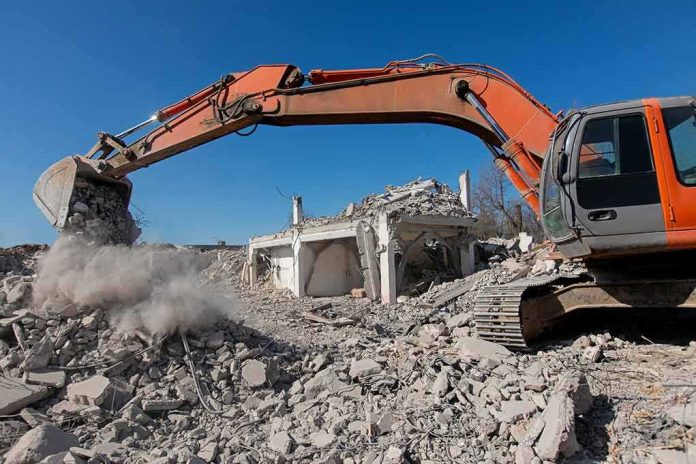
City crews and Wisconsin State Police moved in with heavy equipment to tear down a Black Lives Matter encampment that had shut down two Madison blocks for more than a week.
Story Snapshot
- Police and city workers dismantled the “Corey Ruiz Autonomous Zone” at Williamson and Baldwin Streets in Madison, Wisconsin.
- The camp formed after a Madison officer fatally shot Corey Ruiz, an armed man, on July 22.
- Mayor Satya Rhodes-Conway called the site “not sustainable or safe” before ordering the clearing.
- Journalists covering the encampment said they were threatened and had their vehicle attacked.
- The occupation drew comparisons to Seattle’s 2020 Capitol Hill Autonomous Zone.
What Happened at Williamson and Baldwin
Madison police shot and killed Corey Ruiz on July 22 after officers say he stabbed an officer with a knife during an encounter. Within days, a street memorial at the intersection of Williamson and Baldwin turned into a full encampment. Activists barricaded the roads with bikes, boards, and borrowed city equipment, and gave the area a name: the Corey Ruiz Autonomous Zone, or CRAZ.
The setup drew quick comparisons to the Capitol Hill Autonomous Zone that took over part of Seattle in June 2020 after George Floyd’s death. That earlier zone, later renamed the Capitol Hill Occupied Protest, also blocked streets for weeks before officials cleared it. Reporters covering Madison’s version noted the same pattern of barricades, self-declared rules, and resistance to police entry.
City Support Turns to Confrontation
For more than a week, Madison city workers supplied portable toilets and trash pickup to the encampment, and salt trucks reportedly helped block the intersection to traffic. Business owners nearby said the closures hurt their sales, and some reports claimed police were told not to respond to certain calls from inside the zone. Two independent journalists covering the site said they were threatened and had their vehicle attacked by people inside the camp.
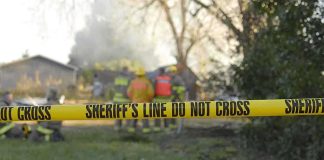
Wisconsin State Police joined city crews for the final clearing operation, using bulldozers and other heavy equipment to remove barricades and debris built up over more than a week. Video shared online showed the intersection reopened to traffic after equipment cleared away wooden barriers, some of which reportedly had nails embedded to stop vehicles from breaking through.
Mayor Orders the Zone Cleared
Mayor Satya Rhodes-Conway first asked demonstrators to leave voluntarily, warning that towing crews would remove any vehicles left blocking the streets. Days later, she escalated her language, saying in a public statement that the situation “is not sustainable or safe” and pointing to “immediate public safety and public health concerns that must not be ignored”.
The mayor’s office followed with plans to tow vehicles used as barricades, according to reporting on the city’s response. That announcement came more than a week after the encampment first formed, during which time the zone had grown rather than shrunk, with no announced date for reopening the streets to normal traffic.
Protesters set up an occupied protest site known as the Corey Ruiz Autonomous Zone (CRAZ) in Madison WI but city authorities dismantled and cleared the encampment on August 4, 2026-that would be TODAY
— Terry Foster (@fuzzyfamily1) August 4, 2026
A Familiar Pattern Repeats Itself
This kind of standoff follows a pattern seen in past protest occupations nationwide. A police shooting sparks outrage, a memorial grows into an encampment, and a city tries to avoid a violent confrontation while facing mounting complaints about blocked streets and public safety. Madison’s case adds another chapter to that cycle, with local officials caught between supporting protesters’ right to demonstrate and managing real disruptions to daily life for residents and business owners.
Whatever anyone’s politics, most Americans agree that public streets should stay open and residents should feel safe going about their day. When city leaders spend more than a week deciding whether to clear a blockade, and only act after journalists report being threatened, it raises a fair question shared by voters on both sides: is local government responding to public need, or reacting only when pressure becomes impossible to ignore?
Sources:
townhall.com, nypost.com, washingtontimes.com, youtube.com, legalinsurrection.com, x.com, instagram.com