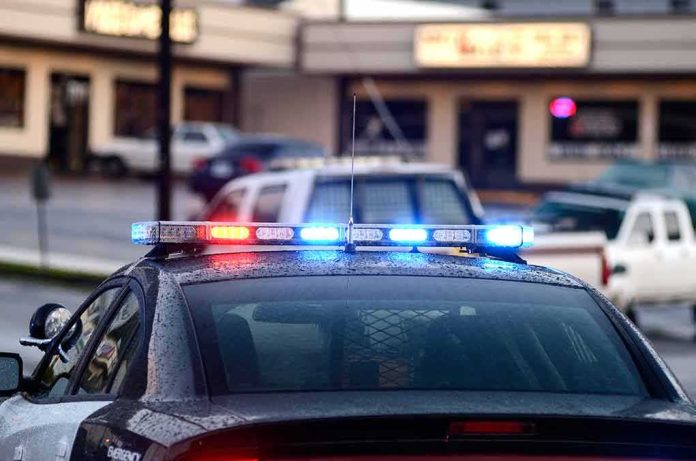
Body-camera records and court filings show a Florida deputy used license-plate readers and police databases to track a woman for personal reasons, turning a crime-fighting tool into a stalking aid.
Story Snapshot
- Monroe County deputy Lamar Roman was arrested and fired for database misuse tied to stalking allegations.
- Reports say he added the woman’s plate to a hot list and later pulled her over without a public-safety reason.
- Court records and coverage indicate Roman admitted he knew his actions were illegal.
- Watchdogs say such abuses fit a broader pattern of weak controls on license-plate reader systems.
What investigators say happened in the Keys
Monroe County Sheriff’s Office leaders said Deputy Lamar Eliseo Roman used agency databases for personal reasons outside the law. The Miami Herald reported the arrest and firing, citing the sheriff’s statement that Roman misused the office’s computer systems. Police trade press said Roman met the woman while working security on the “Bad Monkey” set, looked her up in government records, and later stopped her after tracking her movements. Reason reported court records listing three felony counts tied to unlawful database access.
Local coverage and tech reporting add key details. 404 Media said body-camera footage shows Roman put the woman’s plate on a hot list, used automated license plate reader alerts to find her, and admitted he knew the searches were illegal. That account aligns with reports that he pulled her over without a safety reason and described the episode in personal terms. Together, the records present a consistent picture of personal use of powerful tools that exist for public safety, not dating or harassment.
What the records and admissions show
Reason reported that Roman’s March 10 arrest led to his firing and charges that can bring prison time and fines under Florida law. 404 Media reported Roman told investigators he knew the surveillance was illegal and referred to the woman as a “shiny thing” while explaining his actions. Local television coverage summarized the warrant report, saying he searched driver and crime databases, added her plate to a hot list, and framed the stop as a casual hello, not an enforcement action. These reported admissions weaken any claim of a legitimate safety reason.
Later coverage indicates the criminal case did not end in prison time. Spanish-language reporting from Local 10 said Roman could avoid incarceration if he completes a program that leads to dismissal of the computer misuse charges. That outcome, if finalized, underscores a long-running public concern: when officials abuse access to sensitive data, many citizens doubt the system will hold them fully to account. Whether fair or not in each case, the pattern feeds distrust that crosses party lines.
Why license-plate readers keep drawing fire
License-plate reader networks can help find stolen cars or wanted suspects. They also collect and store location data on millions of drivers who did nothing wrong. The Brennan Center has warned that many departments lack clear policies, sound access controls, and active audits to prevent misuse. A California State Auditor review found gaps in data protection and weak oversight for stored plate images and search access, which raises the risk of abuse and leaks. Those systemic gaps make personal misuse more likely.
Advocacy groups and researchers have flagged recurring “mission creep,” where plate-reader searches spill beyond clear case work. Analyses say the lack of warrant rules and weak auditing enable fishing expeditions and personal snooping. Past national reporting found hundreds of officers disciplined for database misuse over several years, suggesting the problem is not rare and may be undercounted due to poor recordkeeping. The Monroe County case looks like another data point in that trend rather than a one-off outlier.
What this means for trust and public safety
Most officers use tools the right way to solve crimes and protect people. But every abuse chips away at trust. People on the right see a surveillance state that grows while elites dodge real fixes. People on the left see power used to target the weak while oversight lags. Both sides see a government that struggles to police itself. When a deputy can turn a license-plate network into a personal tracker, leaders need to show swift, real control—and document it.
What reforms would actually help
Agencies can set bright-line rules: no personal queries, ever; no hot-list entries without a case number and supervisor approval; and no access without training and annual renewal. Systems should log every search, who ran it, why, and what case it ties to. Independent audits should sample queries and alert chiefs to red flags. Retention should be short for non-hits, and sharing should require formal agreements. These steps protect honest officers and the public while keeping useful tools in the toolbox.
Sources:
yahoo.com, police1.com, local12.com, youtube.com, local10.com, newsfactsnetwork.com