
A California Highway Patrol helicopter held a hover within yards of a granite wall to hoist a fallen climber off a Sierra Nevada dome, turning years of precision training into one life saved.
Story Snapshot
- California Highway Patrol air crew rescued an injured climber off Power Dome near Courtright Reservoir.
- The call came in around 12:45 p.m. on September 11; the team ran a cliffside hoist.
- On a face that sheer there was nowhere to land, which leaves the hoist as the only option.
- Safety guidance requires at least two reconnaissance passes and a briefed go or no-go line before any hoist like this.
- Officials did not release the climber’s name or condition.
What Happened on the Cliff
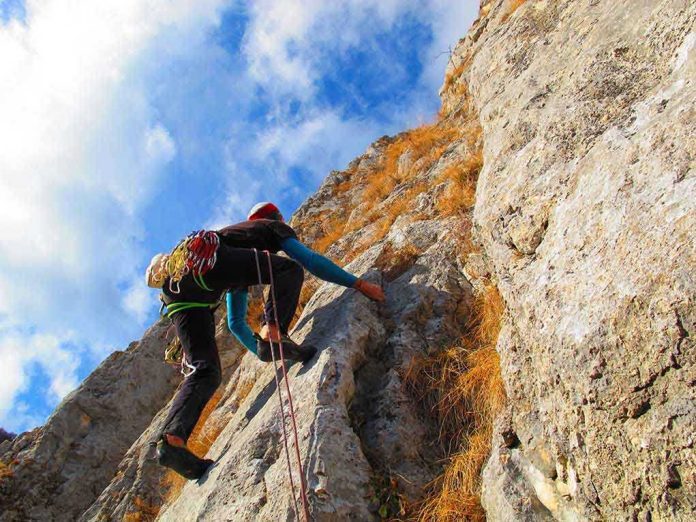
California Highway Patrol air operations responded around 12:45 p.m. on September 11 to Courtright Reservoir in the southwestern Sierra Nevada after reports of a fallen climber on Power Dome. Rescuers found a steep granite face with little room for error. The helicopter held a tight hover near the wall while a rescue technician rode the hoist down. Crews secured the injured climber, lifted them into the aircraft, and flew to medical care.
Power Dome is a tall, clean slab that draws climbers for long routes and big exposure. That same exposure creates rescue hurdles. Rock shelves, wind swirling off the face, and thin margins for rotor clearance raise the risk. Crews train for these limits with fixed roles, clear radio calls, and a choreographed plan for the approach, the hoist, and the exit. The goal is simple and hard at once: keep the aircraft steady, reach the patient fast, and get out safe.
Harrowing moment helicopter hovers frighteningly close to cliff face to rescue fallen climber https://t.co/gQoZN5pegd pic.twitter.com/qfNts0WYxs
— California Post (@californiapost) September 13, 2026
Why the Hover Looked So Close
Airbus safety bulletins say teams should fly at least two reconnaissance passes before any hoist. Crews study wind, power needs, escape paths, and obstacles, then brief a go or no-go line. A direct deployment on a cliff means the rescuer stays on the hook, keeps contact with the rock, and follows a mapped path. To anyone watching, the hover can look inches from disaster. To a trained crew it is a controlled sequence inside limits they set before they ever left the ground.
Mountain Rescue Association training covers the usual options: hoist, short-haul, or landing if there is space. Teams choose based on terrain, aircraft power, and downwash. On a sheer wall like Power Dome the hoist is often the only one available. A tight plan cuts the time spent in the danger zone, manages cable angles to avoid snag points, and keeps the aircraft clear of overhangs that can hide the rotor disc from the pilot’s view.
Risk, Consequence, and the Safety Record
Search-and-rescue research shows the hoist itself is where things most often go wrong, which is why the checklists are strict and the roles never shift mid-operation. Investigations have tied serious accidents to cable entanglement, rotor strikes on terrain, and improper attachment of the rescuer. A National Transportation Safety Board report documented a fatal fall during a night hoist when a specialist was not properly secured — one missed step, in the dark, at altitude.
That record explains the sober tone in aircrew training. Manuals stress capture straps, positive control of the hook, and clean cable routing that keeps lines away from the rescuer’s head and gear. Crews rehearse emergency fly-away routes and wave-off calls, so any member of the team can stop the attempt the moment the picture degrades. When the margins get this thin, the safety net is discipline and the willingness to reset, not luck.
Why This One Is Worth Watching
Responders arrived fast, ran a tight plan, and delivered an injured person to care. That is the plainest version of the job we ask of public servants, done in the open where the standard is visible. It is worth noticing on a day when most of what reaches us about large institutions is the opposite kind of story.
The wider safety record carries a quieter warning, though. Training costs time and money, and aircraft maintenance is not cheap. Thin crew staffing, reduced flight hours, or deferred parts are the kind of savings that never show up until a day like this one, and then show up all at once. The public rarely sees those budget decisions. The outcomes on the worst days are made of them.