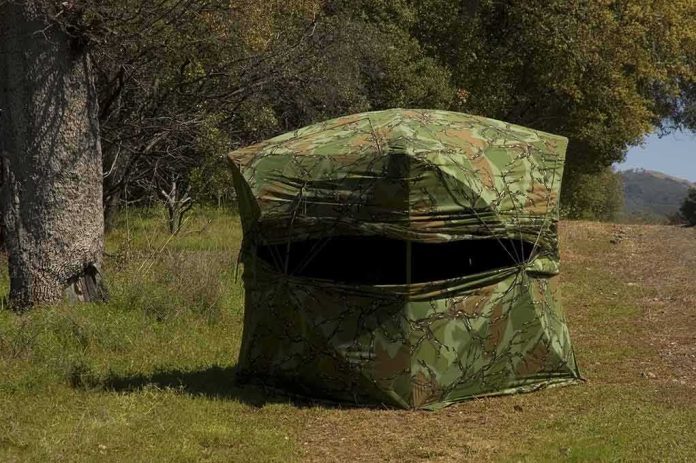
A 74-year-old hunter sitting in a ground blind in a Delaware field saw movement in the evening light, took the shot, and killed a 39-year-old woman walking through the field with a man and two children. Police charged him with manslaughter over the weekend; he is out on a $43,000 bond.
Story Snapshot
- Delaware State Police charged Walter Moorhead, 74, of Salisbury, Maryland, with manslaughter on September 20.
- Police say he fired from a ground blind near Ellendale, in Sussex County, at 7:40 p.m. on September 18.
- The victim, Santos Maria Chilel Soto, 39, of Georgetown, Delaware, died in the field.
- Charges also include possession of a firearm during a felony and three counts of reckless endangering, one for each person walking beside her.
Where This Stands Right Now
Delaware State Police said Moorhead was hunting deer from a ground blind on the evening of Friday, September 18, in an open field off South Old State Road near Ellendale. According to the preliminary investigation, he “saw movement, and fired his rifle believing he was shooting at a deer.” The bullet struck Chilel Soto, who was crossing the field with an adult man and two children. She died from her injuries at the scene.
Moorhead was arraigned in Justice of the Peace Court and released after posting a $43,000 cash bond. Police are handling the case as a hunting-related shooting, not a dispute between the parties; the theory behind the charges is that he fired at what he believed was game without identifying his target.
The Criminal Charges And What Prosecutors Must Prove
Moorhead faces manslaughter, possession of a firearm during the commission of a felony, and three counts of first-degree reckless endangering tied to the man and two children walking with the victim. Manslaughter in cases like this centers on reckless conduct that creates a substantial risk of death. Prosecutors typically argue that the shooter failed to identify the target beyond doubt before firing.
Police announcements came between September 19 and September 21, with consistent accounts of the time and place: an evening field shot taken from a ground blind in Sussex County. Defense counsel has not been quoted, and the official account has been steady across outlets since the arrest.
Where This Fits In Hunting-Safety Patterns
Safety experts say mistaken-target shootings are uncommon compared with total hunting days, but when they happen the pattern usually involves one basic rule break: never fire unless you can clearly identify the target and what lies beyond it. Low light, brush, and expectation can trick the eye. That is why hunter education stresses clear target identification before every shot, without exception.
These reminders are not anti-hunting. They are the backbone of a safe hunting culture that most hunters follow and teach: stop, see the whole form, confirm the species and the background, then decide. A ground-blind shot at perceived game in an open field at dusk is precisely the scenario safety educators warn about, especially in mixed-use country where a field is also somebody’s shortcut home.
Shared Public Concerns About Duty, Safety, And Accountability
Families expect that fields and woods near homes and roads are safe to cross. Hunters expect that if they follow the rules, their sport remains welcome and respected. Both depend on strict target checks and respect for lines of fire. Police say a woman walking with children died because a shooter fired at movement he believed was a deer.
This case will move through court, where facts and law set the outcome. But the message is already clear: identify the target beyond doubt, and expect strict enforcement when that does not happen. That is basic duty of care, the kind that keeps both hunting traditions and everyday life safe for families who share the same land.
Sources:
washingtontimes.com, theguardian.com, nbcnews.com, local12.com, wideopencountry.com