

Maryland Gov. Wes Moore wrote that he mourned a soldier friend at a funeral held 11 days before that soldier was killed, and the soldier’s widow says she never heard of Moore.
Story Snapshot
- Moore’s 2015 memoir, “The Work,” says he cried for Army 1st Sgt. Toby Meister at a December 17, 2005 funeral.
- Meister was still alive that day. He was killed in Afghanistan on December 28, 2005.
- His widow, Alicia Meister, says she does not know who Moore is and that her husband never talked about him.
- Moore called her only after reporters contacted his office, she says.
- Moore has blamed past errors in the book on “poor editing” and on how stress, grief and time affect memory.
In his memoir, Maryland Gov. Wes Moore wrote about grieving the death of Tobias "Toby" Meister, a U.S. soldier who was killed in Afghanistan.
But Toby's family and other soldiers say Moore never knew him.https://t.co/AsBykBWShf
— CBS 21 News (@CBS21NEWS) November 15, 2026
A Funeral Scene That Came Too Soon
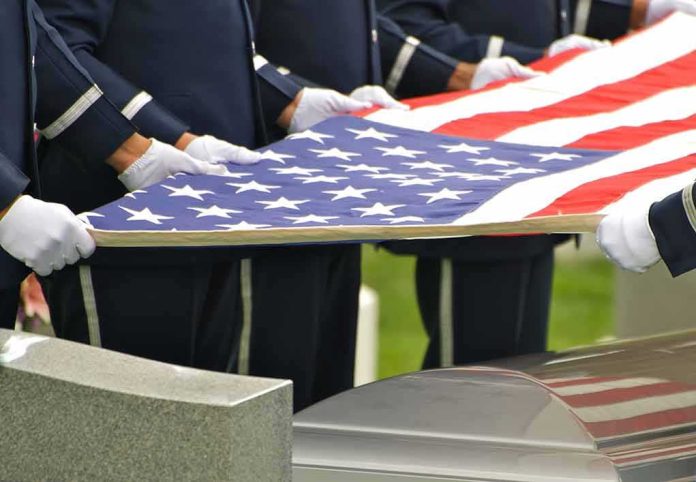
A report published Sunday, November 15, laid out the problem with the timeline. In his 2015 memoir, “The Work: Searching for a Life That Matters,” Moore describes his grandfather’s funeral on December 17, 2005. He writes that he cried for his grandfather and for soldiers lost in the war. “Inside that casket, I also saw Toby,” Moore wrote of Meister, whom he described as a friend.
But Meister was still alive at the time of that funeral. Army 1st Sgt. Tobias “Toby” Meister, 30, was killed when a roadside bomb hit his Humvee in Afghanistan on December 28, 2005. That was 11 days after the funeral. Moore did not learn of Meister’s death until he went back to Afghanistan that January, according to the report.
The new account adds to earlier accusations that Moore, a Democrat seen as a possible presidential candidate, embellished parts of his military record. Those accusations have drawn sharp criticism from veterans and renewed calls for him to step down.
What Moore Has Said
Moore and his office did not answer questions about the new report, and they have not responded to 26 questions sent since June, according to the report. Those questions include whether he owes the Meister family an apology or a correction, and whether he asked his publisher to fix the book.
In an interview in June, Moore blamed mistakes in the memoir on “poor editing” and on the way stress, grief and time can affect memory. He said he thought of Meister as a friend. He said he remembered talking with him about convoy routes by satellite phone before Meister died. He also said he would have written some passages more carefully if he had known his military record would face such close review.
The Widow Says She Never Heard of Him
Alicia Meister said she did not know about the memoir passage until reporters called her. “I’ve never personally heard from him,” she said on Monday, November 9. “I don’t know who [Moore] is. I don’t recall my late husband ever talking about him.” She said Moore never sent the family a copy of the book or told them he planned to write about her husband. “I would remember if he reached out to me about a book,” she said.
She said many soldiers and leaders reached out after her husband’s death, including former President George W. Bush. Moore was not among them until reporters reached out to his office. By Friday, November 13, she said, Moore had called her. “It was good,” she said. “He paid his respects and apologized for not reaching out sooner.”
She also gave Moore some benefit of the doubt. “Trauma can make you get dates wrong,” she said. But she said she is not sure why he chose to write about her husband. “Other soldiers were killed where my husband was, too,” she said. “I don’t know how to feel about it because I don’t know what his intentions were.”
Soldiers Who Served With Meister Push Back
Patrick “Pete” Munster is a retired Army lieutenant colonel who was with Meister in his final moments. He called Meister “one of the best young leaders I’ve ever met.” Munster disputes Moore’s claim that the two worked together. “I can tell you that Toby Meister did not know Wes Moore or coordinate any tactical operations with him,” he said. He said Moore’s job in information operations was more than 200 miles away. Moore’s own former supervisor, retired Lt. Col. James “Jamie” Gottschling, also disputed that Moore coordinated tactical moves with Meister.
The dispute is about what Moore wrote in his book, not about whether he served. State records confirm Moore’s military service. Moore has not publicly explained the 11-day gap between the funeral he described and Meister’s death.
Sources:
foxbaltimore.com, wjla.com, ibtimes.co.uk, nypost.com