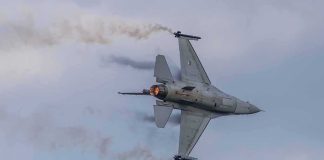

Britain grounded all Hawk training jets after two Royal Air Force pilots ejected and survived a fiery crash near homes in Wales on Wednesday, September 23.
Story Snapshot
- Two pilots ejected from a Royal Air Force Hawk T2 and suffered minor injuries.
- Royal Air Force paused all Hawk T1 and T2 flights while investigators review the crash.
- The jet departed Royal Air Force Valley and came down near Pencarnisiog on Anglesey.
- Officials declined to discuss the cause until the formal probe is complete.
Pilots Eject Before Crash Near Anglesey Homes
Royal Air Force officials said a Hawk T2 from Royal Air Force Valley crashed near Pencarnisiog on Anglesey after both pilots ejected and parachuted to safety. North Wales responders treated the aircrew for minor injuries. Video shared by major outlets showed parachutes in the air and a fireball on impact. Local reports said the jet went down close to buildings, but no deaths were reported. The incident drew a large emergency response and immediate national attention.
The Royal Air Force confirmed the event, stated the pilots were receiving medical care, and said families were being supported. Commanders then took a broad safety step: they paused all Hawk T1 and T2 flying as a precaution. Training units and the Red Arrows display team use these aircraft, so the pause affects pilot pipelines and public events. Leaders framed the halt as temporary while investigators gather wreckage data, maintenance logs, and witness accounts.
Safety Pause And Investigation Protocols
Officials said they would not discuss the cause until the formal investigation runs its course. That approach is standard in military aviation. Investigators first secure the scene, review flight records, and assess any past technical notes tied to the fleet. Only then do they assign cause. Until then, the focus is on aircrew health, public safety, and preventing a second mishap. The Aviationist and other outlets echoed that the cause remains unknown at this stage.
Breaking Defense and the British Broadcasting Corporation reported the fleet-wide pause, underscoring the scale of precaution. That choice protects crews and the public while reducing the chance that a shared fault, if any, repeats during training. It also delays pilot progress and public shows, which carries costs for readiness and morale. Still, recent history shows these pauses often lift once checks confirm systems and procedures are safe to resume.
Why This Matters Beyond One Crash
This crash highlights a tension many readers feel: citizens expect strong safety and honest answers, but government often moves slowly. The Royal Air Force response fits a known pattern. Leaders share confirmed facts quickly, then go quiet while experts work the case. That can feel like a wall to the public. Yet a careful probe, not quick talk, is what prevents repeat mistakes and protects both crews and people on the ground.
Two Royal Air Force pilots sustained minor injuries after ejecting from their training aircraft before it crashed on Anglesey in Wales on Wednesday.
Emergency services responded to the crash in the Pencarnisiog area, near RAF Valley.The pilots were flying an RAF T2 Hawk from… pic.twitter.com/SBK13It64a
— CGTN Europe (@CGTNEurope) September 24, 2026
People on the left and right worry about leadership, transparency, and costs. A grounded training fleet means canceled sorties, more expense, and less training time. Residents near bases want to know if risk has grown by their homes. Aircrews want confidence in their jets. Clear updates, even brief ones, help. When the final report explains what failed, what was fixed, and when flying safely resumes, it will address those shared concerns with facts instead of spin.
Sources:
facebook.com, uk.news.yahoo.com, newsnow.co.uk, straitstimes.com, theaviationist.com