

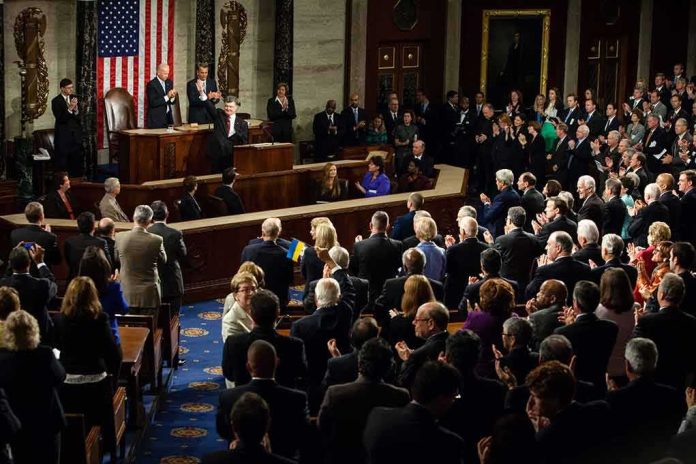
John Thune’s clash with the GOP base came down to one hard fact: the Senate still did not have the votes to force through the SAVE America Act.
Quick Take
- Thune said Republicans did not have the votes to end the legislative filibuster for the bill.
- The Senate leader also rejected a talking filibuster as too risky and still short of the needed support.
- Trump-aligned critics treated the fight as a loyalty test, not just a procedural dispute.
- South Dakota Republican delegates moved toward censuring Thune over his handling of the issue.
Thune’s Vote-Count Defense
Senate Majority Leader John Thune kept returning to the same answer when pressed on the SAVE America Act: the votes were not there. He said Republicans could debate the bill, but they could not guarantee an outcome if the only path required “nuking” the legislative filibuster. Thune framed the fight as simple Senate math, not a lack of effort or interest in the bill itself.
That position put him directly at odds with Trump-aligned activists who wanted a faster, harsher response. Thune also pushed back on the idea that a talking filibuster would solve the problem, calling that route complicated and risky. Reporting said the strategy lacked enough support inside the Republican conference, and Thune said he could not count to the number needed for a rule change.
A Bill That Became a Loyalty Test
The SAVE America Act is not vague symbolism. Congress approved the House bill text as H.R. 22, and the measure would require proof of citizenship to register to vote in federal elections. That gave Trump and his allies a concrete target. It also gave critics a concrete reason to say Thune was blocking one of the president’s top priorities, even though the Senate’s rules made passage far harder than the base wanted to admit.
That gap between demand and procedure is what made the fight so combustible. Reporting described rising tension between Trump and Thune, including complaints that the Senate leader was not moving fast enough and calls to cancel the August recess until the bill passed. But the same reporting also repeated Thune’s central point: the chamber did not have the votes for the filibuster changes Trump wanted.
Why the Backlash Grew
Thune’s refusal to bend the rules angered conservatives who see Senate procedure as a shield for permanent obstruction. South Dakota Republican delegates even considered censuring him over his “failure” on the SAVE America Act, which showed how far the anger had spread inside his own state party. Some critics said he should have fought harder. Thune’s defenders said he had no realistic path to a win and would only waste time chasing a dead end.
✋✋✋✋✋✋✋✋✋✋✋✋✋✋✋✋✋✋✋✋✋✋✋✋✋✋ Thune is a venal traitor. Get Lee or Scott to take his position and PASS THE SAVE ACT!
— Veranda Vamp (@VerandaVamp) August 9, 2026
The episode fits a familiar pattern in Washington. When a party controls the Senate but lacks 60 votes, the real fight often shifts from policy to procedure. That is what happened here. The House passed a high-profile voting bill. The Senate majority leader said the math did not work. Trump-aligned critics called that betrayal. The result was a public argument about power, loyalty, and whether Senate rules still matter more than political anger.
Sources:
townhall.com, thehill.com, politico.com, facebook.com, time.com, pbs.org, youtube.com, axios.com