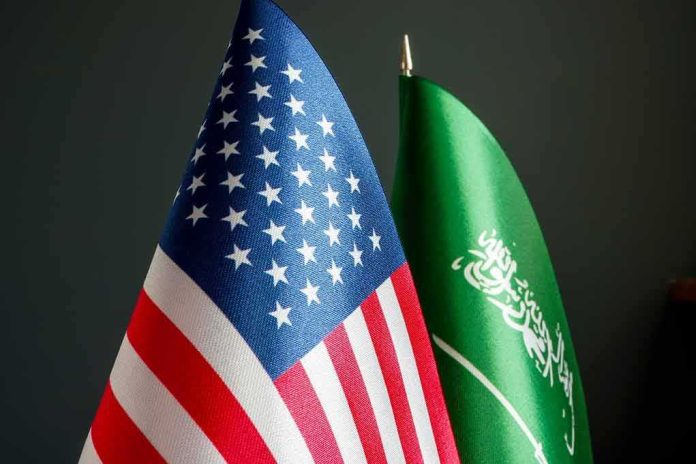
Washington and Riyadh have finished civil nuclear talks, opening a deal that could reshape energy, trade, and nonproliferation policy in the Middle East.
Quick Take
- The United States and Saudi Arabia signed a joint declaration on civil nuclear cooperation.
- The White House said the pact lays the legal base for a decades-long, multi-billion-dollar partnership.
- Some reporting says the draft deal may relax standard guardrails on enrichment and inspection.
- The agreement is part of a wider U.S.-Saudi push that also includes defense and economic ties.
Deal Moves From Talks to a Formal Framework
U.S. Secretary of Energy Chris Wright and Saudi Energy Minister Prince Abdulaziz bin Salman Al Saud signed a joint declaration completing negotiations on civil nuclear cooperation. Saudi reporting said the accord is a key step toward a formal Section 123 agreement, which U.S. law uses for peaceful nuclear trade. The White House said the deal creates the legal base for long-term cooperation.
The agreement matters because it turns a long-running diplomatic issue into a concrete framework. Saudi Arabia wants reactor technology, fuel-cycle help, and a bigger role in civilian nuclear power. U.S. officials say the arrangement can open a major market for American firms while keeping the work inside a legal structure built for civilian use. That is the promise. The hard part is whether the safeguards will match that promise.
Commercial Gain Sits Next to Proliferation Risk
Supporters frame the accord as a business win for American industry and a way to lock in U.S. influence. A White House fact sheet said the partnership will support a decades-long, multi-billion-dollar nuclear energy relationship and make U.S. companies Saudi Arabia’s partners of choice. Industry coverage also described the deal as a historic step that could bring major reactor work, technology transfer, and related investment into the kingdom.
But the same reporting shows why the deal is controversial. Reuters said a document reviewed by the outlet removed some guardrails that U.S. officials have long tied to nonproliferation. Arms Control Association reporting said the draft agreement may not require more intrusive International Atomic Energy Agency monitoring and could still allow some enrichment. That is why lawmakers and experts keep warning that a commercial opening can also create a nuclear security risk.
Broader Stakes Reach Beyond One Bilateral Deal
The Saudi deal fits a familiar pattern in U.S. nuclear diplomacy. Washington often uses civil nuclear agreements to spread American technology while setting rules on safeguards, access, and fuel-cycle limits. The same structure that creates export opportunities also gives the United States leverage over how a partner develops nuclear power. In this case, that balance looks especially delicate because Saudi Arabia has pushed for more room on enrichment.
U. S. Foreign Policy must be adopting the idiotic theory that the only thing that stops a Shia Islam theocracy with a bomb is a Sunni Islam absolute monarchy with a bomb. #ETTD
Coveted U.S. Nuclear Deal Is a Coup for Saudi Crown Prince https://t.co/uMmbYgzKGH
— Spence Williams (@beoduck) July 22, 2026
The timing also matters in a wider Middle East where energy, defense, and security questions are tightly linked. Reuters reported earlier that the United States had stopped making Saudi recognition of Israel a condition for civil nuclear talks. That shows how the nuclear file has become part of a bigger regional bargain, not just an energy story. For readers on both the right and left, the concern is plain: big deals often move fast, while the public learns the fine print later.
Sources:
mediaite.com, reuters.com, cnn.com, ans.org, armscontrol.org, wsj.com, youtube.com, brookings.edu, thebulletin.org, whitehouse.gov, wagingpeace.org