

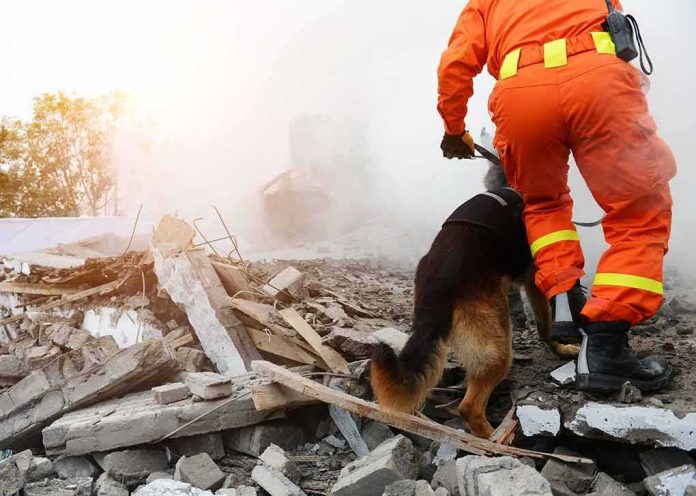
Rescuers in Nepal pulled a woman alive from a flood-buried home about 10 days after the disaster and flew her to safety.
Story Snapshot
- A Nepali woman was found alive in Nuwakot district roughly 10 days after the floods.
- Rescue teams also airlifted survivors from nearby Rasuwa to an army camp in Nuwakot.
- Officials report large numbers dead and missing as search and relief efforts continue.
- Multiple sites, including hydropower tunnels, saw separate rescues during the same period.
What Rescuers Found And How They Moved Survivors
Reuters reported that rescue crews located a woman alive in the flood zone and moved her for treatment after about 10 days trapped, with evacuations running through Nuwakot district. The same rescue window saw survivors airlifted from the hard-hit Rasuwa area to an army camp in Nuwakot, showing how teams linked nearby districts to speed care. These details fit a wider push to reach remote sites where roads, bridges, and power lines were damaged or gone.
Authorities and aid groups staged rescues at the same time in different places, including damaged hydropower tunnels where people were found alive more than a week after the flood. That meant helicopters, bulldozers, and ground teams worked in parallel, often in poor weather and on unstable land. Airlifts cut travel time to hospitals. Ground teams cleared debris to reach pockets where people had air, water, or space to hold on until help arrived.
The Scale Of Loss And The Race To Reach The Missing
Nepal’s government and international partners say deaths number in the hundreds and the count of missing remains in the thousands, underscoring the need to move fast before survivable windows close. Officials paused some operations because of weather, then resumed searches as soon as it was safe to fly and dig again. Crews also faced a hard task of identifying bodies. Many remains were recovered in poor condition, so teams collected DNA samples to help families later.
Rescue leaders mobilized thousands of police and army personnel within days of the flood to find people and open supply routes. They reported more than one hundred rescues in early phases and kept adding flights and field hospitals as terrain and weather allowed. This tempo matters. In disasters, time and access decide outcomes. The survival of a woman found after about 10 days, and other late rescues, shows why teams keep digging even when hope seems thin.
Why The Story Spread And How To Read It
Newsrooms and officials shared fast updates from many sites, which can blend separate rescues into one viral “miracle” thread. Reports during the same cycle cited tunnel extractions, rooftop saves, and airlifts between Rasuwa and Nuwakot, all within hours or days of each other. That flood of details helps families and donors track progress, but it can also blur lines between locations and people. Readers should match names, places, and dates when possible.
🇳🇵 ✅ **𝗪𝗢𝗠𝗔𝗡 𝗥𝗘𝗦𝗖𝗨𝗘𝗗 𝗔𝗟𝗜𝗩𝗘 𝗢𝗡 𝗗𝗔𝗬 𝟭𝟭 𝗔𝗙𝗧𝗘𝗥 𝗡𝗘𝗣𝗔𝗟 𝗙𝗟𝗢𝗢𝗗
✅ Chandrika Shrestha, 64, was found unconscious on the fourth floor of her flood-buried home in Betrawati, Nuwakot, 11 days after the catastrophic Bhotekoshi flood swept through the… pic.twitter.com/IcJxyu8twU
— 🇺🇦 Vortex Report (@VortexReportX) September 5, 2026
The human stakes cut across politics. When roads wash out, it does not matter who is in power. What matters is whether systems move fast, spend well, and tell the truth. Nepal’s rescue work shows the value of clear chains of command, shared air assets, and honest data about the dead and missing. It also shows limits. Remote valleys and broken tunnels slow help. That is why steady funding, training, and cross-border aid planning save lives before the next storm.
Sources:
reuters.com, timesofindia.indiatimes.com, bbc.com, prameyanews.com, thehindu.com, timesofisrael.com