

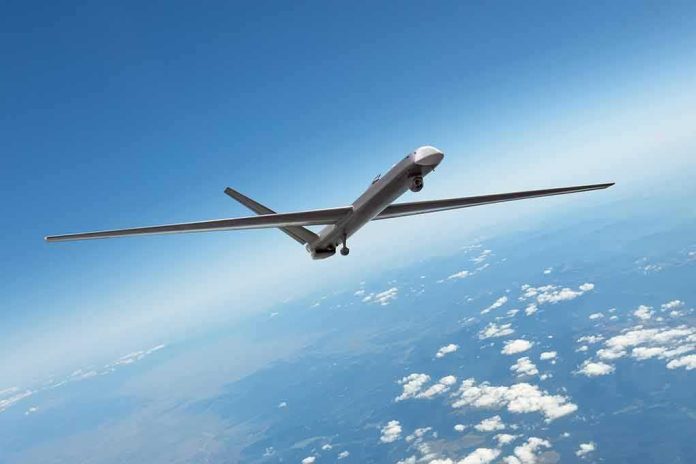
Ukraine warned airlines that Russian skies are becoming unsafe due to drones, and Russia answered by calling that “state terrorism.”
Story Snapshot
- Zelensky warned airlines and insurers that Russian airspace is becoming unsafe and “effectively closing.”
- Ukraine says civilian planes are not targets but risks rise as drones operate over Russia.
- Putin said the warning “amounts to state terrorism” and ruled out talks with “terrorists.”
- Global aviation rules tell airlines to avoid conflict airspace when risk climbs.
Zelensky’s Warning to Airlines and Insurers
President Volodymyr Zelensky told airlines, insurance firms, and airport users that Russian airspace is growing dangerous. He said Ukrainian drones would keep operating over Russia and that the skies would be “effectively closing.” His message aimed at carriers still routing flights over or into Russia. The warning follows months of drone strikes deep inside Russia. The statement did not order a ban. It pushed operators to weigh risks and avoid the area.
Zelensky Warns Against Flights in Russian Airspace: "Completely Unsafe"
Kijev— Ukrainian President Volodymyr Zelensky has warned that Russian airspace is no longer safe for civil aviation.
"Russian airspace will become completely unsafe," Zelensky
stated. He clarified that… pic.twitter.com/u9KMihbOsV— LiberlandPress (@PressLiberland) September 2, 2026
Reports added that Ukraine says civilian aviation is not the target. The warning centered on risk from ongoing drone operations and air defenses. Airlines and insurers care about two things: probability of harm and size of loss. A single accident could be catastrophic. Recent conflict patterns show many carriers already reroute around war zones. The Ukrainian message seeks to speed that shift by making the risk plain to boardrooms and underwriters.
Kremlin Response: “State Terrorism,” No Talks
President Vladimir Putin replied that the public warning to airlines “amounts to state terrorism.” He said Russia would not negotiate with “terrorists,” a label he applied to Kyiv’s leadership in this context. He also said Russia remained open to talks with people he considers trustworthy. The Kremlin framed the warning as a threat to civilians. Ukraine’s side framed it as a safety advisory driven by combat in Russian skies. The clash hardened both positions.
Putin’s charge raises the political stakes. Words like “terrorism” carry heavy weight in diplomacy and domestic law. They can shape sanctions, travel rules, and media narratives. But the charge itself does not change how pilots and insurers judge danger. Aviation risk managers focus on active threats, not labels. They look at drones, missiles, air defense launches, and false radar tracks. If those hazards increase near civil routes, flight plans change, fast.
How Aviation Treats Conflict Airspace
The International Civil Aviation Organization says states and airlines must assess conflict risks and take steps to avoid harm. The Risk Assessment Manual explains that operators should avoid affected airspace when threats rise. The standard is precaution, not proof after a tragedy. Airlines do not wait for a jet to be hit. They track incidents, military activity, and warnings from states. When the risk line is crossed, they reroute or suspend service.
Volodymyr Zelensky has issued a stark warning to airlines still flying through Russian airspace: “Safe times are over.”
Ukraine has increasingly sent long-range drones deep into Russian territory, targeting military and other sites. Zelensky predicted the war would effectively… pic.twitter.com/kidpLAb7OZ
— Global South World (@g_s_world) September 2, 2026
In recent years, carriers have moved quickly when drones or missiles threaten cruise altitudes or busy approach paths. Even small drones can cause damage, and larger systems can do far worse. Insurers raise premiums or withdraw coverage as risks grow. Airports face disruptions as alerts force holds and diversions. Ukraine’s warning signals more of that in Russia. Russia’s reply signals a long fight over blame. For travelers and crews, the near-term effect is fewer routes and higher costs.
Sources:
theguardian.com, moneycontrol.com, thehindu.com, meduza.io, icao.int, caa.co.uk