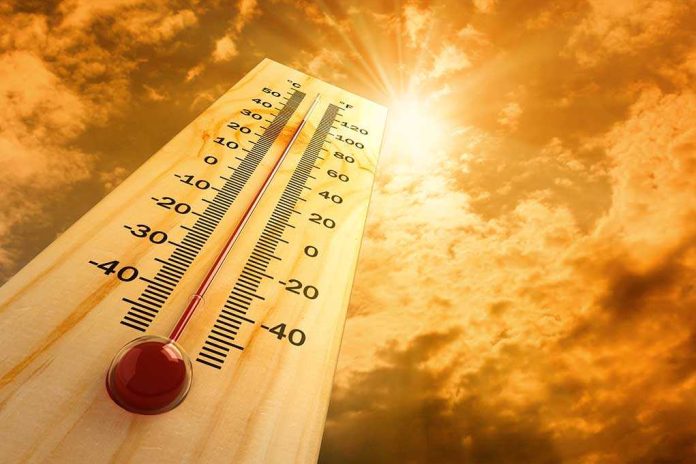
Forecasters are dangling a 106‑day “endless summer” for 2026, but the real story is how a hotter, longer-feeling season could quietly test your health, your property, and your patience all at once.
Story Snapshot
- Summer 2026 outlooks lean toward hotter-than-normal conditions for much of the United States, driven in part by a developing El Niño pattern.
- Commercial and traditional forecasters alike are selling a season of heat, severe storms, and regional extremes rather than mild, forgettable weather.
- Government climate centers frame these forecasts as probabilities, not guarantees, which clashes with media headlines about “endless summer.”
- The risk side of this heat—wildfire, floods, and health stress—will matter more than whether the season lasts 90, 100, or 106 days on a calendar.
Why forecasters are hyping a long, hot 2026 summer
Weather outlets are circling around a similar storyline: summer 2026 runs hot, disruptive, and stubborn across much of the country. AccuWeather’s seasonal forecast calls for a volatile blend of heat, severe thunderstorms, and flooding while stressing that almost no region of the contiguous United States is favored to be cooler than normal.[1] Farmers’ Almanac echoes this, describing “a season filled with intense heat” and strong July heat for the Southwest and South Central states along with persistent hot, humid conditions in the Southeast.[3] When independent voices and legacy outlets converge on the same broad pattern, you pay attention.
The phrase “endless summer” is more marketing than meteorology, but the feeling behind it is grounded in how these patterns play out in real lives. A warmer baseline means the first truly hot days arrive earlier, linger later, and turn what used to be a three-month season into something that blurs into May and September. Seasonal model roundups from European and other global centers point toward summers that run a degree or two above normal across large regions, not necessarily record shattering but consistently, relentlessly warm.[2] That kind of marginal heat, repeated day after day, is what stresses power grids, frays tempers, and quietly raises your electric bill.
The El Niño factor and what it really changes
Federal forecasters are not promising an apocalypse, but they are not promising a break either. The National Weather Service and related climate outlooks highlight a strong chance that El Niño conditions will emerge and persist into late 2026.[4] Historically, El Niño shifts storm tracks and can favor warmer conditions over roughly three-quarters of the United States, with the highest odds of hotter-than-normal weather in many states.[6] That does not mean every town bakes, yet the deck stacks toward more heat waves, warmer nights, and a higher floor for humidity, especially when combined with decades of underlying climate warming.
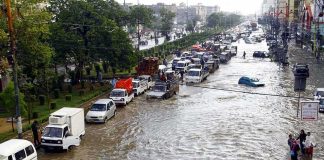
That setup also tilts the table for extremes that feel anything but abstract. A hotter, drier regime in part of the West means a longer wildfire window, more days where a stray spark can turn into a fast-moving blaze, and more smoke drifting hundreds of miles downwind. At the same time, outlooks for the Northeast and Southeast emphasize recurring thunderstorms, heavy rain, and even increased hurricane risk along the Atlantic coast by August.[3] Heat and moisture together drive severe weather, so a summer that “leans hot” is also a summer that leans into flash flooding, downed trees, and insurance claims—none of which show up in the feel-good beach imagery that sells the season.
Forecast confidence, media spin, and common-sense skepticism
Government climate centers spell out the limits of what anyone can promise this far ahead. The Climate Prediction Center issues formal 90‑day outlooks once each month, focusing on probabilities of above- or below-normal temperature and rainfall, not on dramatic labels like “longest summer of the decade.”[6] That probabilistic framework is crucial: a 60 percent chance of a hot summer still leaves a substantial chance that your specific region ends up near normal. Private forecasters and headline writers, however, understandably prefer definitive language—“endless,” “wild,” “historic”—because it grabs eyeballs.
NBC4’s Doug Kammerer Releases 2026 Summer Heat Forecast for the DMV
Click below for full article.https://t.co/te9zuXBXMQ pic.twitter.com/fXbnZdFx2B
— The MoCoShow (MCS) (@TheMoCoShow) May 25, 2026
For a conservative, common-sense reader, the right posture is neither panic nor complacency. Seasonal forecasts have real skill at the broad level: when multiple independent centers and traditional outlets all point toward a warmer-than-normal summer, dismissing them outright is foolish.[1][3][6] At the same time, treating these outlooks as destiny lets politicians and bureaucrats hide behind “the models” instead of improving basic resilience—maintaining power infrastructure, managing forests to reduce fuel loads, clearing drainage systems, and protecting vulnerable populations from predictable heat stress. The actionable middle ground is simple: expect hotter, higher-impact conditions on average, plan for them at home and locally, and refuse to be manipulated by breathless superlatives about a “106‑day summer” that no official forecast actually defines.
Sources:
[1] Web – Summer forecast 2026: Heat, severe storms to shape the season as …
[2] Web – 2026 Summer Weather Forecast – Farmers’ Almanac
[3] YouTube – The SUMMER Of 2026 Will Be WILD…
[4] YouTube – What Could Summer 2026 Bring? Long-Range Update
[6] Web – Three-Month Outlook Maps – Climate Prediction Center – NOAA