Federal prosecutors say a U.S. Energy Department engineer tried to help the Houthis, the Iran-backed armed group that controls Yemen’s capital and that the United States lists as a foreign terrorist organization. The criminal complaint, the sworn document that lays out the charge, gives no motive.
Story Snapshot
- FBI agents arrested Ashton Hamed Ellaboudy, 51, in Richland, Washington, on Thursday, October 1; his first court appearance was set for Friday, October 2.
- He is charged with attempting to give material support to the Houthis and faces up to 20 years in prison if convicted.
- Prosecutors say he bought drone parts and chemicals used in homemade explosives.
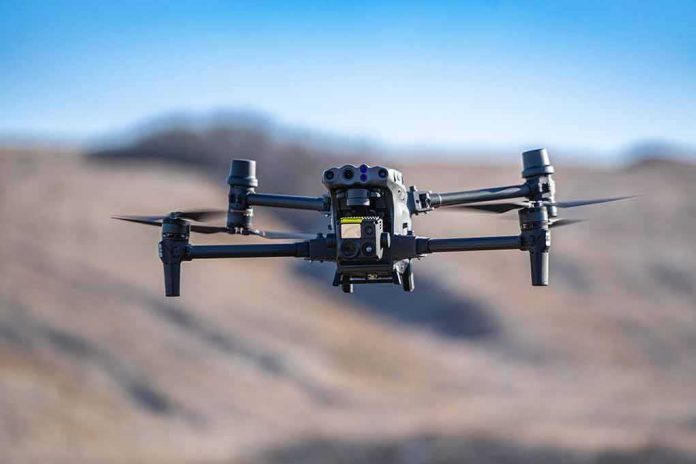
- They say he traveled to Yemen and advised FBI informants he believed were tied to the group.
What prosecutors say happened
The Justice Department charged Ellaboudy, an electrical engineer at the Department of Energy in Richland, with attempting to provide material support or resources to the Houthis. “Material support” is the legal term for help given to a banned group. It covers money and weapons, and also skills, training and equipment. Prosecutors say Ellaboudy’s goal was to help the Houthis improve their communications. The complaint does not say why he wanted to help them.
Officials stressed that the case is an allegation. Ellaboudy is presumed innocent unless he is proven guilty in court. Court records listed no attorney for him, and no response from him has been reported. The Energy Department manager for the Hanford Site, the former nuclear weapons production site near Richland that the department is cleaning up, said the matter “did not involve an attempt to harm the Hanford Site or its workforce.”
Alleged purchases and engineering assistance
According to the complaint, Ellaboudy bought chemicals that are common ingredients in homemade explosives, including acetone and sodium bisulfate. Prosecutors say he also bought drone parts and gear for flying drones by remote control. They say he took sick leave in December 2024 and told his employer he had been exposed to nitric acid, another chemical used to make explosives.
Prosecutors also say Ellaboudy used his electrical engineering training to work on communications and power equipment for the group. The complaint says he tested solar generators, changed power systems, and supplied diagrams and research advice for Houthi communications gear.
Travel and contact efforts tied to the Houthis
The complaint says Ellaboudy flew from Richland to Oman, which borders Yemen, in September 2025. Prosecutors say he used an official government passport issued when he worked for the U.S. Army Corps of Engineers, then crossed into Yemen. He later told FBI informants he had to be smuggled into and out of the country, according to the complaint. He hoped to reach the capital, Sanaa, to make government-level contacts, but he could not get to the city.
When he came home, prosecutors say, he told customs officers he had been in Oman on official business, as part of a government missile defense inspection. His supervisor told investigators he knew of no such trip. The FBI then brought informants into the case, people who secretly work with agents. One posed as a Houthi colonel. Prosecutors say Ellaboudy advised that informant on the group’s communications equipment.
Why this case matters for public safety and trust
The charge is attempted support, and the accused is a federal employee. Assistant Attorney General John Eisenberg, who leads the Justice Department’s national security division, said, “These allegations are so deeply disturbing that they almost defy imagination.”
The FBI’s counterterrorism chief, Jarod Brown, said Ellaboudy “allegedly betrayed the U.S. and attempted to aid the Houthis.” Officials said the group is backed by Iran. The Houthis took over Sanaa in 2014 and are fighting government forces backed by Saudi Arabia.
What comes next
Ellaboudy was arrested on the morning of Thursday, October 1. His first court appearance was scheduled for 11 a.m. on Friday, October 2, before a federal magistrate judge in Richland. A magistrate judge handles the early steps of a federal case, including whether a defendant stays in jail before trial.
The charge carries a maximum sentence of 20 years in prison. For now the case rests on a complaint. For the case to go to trial, prosecutors must next take it to a grand jury, a panel of citizens that decides whether there is enough evidence for a formal charge called an indictment. Everything in the complaint is the government’s account, and prosecutors must prove it in court.
Sources:
foxnews.com, justice.gov, wfmd.com, mynorthwest.com, newsnationnow.com, fox9.com