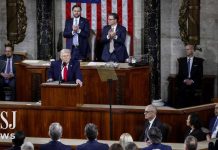

President Trump’s warning about Iranian “sleeper cells” in North America is reigniting a hard question: did years of loose border and lax vetting policies leave Americans—and our allies—more exposed to foreign regime threats?
Story Snapshot
- President Trump said U.S. authorities are monitoring Iranian networks and claimed officials “know where most of them are,” while blaming prior open-border policies for entries.
- Canadian opposition lawmakers are pressuring their government to stop Iran-linked operatives from finding “safe haven” in Canada and to produce an action plan quickly.
- Canadian police are investigating the disappearance of Iranian dissident Masood Masjoody in British Columbia, with investigators suggesting he was likely murdered.
- Recent violence and intimidation concerns in Canada—including multiple Toronto synagogue shootings in early March 2026—have intensified scrutiny of security gaps.
Trump Flags Iranian Networks as a Border-Security Test
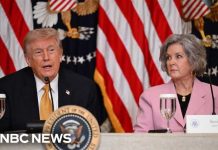
President Donald Trump said in March 2026 that U.S. authorities are actively monitoring Iranian networks that he described as “sleeper cells,” adding that officials “know where most of them are” and are watching them. Trump also linked the threat to prior U.S. border policy, arguing that some of these entries happened during the Biden-era approach to immigration enforcement. The available reporting does not include the full Peter Doocy question excerpted elsewhere.
For voters who prioritize national sovereignty and constitutional order, the practical issue is less about rhetoric and more about capacity: identifying hostile actors, tracking networks, and preventing targeting of Americans on U.S. soil. While the public lacks classified detail on how many operatives entered or through what specific channels, the warning lands in a familiar place for conservatives—security failures tend to follow when government treats border control as optional.
Canada’s Political Fight Highlights a Shared North American Vulnerability
Canada’s own political and law-enforcement developments are now part of the story because cross-border security realities do not stop at the 49th parallel. Opposition lawmakers in Canada accused their Liberal government of allowing Tehran-linked operatives to remain in the country and demanded a rapid plan, stating that Iran’s regime must not find “safe haven” there. That internal Canadian dispute matters to Americans because weaknesses in one partner country can increase risks across the continent.
The Fox News reporting cites specific examples that critics say illustrate Canada’s permissive environment, including Mahmoud Reza Khavari, a former CEO of Iran’s Bank Melli who fled after a banking scandal and settled in Canada, and Marjan Al-Agha, described as a known embezzler. Those examples are not, by themselves, proof of intelligence activity; however, they are being used politically to argue that enforcement and removals have not matched the threat picture.
The Masjoody Case and Toronto Attacks Raise the Stakes
Canadian police are investigating the disappearance of Iranian dissident Masood Masjoody, a mathematician and critic of Iran’s clerical leadership who vanished in Burnaby, British Columbia earlier in 2026. Investigators have suggested he was likely murdered, but authorities have not publicly identified suspects. Canadian media reporting, as summarized in the available research, indicates investigators are examining aspects of his background for possible motives, underscoring how dissidents can become targets abroad.
The same reporting also notes multiple synagogues in Toronto were shot in the first week of March 2026, and that anti-Israel protesters had previously gathered outside one of the locations. The research does not provide confirmed attribution tying these shootings to Iranian intelligence, so any direct linkage would be speculation. Still, the combination of dissident intimidation fears and real-world violence is driving demands for tighter security screening and stronger counterintelligence posture.
How Iranian Operatives Allegedly Blend In—And Why Vetting Matters
Exiled Iranian journalist Mehdi Ghadimi described methods by which Iranian operatives may enter Western countries, including as students, academics, or ordinary immigrants with pre-existing ideological or IRGC-linked ties; as wealthy business figures moving capital abroad with security establishment approval; or as individuals tasked with identifying activists and critics. Those pathways—legal travel channels mixed with covert intent—complicate the debate because the solution is not blanket suspicion, but more competent vetting and targeting.
PETER DOOCY: "President Trump, what are your advisers telling you about the Ayatollah's son, the new supreme leader? What are they telling you about him?"
PRESIDENT TRUMP: "It's not only them, it's you people. I mean, a lot of people are saying that he's badly disfigured…… pic.twitter.com/7UpCAoOcuy
— Fox News (@FoxNews) March 16, 2026
The limitation for the public is that the available material does not include the complete exchange referenced in the prompt about “the Ayatollah’s son,” nor does it provide official, detailed government statements or a comprehensive 2026 timeline of all related incidents. What it does show is a pattern of concern: policymakers are weighing how hostile regimes exploit open societies, and conservatives are likely to demand that enforcement—at borders and within institutions—catch up to the reality of foreign intelligence operations.
Sources:
Trump warns Iranian ‘sleeper cells’ as Canada accused of harboring regime operatives