

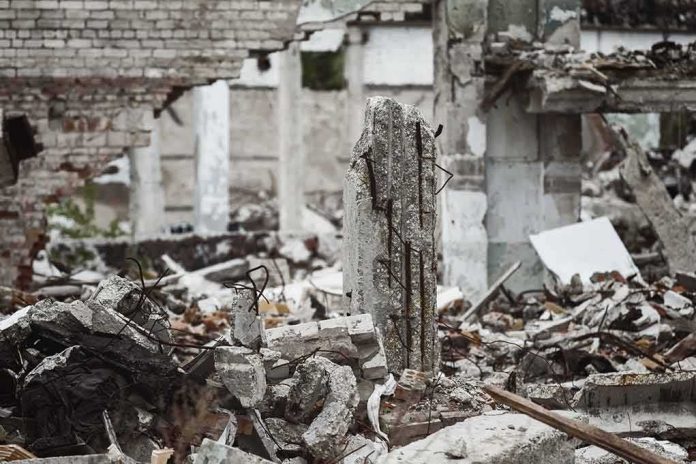
A crowded Japanese shopping mall turned into a deadly trap in seconds when a powerful earthquake collapsed its second floor and left rescuers racing to reach “many people” still stuck inside.
Story Snapshot
- A strong quake hit Japan’s Kyushu island, collapsing part of an Aeon shopping mall and trapping many people.
- Emergency services say the mall’s second floor in Kashima town fell after an explosion, with the full death toll still unknown.
- Officials report at least about 50 injuries across the region, widespread damage, and power cuts for tens of thousands of homes.
- The disaster exposes how even advanced countries struggle to protect ordinary people when systems built by elites fail under stress.
Powerful quake shatters a busy shopping day
A major earthquake, first measured at magnitude 7.1, struck Japan’s southern Kumamoto prefecture on the island of Kyushu on Tuesday afternoon, shaking cities, cracking roads, and knocking out power to tens of thousands of homes. Japan’s national broadcaster reported strong tremors across the region and fires near the epicenter, as people rushed out of buildings into the streets. The Japan Meteorological Agency briefly issued a tsunami advisory, later lifting it after no large waves appeared.
Kyushu Electric Power said about 40,000 households lost electricity after the quake, while Japan Railways Kyushu halted train services, including high-speed bullet trains. Live video from public broadcasters showed smoke rising from damaged buildings, a train carriage knocked off the tracks, and shoppers fleeing as ceilings and signs crashed down. Although Japan’s nuclear regulators reported no problems at nearby plants, many residents still feared a repeat of the 2011 Fukushima nightmare.
Mall collapse and explosion leave many trapped inside
In Kashima town, local fire officials reported that the second floor of a large Aeon shopping complex collapsed, trapping “many people” inside the damaged building. Witnesses and police told broadcasters they heard what sounded like an explosion at the mall shortly after the quake, followed by smoke pouring from the structure. Aerial footage and ground images showed a partially crumbled mall with exposed steel beams, fallen ceiling panels, and rescue crews entering through broken glass and twisted metal.
Japan’s public broadcaster said emergency services were treating the mall as one of the worst-hit sites, with several people feared dead and an unknown number still stuck under debris from the collapsed floor. Reporters cited local police alerts that 20 to 30 employees might be trapped, while hospital staff said more than 50 injured people had already arrived from different parts of Kumamoto city. Officials stressed that numbers could change as crews move deeper into the wreckage and confirm who is missing, injured, or dead.
Early casualty counts and the race to rescue survivors
Across the wider region, officials and broadcasters reported at least around 50 injuries, damaged roads and bridges, fires, and multiple collapsed buildings, including homes and smaller shops. State media said at least 12 buildings had fully or partly collapsed, with four separate incident sites where people were known to be trapped and waiting for help. Local authorities ordered more than 150,000 people to move to evacuation shelters, trying to keep families safe as aftershocks continued to shake already weakened structures.
Japan: Rescue Operations Underway After Earthquake Damages Kumamoto Mall..#Japan’s Fire and Disaster Management Agency says several people may be trapped inside the Aeon Mall Kumamoto in Kashima Town after an explosion was reported following the #earthquake. The second floor of… pic.twitter.com/Ylvy88TY2N
— Ayman Mat News (@AymanMatNews) July 28, 2026
Japan’s prime minister, Sanae Takaichi, told reporters that the government was still assessing the full picture of injuries, deaths, and destruction, and warned that casualty numbers could rise. She said she had already been informed of several injuries and widespread property damage but urged the public to wait for verified updates from local disaster offices rather than social media rumors. That warning matters, because early disaster reports often repeat rough numbers from busy police and fire units before full incident logs are ready.
What this disaster reveals about modern systems and ordinary people
Japan is known worldwide for strict building codes, advanced warning systems, and careful planning for earthquakes, yet this mall collapse shows how even “safe” systems can fail when stress hits the weakest points. Architects may design for shaking, but they cannot always account for aging structures, rushed repairs, or cost-cutting choices by corporations that see safety as an expense instead of a duty. When a floor collapses over shoppers and workers, the people under it pay the price, not the executives.
For many Americans watching this, the story feels sadly familiar: a crisis hits, regular people suffer, and large institutions promise that lessons will be learned but rarely change in ways that protect families next time. In Japan, just like in the United States, everyday citizens often sense that big government agencies, powerful companies, and distant “experts” answer more to each other than to the public they claim to serve. Disasters expose that gap in the harshest way, one collapsed ceiling or broken bridge at a time.
Earthquakes are natural events, but the scale of harm they cause is shaped by human decisions about construction, oversight, and emergency planning. When those decisions are guided more by political careers, corporate profits, or bureaucratic routines than by the safety of ordinary shoppers and commuters, disaster becomes a test of trust that many citizens feel their leaders keep failing. This tragedy in Kumamoto is not only a Japanese story; it is a warning to every country whose infrastructure and institutions are aging while elites keep telling the public that everything is under control.
Sources:
insiderpaper.com, nytimes.com, turkiyetoday.com, nbcnews.com, france24.com, bbc.com, timesofisrael.com, youtube.com, cnn.com