
Federal prosecutors say a Detroit clinic network sold opioid prescriptions for cash so the pills could be resold on the street for profit.
Story Highlights
- Federal prosecutors in Detroit announced charges against five people, including three doctors, on Thursday, October 22.
- Prosecutors say a cash-only clinic charged $250 to $500 a visit and collected only when the patient got the opioid prescription he wanted.
- Recruiters allegedly paid people $100 or more to get prescriptions, fill them and sell the pills on the street.
- Prosecutors say doctors at two clinics wrote prescriptions for more than 2.4 million doses of strong painkillers.
- New patients were allegedly asked, “Who sent you?” Anyone who could not name a recruiter or a worker was turned away.
Indictment Says Detroit Clinic Traded Pills for Cash
A federal grand jury has indicted five people in what prosecutors call a “cash for pills” scheme. An indictment is a formal charge, not proof of guilt. Prosecutors say the goal was money: patients paid cash for opioid prescriptions, and many of the pills ended up for sale on the street. The five face more than 30 federal charges in all, including conspiracy to distribute controlled substances and unlawful distribution. Two of them also face money laundering charges. The reports carried no statement from the defendants or their lawyers.
Five Charged in Alleged 'Cash for Pills' Opioid Scheme Run Through Detroit Clinics https://t.co/6Bb4PrDnHn
— DLW 🔥#MAGA (@Dlw20161950) October 25, 2026
The clinic at the center of the case is the Woodward Boulevard Medical Building in Detroit. Prosecutors say it refused insurance and took only cash. New patients were allegedly asked, “Who sent you?” Anyone who could not name a recruiter or a worker was turned away. A patient who could not fill a prescription allegedly got a credit toward a later visit. Prosecutors call this a pill mill, meaning a clinic that hands out painkiller prescriptions for cash with little or no real medical care.
Who Is Accused, and What Prosecutors Say Each One Did
Clara Wilkerson, 65, formerly of Bloomfield Hills, is accused of using her two companies, CRW Worldwide, LLC and CRW Development, Inc., to recruit and pay doctors to write prescriptions. Latanya Wallace-Hardiman, 53, of Detroit, is accused of owning and running the Woodward Boulevard clinic. Three doctors are accused of writing the prescriptions there at different times from 2018 through September 2024: Dr. Luis Rodriguez, 53, who lives in Orlando, Florida; Dr. Nayantara Jnananand, 59, of Plymouth; and Dr. Prashanti Franklin, 49, of Okemos.
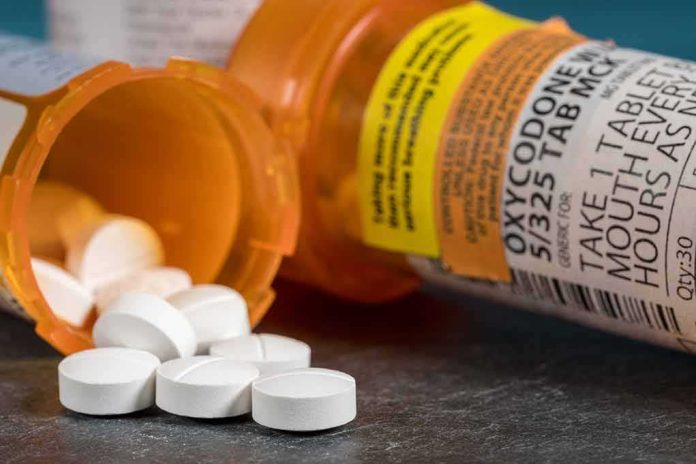
The drugs named include oxycodone, oxymorphone, Norco and Percocet. These are Schedule II drugs, the federal label for medicines that have a real medical use but a high risk of abuse. Prosecutors say doctors at the Woodward Boulevard clinic wrote prescriptions for more than 500,000 doses of them from 2021 to 2024, worth more than $4.6 million on the street. They say doctors at a second clinic, P and A Aftercare, wrote prescriptions for more than 1.9 million doses worth more than $10 million. Prosecutors also say the clinics’ cash was used to pay the doctors, and that some deposits and withdrawals topped $10,000 at a time.
Why the Case Matters
“Prescribers who work at ‘cash only’ clinics are fueling the illegal street market,” said U.S. Attorney Jerome F. Gorgon, Jr., the top federal prosecutor in eastern Michigan. The Drug Enforcement Administration and the IRS criminal investigation unit worked the case. An IRS official said such schemes “are driven by profit, and that money leaves a trail.” Each drug and money laundering count carries up to 20 years in prison and a $250,000 fine. A judge would set any sentence.
Conservatives see two clear stakes. The first is law and order: pill mills feed addiction, crime and the decay of neighborhoods. The second is fairness to real patients: people in true pain suffer when bad actors twist medical care and bring on tighter rules for everyone. President Trump’s administration has put public safety first, and cases like this one can help restore trust. The case moves next to court, where the government must prove each charge beyond a reasonable doubt.
Sources:
townhall.com, beckersasc.com, wlns.com, milawyersweekly.com, clickondetroit.com