
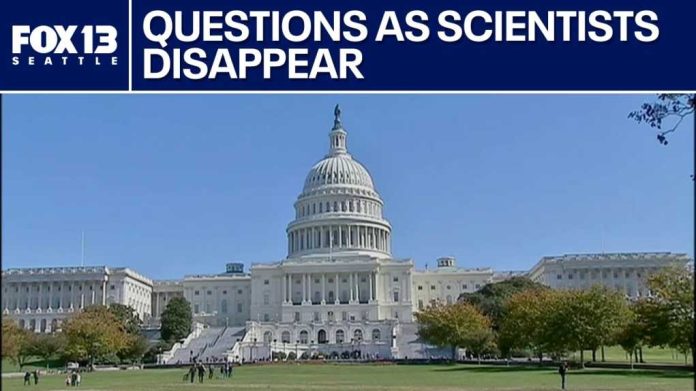
Twelve deaths and disappearances tied to America’s most sensitive nuclear and space work are forcing Congress to ask a chilling question: is this coincidence—or a national security breach hiding in plain sight?
Quick Take
- Federal investigators and House Oversight Republicans are reviewing 10 cases within a broader set of 12 deaths/disappearances tied to scientists and defense-linked experts since 2022.
- The FBI is spearheading an effort to determine whether any of the cases are connected, while some officials and families say there is no evidence of foul play.
- Several incidents cluster around high-security regions and employers, including New Mexico labs and a Pasadena-area research community, fueling public suspicion.
- President Trump has publicly signaled concern while stressing it may be a coincidence, as social media speculation accelerates faster than confirmed facts.
What happened—and why lawmakers are treating it as a security issue
Reports since 2022 have linked a dozen deaths or disappearances to Americans connected to nuclear, space, or otherwise sensitive research programs. The cases range from deaths ruled suicides to missing-person reports with unresolved timelines and incomplete public detail. House Oversight, led by Chairman James Comer, has focused on 10 cases and sent inquiries to the FBI, Pentagon, and Department of Energy, framing the pattern as a possible national security threat.
At the center of the renewed attention is the February 2026 disappearance of retired Air Force General William McCasland from his home in Albuquerque. Public reporting says personal items were left behind, while critical items such as a phone were not. His background—leading roles tied to Air Force research—made the case politically combustible, especially as it became a catalyst for online claims that someone is targeting people with access to advanced U.S. capabilities.
What’s verified vs. what’s speculation
Two realities are running side-by-side. First, several cases are real and documented: people died, others remain missing, and some causes of death are undisclosed publicly. Second, authorities have not established a single linked conspiracy. Police and coroners have ruled out foul play in some incidents, while NASA has said it sees no security threat. Families in certain cases have also pushed back on online narratives, underscoring how quickly rumor can outrun evidence.
A frequently cited example is Amy Eskridge, an antigravity researcher who died in 2022 in a death ruled a suicide. A friend publicly claimed she feared she was being targeted, which helped feed public suspicion, but that claim is not the same thing as proof of a wider plot. Another case, the July 2024 death of a German-born researcher in Pasadena, has been described with limited public detail, leaving open questions that social media often fills with certainty.
Why the clusters matter: New Mexico, Pasadena, and sensitive work
Several of the incidents are associated with New Mexico and Southern California—two regions deeply intertwined with national security research. Public reporting describes multiple disappearances tied to New Mexico, including people linked to Los Alamos National Laboratory, the historic hub of America’s nuclear weapons program. Another case involves a contractor connected to the Kansas City National Security Campus who reportedly vanished in the Albuquerque area. In Pasadena, multiple incidents have been grouped together in media accounts.
To readers already skeptical of “deep state” competence, the geographic clustering raises a hard question: if there is no connection, why do the same corridors of classified work keep appearing in the headlines? Still, clustering alone cannot establish causality. High-security research is concentrated in a few places, so any set of unrelated tragedies can look “patterned” when filtered through the same national security lens—and when amplified by partisan and online echo chambers.
What the FBI and Congress can realistically do next
House Oversight pressure is likely to force more interagency coordination and clearer reporting up the chain—from lab security to federal investigators. FBI Director Kash Patel has said arrests will follow if investigators find “nefarious conduct,” but the public has not seen evidence tying the cases together. President Trump has described the situation as “hopefully” a coincidence while calling it “pretty serious,” reflecting the administration’s balance between urgency and restraint while investigations remain active.
The practical challenge is that many details in national security-adjacent cases are not public, and some may never be. That secrecy can protect operations, but it also creates an information vacuum where distrust flourishes. If the cases are unrelated, transparency about what can be shared—timelines, investigative steps, and clear explanations—may be the fastest way to cool the fever swamp without dismissing legitimate security concerns from both parties and the public.
Why Are American Scientists Suddenly Disappearing? https://t.co/ySYSl20eC8 via @YouTube
— NorthDorsetVoter (@360Chambers) May 1, 2026
For conservatives frustrated with years of bureaucratic failure, this story lands like a gut punch: even when the stakes involve nuclear and defense knowledge, the system can look slow, opaque, and reactive. For liberals concerned about unequal protection and government accountability, the unanswered questions also trigger distrust—just aimed at different villains. Until investigators publish verifiable links or close cases with solid facts, the responsible conclusion is narrow: real incidents occurred, officials are probing, and the public deserves clarity without conspiracy shortcuts.
Sources:
Missing scientists conspiracy theory