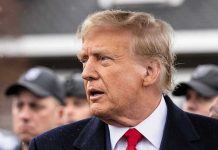
President Trump’s furious blast at the Supreme Court after losing his tariff case is forcing conservatives to confront a hard truth: the same constitutional limits we rely on to stop left-wing overreach also restrain a Republican president.
Quick Take
- The Supreme Court struck down most of Trump’s sweeping emergency-power tariffs as illegal in a 6-3 decision that included votes from two Trump appointees.
- Trump responded with unusually personal attacks, singling out Justices Neil Gorsuch and Amy Coney Barrett while praising dissenters.
- The dispute has widened into attacks on the broader court system, including criticism of D.C. Chief Judge James Boasberg.
- Judges have publicly raised concerns about threats and intimidation in the current political climate, sharpening the stakes of heated rhetoric.
Why the tariff ruling hit a constitutional nerve
The Supreme Court’s ruling against Trump’s emergency tariffs was not a minor procedural loss; it was a direct limit on presidential power. The six-justice majority—led by Chief Justice John Roberts—found most of the tariffs unlawful, rejecting the administration’s expansive use of emergency authorities. Two of Trump’s first-term appointees, Gorsuch and Barrett, were in that majority, underscoring a recurring theme: justices may share a general judicial philosophy yet still block a president when statutes and constitutional structure demand it.
For conservatives who want strong borders, lower inflation, and a government that stops micromanaging families, the legal question matters as much as the policy outcome. Emergency powers can be tempting when Washington is gridlocked, but those same shortcuts have been used for decades to grow the administrative state. If a president can unilaterally reshape trade policy at scale through emergency declarations, that precedent will not stay in Republican hands forever—and it can boomerang when the next progressive administration pushes climate, speech, or gun-related “emergencies.”
Trump’s response: personal attacks meet judicial independence
Trump reacted by publicly shaming the majority justices and directing special ire at Gorsuch and Barrett, arguing they lacked courage and framing their independence as disloyalty. Reports describe Trump calling the Court “inept” and “embarrassing,” and casting the institution as politically “weaponized.” He also praised the dissenters—Justices Alito, Thomas, and Kavanaugh—as having “wisdom and courage.” The moment stands out because it moved beyond criticizing an outcome into publicly targeting specific justices tied to his own legacy.
Some legal conservatives argue the line between criticizing a decision and attacking the integrity of judges is not just etiquette—it is a guardrail. Judicial independence is a core constitutional feature, not an obstacle to be “managed,” and conservative jurisprudence has long emphasized separation of powers. At the same time, the anger among many Trump voters is real: tariffs were sold as a tool to protect American workers and reduce strategic dependence, and the ruling landed amid broader frustrations about high costs and Washington’s inability to deliver stable economic relief.
Claims about “alternative tariff rights” and what’s verifiable
Several outlets reviewing Trump’s posts reported that he portrayed the decision as leaving him an “absolute right” to pursue tariffs through other means—claims critics said were not accurate as stated. The available reporting indicates the majority did not grant the broad fallback authority Trump suggested, even as the administration signaled it would explore other legal pathways. With the Court’s opinion limiting the emergency approach, the next move becomes less about rhetoric and more about whether Congress acts—or whether the White House can point to a clearly authorized statute.
Collateral damage: threats to judges and the wider court system
The controversy has not stayed confined to the Supreme Court. Trump’s posts and remarks also targeted the broader court system and singled out D.C. Chief Judge James Boasberg, escalating the conflict into an institutional fight. In the same period, judges publicly voiced concerns about threats and intimidation, including spillover from political cases into non-political ones. That context matters for conservatives who value order: strong arguments about law and legitimacy lose force when public pressure starts looking like coercion.
Trump Slams Supreme Court Justices He Appointed: ‘They Sicken Me’ https://t.co/kHYHjbyoXZ
— Mediaite (@Mediaite) March 26, 2026
For a Republican coalition already split by war fatigue and skepticism of “forever conflicts,” this episode adds another stress test: whether the movement can demand constitutional limits consistently, even when the limits frustrate a president they voted for. The Court’s independence is often the last firewall against aggressive bureaucracies and cultural mandates. If conservative voters want judges who apply law rather than politics, the standard has to hold when the results cut against Trump’s agenda—especially in a tense national moment when trust in institutions is already fraying.
Sources:
SCOTUStoday for Friday, March 20
Trump rails against Supreme Court after tariffs ruling, attacks judge Boasberg (TIME)
Trump rails against Supreme Court, court system and judge in social media posts (ABC News)
SCOTUStoday for Monday, March 2