
After years of grid fragility and green wishful thinking, the Trump White House is moving to lock down military power supplies with long-term coal contracts that critics say will reshape America’s energy future.
Quick Take
- President Trump signed a February 11, 2026 executive order directing the Department of War and Department of Energy to prioritize long-term power purchase agreements with coal plants for military bases and mission-critical federal facilities.
- The order is framed as a national security measure under an ongoing national energy emergency, emphasizing “on-demand baseload power” and fuel security.
- The Department of Energy announced $175 million to restart and upgrade six coal-plant projects, with early focus on states including West Virginia, Ohio, North Carolina, and Kentucky.
- Supporters argue coal strengthens readiness and grid resilience; opponents argue coal is highly polluting and point to reliability disputes during major winter storms.
What the Executive Order Directs the Military to Do
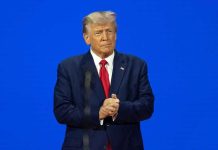
President Donald J. Trump signed an executive order on February 11, 2026 instructing the Department of War (the renamed Department of Defense) to work with the Department of Energy to secure electricity for military installations and other mission-critical federal facilities through long-term power purchase agreements that prioritize coal-fired generation. The administration’s stated rationale centers on uninterrupted, on-demand baseload power, resilience against grid disruptions, and the ability to rely on domestic fuel supplies during emergencies.
The order builds on a broader “energy emergency” posture the administration has used to justify rapid changes in federal energy policy and procurement. In practical terms, it points federal buying power—especially defense procurement—toward coal plants that can commit to multi-year supply, a major shift for an industry that has been losing market share. The White House messaging also leans heavily on rebranding, repeatedly calling it “beautiful clean coal,” language that is political rather than a settled technical standard.
$175 Million for Restarts and Upgrades—and a Target Map in Coal Country
Alongside the procurement directive, the Department of Energy announced $175 million in funding aimed at restarting and upgrading coal-fired plants, with projects tied to coal-heavy regions such as West Virginia, Ohio, North Carolina, and Kentucky. The White House fact sheet presents the funding as a way to preserve a dependable generation fleet while improving performance and extending plant life. Key details that would normally matter to taxpayers—specific awardees, project milestones, and measurable outcomes—were not fully spelled out in the summarized materials.
For communities that watched plants shutter during years of regulatory pressure and market shifts, the immediate impact is straightforward: potential jobs, plant operations, and local tax bases stabilized by long-term federal demand. For defense planners, the logic is also simple: bases cannot “pause” operations because wind output drops or a regional grid hits a crunch. The administration’s approach treats electricity like ammunition—something the country must stock, control, and guarantee, especially during crises.
Why the White House Is Tying Coal to National Security
The executive order’s core argument is that national defense depends on energy reliability and fuel security, not just price. The administration frames coal as a domestic resource that can support baseload generation and reduce exposure to supply chain disruptions. That thinking aligns with a broader conservative preference for hardening critical infrastructure rather than chasing trendy mandates, especially after recent years when Americans were told “the grid is fine” while families experienced outages, rising bills, and policy-driven uncertainty.
The order also lands in the middle of a larger policy reset: the administration is moving to unwind climate-era constraints and redirect federal priorities away from aggressive renewable and electric-vehicle push strategies. Supporters see that as correcting Biden-era overreach that often treated abundant U.S. energy as a political problem instead of a strategic asset. Critics counter that federal steering toward coal entrenches an older technology and increases pollution, a tradeoff they argue the country should not make.
The Reliability and Pollution Debate the Order Reignites
Coal’s decline over the past decade was driven by a mix of regulations, competition from natural gas, and rapid renewable buildout, with hundreds of coal plants retiring. Environmental reporting has emphasized that coal is among the highest-emitting fuels, associated with particulates, sulfur dioxide, mercury, and higher carbon dioxide emissions than natural gas. Those points are central to the pushback now: opponents argue that calling coal “clean” is marketing, and they question whether extending the life of aging plants is a sound long-term bet.
Reliability claims are also contested. The administration presents coal as a stabilizing backbone for the grid, but critics point to major winter storms where multiple fuel sources—including coal—struggled. The honest takeaway is that “reliability” is not a slogan; it is a measurable performance question that depends on winterization, maintenance, on-site fuel handling, transmission constraints, and regional planning. The order may force that argument into real-world contracts, where performance standards and penalties will matter more than rhetoric.
PRESIDENTIAL ACTION, EXECUTIVE ORDER
Strengthening United States National Defense With America’s Beautiful Clean Coal Power Generation FleetThe United States will prioritize the use of coal-based energy to ensure the resilience and reliability of the electric grid, which is…
— whitehouse.gov News (@whgovnews) February 12, 2026
For conservatives focused on limited government, the tension is familiar: federal intervention is never ideal, but defense is a constitutional responsibility, and ensuring military readiness is a legitimate federal function. The real test will be whether these coal-focused PPAs deliver measurable resilience at a reasonable cost—and whether the administration pairs procurement with transparent accountability. As the Department of War and DOE implement the directive, Americans should watch the contract terms, grid performance data, and project results, not just the political branding.
Sources:
Get your electricity from coal, Trump tells Department of Defense
Trump directs military to strike deals with coal-fired power plants, ‘buying coal’
President Trump celebrates his commitment to championing dirty coal power
Fact Sheet: Department of Energy Ending War on Beautiful Clean Coal