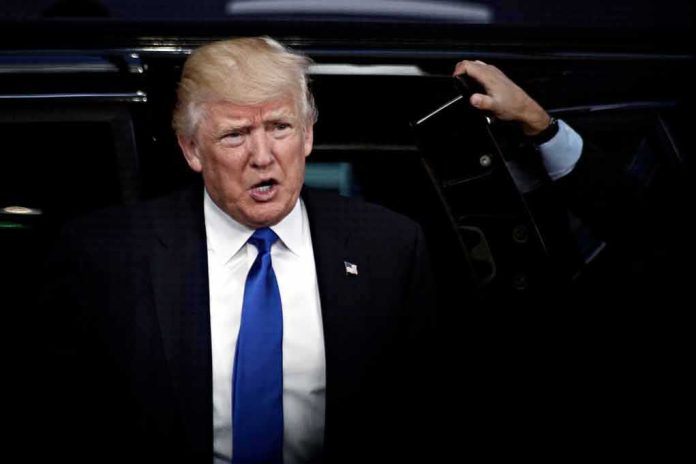
President Trump vowed on air to “absolutely prohibit” Sharia law nationwide, thrusting a culture-war promise into a live legal minefield that past courts have blocked.
Story Snapshot
- Trump said he would ban Sharia law and claimed “pockets” already exist in the United States.
- Past efforts to target Sharia in state courts were blocked as unconstitutional by federal judges.
- Studies show U.S. cases sometimes reference Islamic law in private disputes, not as a separate legal system.
- The fight reflects wider mistrust of government and courts on both left and right.
What Trump Promised And Why It Matters
President Trump told host Glenn Beck he would “absolutely prohibit” Sharia law in the United States. He said it is “happening in this country a little bit” and that there are “pockets of it.” His remarks signal a push to keep one legal system under the Constitution. The claim mirrors long-running worries about parallel rules and cultural carve-outs. The exchange renewed a debate that blends law, religion, and identity politics in a tense election cycle.
Trump’s pledge lands in a system where courts already reject any rule that violates the Constitution or state policy. Legal fights over Sharia in the past have centered on narrow civil issues. Examples include family law or contracts that mention foreign or religious standards. These cases do not create a second legal system. Judges still apply American law and public policy tests. Supporters of a ban see a needed line. Critics call it a false fix to a limited problem.
What Courts Have Already Said
When Oklahoma voters approved a ban that singled out Sharia, federal courts stepped in. The United States Court of Appeals for the Tenth Circuit upheld an injunction blocking the measure. Judges found the state did not show an actual problem and that the law likely violated the First Amendment by targeting Islam. That decision signals a key legal limit for any national move that names one faith for special disfavor.
Civil liberties groups also argued that such bans chill religious practice. They warned that broad rules against “considering” Islamic and international law could disrupt routine legal work. Courts often weigh foreign law in contracts, estates, or divorces that cross borders. American judges can and do reject terms that break public policy. But they also honor valid agreements and comity when it fits our law. That is how the system balances fairness and sovereignty.
The Real Scope Inside U.S. Courts
Research from advocacy groups and legal scholars shows references to Islamic law have appeared in court records. Most involve private disputes, like marriage, custody, inheritance, or business deals with foreign ties. In these cases, courts may look at foreign or religious terms, then accept or reject them under American standards. That is a conflict-of-law process, not parallel rule by clerics. Claims of a shadow system running towns or states are not what these dockets show.
This narrow legal reality still collides with public fear. Many citizens believe elites bend rules for special groups while regular people face strict enforcement. Others fear that targeting one religion lets government pick winners and losers. Both concerns tie back to trust. People across parties see officials posture for votes while big problems linger. Any national Sharia ban would face the same test: does it solve a real harm without breaking the Constitution or equal treatment?
Sources:
fedsoc-cms-public.s3.amazonaws.com, yahoo.com, amarujala.com, everycrsreport.com