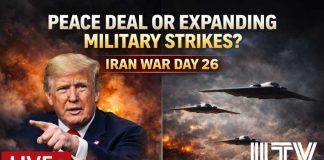

Iran’s missile-and-drone strike on a major U.S. air hub in Saudi Arabia is the kind of “limited war” escalation that quietly drags America deeper—while families at home pay the price in blood, higher energy costs, and broken promises.
Quick Take
- Iran hit Prince Sultan Air Base in Saudi Arabia on March 27, 2026, wounding roughly 10–12 U.S. service members, with at least two reported seriously injured.
- Reports said multiple drones followed a missile attack, and several refueling/AWACS-type aircraft were damaged, raising questions about base defense and sustainment.
- The strike came hours after Israeli attacks on Iranian nuclear sites, underscoring how allied actions and U.S. basing are now tightly linked in the conflict’s escalation ladder.
- CENTCOM had not publicly confirmed details as of March 28, leaving Americans reliant on anonymous official briefings and foreign claims.
Prince Sultan Air Base Strike Injures U.S. Troops and Damages Aircraft
U.S. officials told multiple outlets that Iran launched a missile attack followed by drones on Prince Sultan Air Base in Saudi Arabia on March 27, injuring American personnel and damaging aircraft used to sustain operations. Early reporting placed the number of wounded around 10, while later reports cited 12, with at least two described as seriously injured. The incident marks another direct hit on U.S. forces during the ongoing U.S.-Iran war.
Military-focused reporting described damage to refueling aircraft, and other accounts referenced airborne surveillance assets, a reminder that modern air campaigns depend on vulnerable “enablers” parked on predictable ramps. When tankers or command-and-control platforms take hits, the impact is bigger than the visible blast damage; it can slow sortie generation and complicate regional coverage. As of March 28, public confirmation from CENTCOM was still absent, keeping key details in the fog of war.
Why the Attack Matters: A Logistics Hub Under Pressure
Prince Sultan is not just another outpost; it has functioned as a critical hub for U.S. air operations connected to the conflict, and reports have tied it to Operation Epic Fury. Recent coverage has also described cumulative U.S. casualties across the campaign—hundreds wounded and more than a dozen deaths—making each new strike more politically combustible at home. The base was previously hit earlier in March, when reporting said a U.S. soldier was killed.
The March 27 strike also highlighted a familiar pattern: drones and missiles used together to stress defenses and exploit any gaps. Iranian state-linked messaging claimed success in breaching defenses and hitting refueling-related operations, but independent verification is limited and U.S. official statements have been constrained. Even if U.S. and allied strikes have degraded portions of Iran’s production and launch capacity, this attack showed Tehran still retains the ability to reach U.S. assets across the region.
Escalation Timing: Israeli Nuclear-Site Strikes and Iranian Retaliation
Multiple reports placed the Saudi base strike just hours after Israeli attacks on Iranian nuclear facilities, a sequence that matters because it shapes how Tehran chooses targets and timing. If Iran’s leadership views U.S. basing and U.S. logistics as integral to Israel’s campaign tempo, American facilities become pressure points regardless of Washington’s messaging. That is the strategic trap voters have seen before: “support” roles quickly become front-line exposure.
President Trump has publicly praised strikes and has expressed interest in broader regional diplomacy, including Saudi-Israel normalization efforts. At the same time, administration messaging—such as Secretary of State Marco Rubio emphasizing achieving goals without ground troops—signals a preference for an air-led approach. For many conservative voters, the immediate question is not about valor or capability; it is whether mission creep is being managed, and whether a promised avoidance of new wars is still realistic amid daily escalation.
What’s Confirmed, What Isn’t, and Why It Fuels Domestic Skepticism
Confirmed elements across outlets include the date, the target base, the combined missile-and-drone nature of the attack, U.S. casualties, and aircraft damage. Uncertainty remains on the exact number of wounded (often reported as 10–12) and the full extent of aircraft losses, and public U.S. military confirmation has lagged. Those gaps matter because they create space for propaganda, rumors, and selective leaks—exactly the information environment that erodes trust during foreign conflicts.
For a conservative audience already soured on decades of open-ended interventions, the political stress point is simple: the Constitution makes Congress responsible for war powers, while the public often learns major escalation details through anonymous briefings after the fact. Americans can support the troops while still demanding clarity on objectives, limits, and cost—especially when energy markets and household budgets remain sensitive and when foreign policy choices ripple directly into prices at home.
Limited public data is also available on defensive system performance at the base, the number of inbound threats, and whether warnings were received in time to disperse aircraft. Until official briefings provide specifics, citizens are left with a broad outline: Iran can still strike U.S. hubs, critical aircraft are vulnerable, and the conflict’s escalation ladder is influenced by actions across the U.S.-Israel partnership. That combination explains why parts of the MAGA coalition are newly split on how far America should go.
Sources:
https://www.airandspaceforces.com/us-forces-saudi-arabia-iran-attack/
https://en.wikipedia.org/wiki/2026_United_States_military_buildup_in_the_Middle_East