The hung jury in Harvey Weinstein’s New York rape retrial did not clear him, but it did expose something far more uncomfortable: how Americans now struggle to decide what “reasonable doubt” means when sex, power, and memory collide.
Story Snapshot
- Jurors deadlocked again on whether Weinstein raped Jessica Mann in a Manhattan hotel room in 2013, forcing a mistrial.[1][2]
- This was Manhattan’s third attempt to secure a verdict on that allegation after an earlier conviction was overturned.
- Jurors reportedly battled over the consistency of Mann’s testimony and the defense claim of an “on and off” consensual relationship.[1][2]
- Prosecutors now must decide whether a fourth trial serves justice or just feeds mistrust in the system.[1]
A Third Manhattan Trial That Answered Nothing
Harvey Weinstein rolled into a Manhattan courtroom in a wheelchair this spring to face, yet again, a single charge: third-degree rape of Jessica Mann, an aspiring actress who says he assaulted her in a New York hotel room in 2013.[1] Jurors heard her testify for the third time across Manhattan proceedings, reliving the same night, the same room, the same accusation. They then did what two earlier panels had already done in various forms: they fractured, fought, and finally stalled.[1]
The judge received the inevitable note: the jury could not reach a unanimous verdict and saw no path forward.[1][2] That message triggered the legal ritual everyone now recognizes from television dramas but rarely thinks about in real life—a formal mistrial, not a conviction, not an acquittal, but a declaration of unresolved doubt. Weinstein left court without a new guilty verdict on the Mann count, but also without any legal finding that she lied. The truth remains officially undecided.[1]
Why Jurors Could Not Agree On One Night In 2013
Jurors reportedly fixated on one core question: did Jessica Mann’s story hold together across years of investigations, media storms, and repeated trials, or did it shift enough to undermine certainty?[1][2] Prosecutors presented a specific narrative—a rape in a Manhattan hotel room, in a defined year, by a man whose power in Hollywood needed no introduction.[2] Defense lawyers attacked not just that night but the entire relationship, calling it “on and off” and consensual, suggesting Mann reinterpreted it years later.[1][2]
That clash put jurors in the most difficult category of criminal case: largely testimonial sexual assault, with prior contact, delayed reporting, and no dramatic forensic revelation. Some jurors apparently saw Mann’s repeated willingness to testify as a mark of credibility and courage. Others reportedly took the very same facts—continued contact with Weinstein, emotional complexity, evolving descriptions—as reasons to hesitate.[1][2] Both readings can exist inside one jury room; the law, however, demands that twelve people converge on one of them.
The Shadow Of Overturned Convictions And Long Sentences
This retrial did not happen in a vacuum; it unfolded under the shadow of a New York conviction already overturned on appeal and additional sex-crimes convictions in California that keep Weinstein behind bars for years regardless of Manhattan’s outcome.[2] Prosecutors once persuaded a New York jury to convict on charges involving Mann, only to see that verdict erased for legal errors, not because an appellate court declared him innocent. The system effectively told them: start over, but this time follow every rule perfectly.
The judge in the rape retrial of Harvey Weinstein declared a mistrial after the jury could not reach a unanimous verdict in the closely watched #MeToo-era case that another jury failed to decide last year. https://t.co/UL7fSCBDmx
— NBC Bay Area (@nbcbayarea) May 15, 2026
That history shaped everything. Jurors knew they were not judging an anonymous man; they were judging Harvey Weinstein, national symbol of the #MeToo reckoning, already imprisoned for other sex crimes.[1] Conservative instincts about due process usually recoil at that kind of baggage, because it tempts jurors to punish a pattern instead of evaluating a single charge. Yet the mistrial suggests the opposite risk also loomed large: some jurors may have overcorrected, refusing to convict unless the evidence was spotless, tidy, and perfectly remembered years later.
What This Says About Justice, Not Just Harvey Weinstein
Designing criminal justice around viral movements always courts trouble. A legal system that bends to social-media outrage abandons due process; one that shrugs at credible accusations from less powerful people invites cynicism and despair. This hung jury lives precisely at that fault line. The state had enough evidence to survive motions, put witnesses on the stand, and reach deliberations. The defense had enough doubt to convince at least one juror to block a unanimous guilty vote.[1][2]
American conservatives traditionally insist on two values at once: moral seriousness about sexual assault and a hard line on presumption of innocence. Those values collide in a case like this. Respecting the verdict—or the lack of one—means admitting the evidence did not persuade twelve citizens beyond a reasonable doubt. Respecting victims means acknowledging that a mistrial does not magically convert a sworn accusation into a lie. The criminal standard deliberately sacrifices some punishment in exchange for protecting against wrongful convictions.
Should Prosecutors Try Again, Or Let The Record Stand?
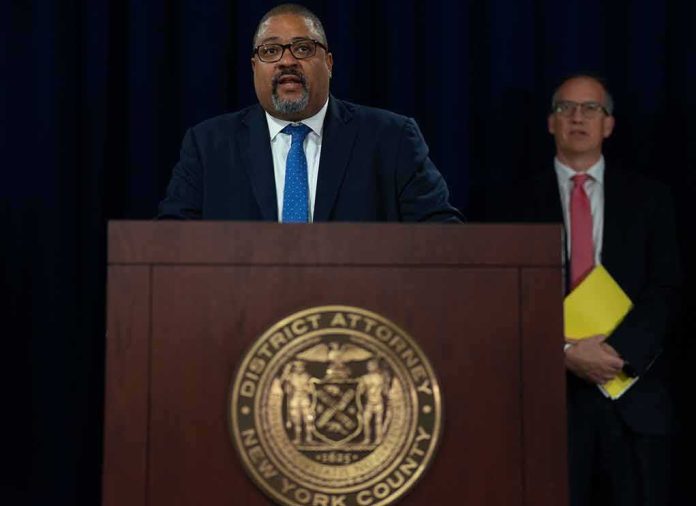
Manhattan District Attorney Alvin Bragg publicly thanked Jessica Mann and said his office would consult with her about “next steps,” which include the possibility—however remote—of a fourth trial.[1] Skeptics already argue that continuing would be prosecutorial stubbornness, especially since Weinstein will likely die in prison based on other sentences alone.[2] Supporters counter that the legal outcome on this specific allegation matters, regardless of what happens in California or any other jurisdiction.
A conservative, common-sense view asks two blunt questions. First, does the evidence in its current form have any realistic chance of moving the kinds of jurors who just dug in their heels? Second, does putting Mann through another grueling, public, adversarial testimony marathon advance justice more than it deepens public fatigue and suspicion? When a case reaches multiple mistrials, the law allows prosecutors to stop, not because the accusation is false, but because the burden of proof has proven unmeetable.
Sources:
[1] YouTube – Judge declares mistrial in Harvey Weinstein’s rape retrial after jury …
[2] YouTube – Judge declares a mistrial on one count in Harvey Weinstein retrial