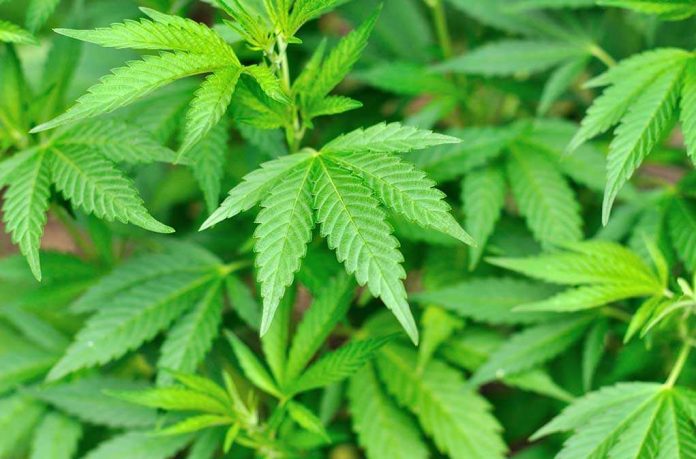
A new wave of dispensaries in New York threatens to overshadow the reality of a flourishing illicit market, challenging the state’s regulatory framework.
Story Highlights
- New York’s legal cannabis sales hit $2.5 billion in 2025, with dispensaries doubling to 556.
- Despite legal growth, illicit cannabis shops continue to thrive, posing a regulatory challenge.
- Equity-focused licensing sees success, with 55% of licenses going to Social and Economic Equity businesses.
- Tax revenue from cannabis falls short of expectations, representing only 0.21% of state revenues.
Cannabis Sales Surge and Regulatory Challenges
New York’s cannabis market is flourishing with over $2.5 billion in sales and 556 licensed dispensaries as of late 2025. This growth suggests a strong demand for legal cannabis. However, the state’s efforts to regulate the market face significant challenges from a persistent illicit sector. Despite the legal market’s expansion, unlicensed shops continue to operate, undermining regulatory efforts and highlighting the complexity of market oversight.
The regulatory framework, while successful in promoting equity, struggles to keep pace with the illicit market. An estimated 2,500 to 8,000 illegal operations in New York City alone pose a threat to legal businesses. These unlicensed shops benefit from lower prices and fewer regulatory constraints, attracting price-sensitive consumers away from the legal market.
Equity and Community Reinvestment
New York’s cannabis market prioritizes equity, with 55% of licenses granted to Social and Economic Equity businesses. This initiative aims to rectify past injustices of cannabis prohibition by supporting minority and women-owned businesses. Additionally, $5 million has been distributed to community organizations, furthering social equity goals. However, sustaining these initiatives as the market matures will require ongoing support and adaptation to competitive pressures.
Despite these successes, the market’s high average pricing of $31.67 per item could hinder broader consumer adoption. These prices are among the highest nationally, reflecting regulatory costs and market immaturity. As the market stabilizes, adjustments in pricing or tax structures may be necessary to enhance accessibility and compete with illicit alternatives.
Economic and Policy Implications
The economic impact of New York’s cannabis market is significant, creating jobs and generating consumer spending. However, the projected tax revenue of $248 million for FY 2025 falls short of initial expectations, comprising a mere 0.21% of the state’s budget. This shortfall highlights the need for policy adjustments to optimize revenue generation and ensure the market’s sustainability.
New York’s legal pot shops more than doubled in 2025 — as sales surpassed $2.5B https://t.co/ZeZmOAlDf8 via @nypost
— Chris 🇺🇸 (@Chris_1791) January 1, 2026
Going forward, the market’s success will depend on its ability to address regulatory challenges and sustain equity-focused initiatives. Balancing growth with effective oversight will be crucial in establishing a robust, competitive, and equitable cannabis marketplace in New York.
Sources:
New York Legal Cannabis Sales Top $2.5 Billion as Retail Access Nearly Doubles in 2025
Legal Cannabis in New York Sees Record Growth in Sales