
The TSA’s invasive pat-downs spark renewed debate over constitutional rights and government overreach.
Story Highlights
- Evita Duffy-Alfonso criticizes TSA pat-down as unconstitutional.
- The incident has ignited calls for TSA’s abolition or reform.
- Concerns raised over TSA’s impact on pregnant travelers’ health.
- The situation underscores broader issues of federal overreach.
Evita Duffy-Alfonso’s TSA Encounter Spurs Controversy
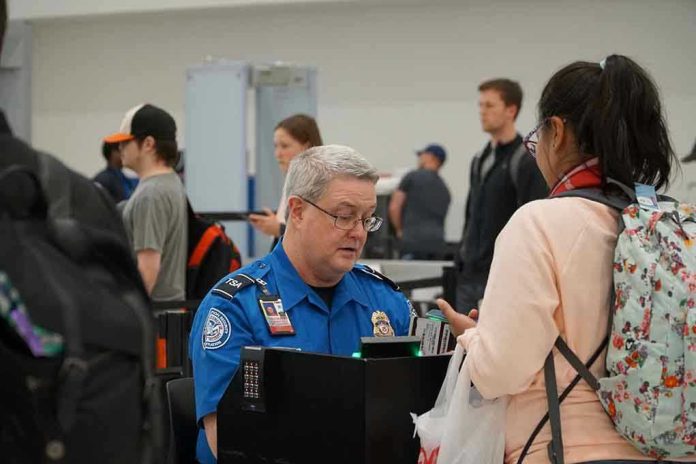
On December 18, 2025, Evita Duffy-Alfonso, pregnant daughter of U.S. Transportation Secretary Sean Duffy, faced a controversial incident at an airport TSA checkpoint. Opting out of body scanners due to radiation concerns, she was subjected to what she described as an “absurdly invasive” pat-down. Her subsequent social media posts labeled the TSA as ineffective and unconstitutional, sparking debate over privacy rights and security protocols.
The TSA’s response, acknowledging the complaint and promising an investigation, has done little to quell public outrage. Duffy-Alfonso’s call for the agency’s abolition or radical reform echoes a growing sentiment among conservatives who view the TSA as a symbol of federal overreach and inefficiency.
TSA Procedures Under Scrutiny
Established post-9/11, the TSA has long been criticized for its invasive security measures, including body scanners and pat-downs. These procedures, while intended to ensure safety, have frequently been accused of violating personal privacy. Pregnant travelers, like Duffy-Alfonso, face unique challenges, as they must navigate health concerns associated with radiation from security scanners.
The incident has reignited discussions around the Fourth Amendment and the balance between security and privacy. Critics argue that the TSA’s practices constitute warrantless searches, infringing on constitutional rights. This case has further highlighted the need for a reevaluation of TSA’s role and methods in securing airports.
Implications for Future Policy
The backlash against the TSA could drive legislative action, especially under President Trump’s administration, which has been vocal about reducing government overreach. There’s potential for policy shifts towards privatized security solutions or advanced technological alternatives, like biometric screenings, that respect individual privacy while maintaining safety.
Duffy-Alfonso’s personal experience, amplified by her connection to a prominent political figure, underscores the necessity for reform. As public discourse continues, the question remains: how can we ensure both security and constitutional rights in our nation’s airports?
The ongoing investigation into Duffy-Alfonso’s complaint might influence future TSA policies. However, the broader implications for air travel and security protocols will depend on how effectively these concerns are addressed by both the agency and lawmakers.
Sources:
Transportation Secretary Sean Duffy’s daughter calls TSA ‘unconstitutional’ after pat-down
Transportation Secretary’s daughter calls to abolish TSA after 15-minute security delay