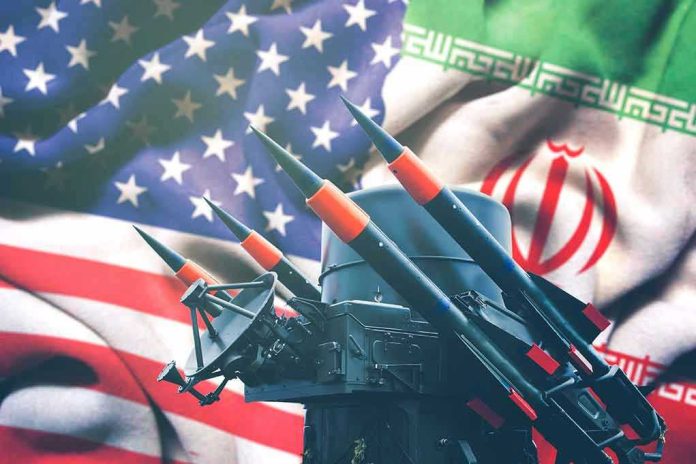
Iranian officials are threatening retaliation against Middle East water infrastructure after U.S. and allied forces allegedly struck desalination plants, setting a dangerous precedent that could weaponize the region’s most critical civilian resource.
Story Snapshot
- Iran accuses U.S. forces of destroying a desalination plant on Qeshm Island, disrupting water supply to 30 villages and warning of reciprocal attacks
- Bahrain reports Iranian strikes damaged its own desalination facilities, with Gulf states relying on these plants for 50-90% of their water supply
- Iranian President Masoud Pezeshkian vows stronger military responses against U.S. targets as water infrastructure becomes a new conflict frontline
- Experts warn targeting desalination plants threatens millions across the Gulf region already facing severe drought and water scarcity
Water Infrastructure Becomes War Target
Iranian Foreign Minister Abbas Araghchi publicly cited alleged U.S. airstrikes on Iran’s Qeshm Island desalination facility in early March 2026 as establishing a “precedent” for attacks on water infrastructure. The strike reportedly cut water access to 30 villages, prompting warnings of consequences from Iranian leadership. While U.S. officials deny involvement in the Qeshm incident, Bahrain simultaneously accused Iran of damaging one of its desalination plants through missile or drone attacks. This mutual targeting of civilian water facilities marks a troubling escalation in the conflict that began February 28, 2026.
Critical Infrastructure Under Threat
Gulf states depend heavily on desalination plants for survival in the arid region, with some nations relying on these facilities for up to 90% of their water supply. These dual-purpose plants often combine water production with power generation, making them attractive military targets that can cripple both utilities simultaneously. The timing compounds the danger—summer demand peaks approach while sanctions limit Iran’s ability to repair or expand facilities. Water expert Mohammed Mahmoud from UNU warns that disruptions to such vital infrastructure create “dangerous” humanitarian risks for millions of civilians, echoing tactics previously employed by ISIS when weaponizing dams in Iraq and Syria.
Iran’s Pre-Existing Water Crisis Deepens
The current conflict exacerbates Iran’s severe water crisis that predates the war. Five years of drought combined with unsustainable groundwater extraction through diesel-powered deep wells has pushed Iran toward “water bankruptcy.” Tehran’s water supply nearly depleted in 2025, triggering farmer protests across the country. Iran abandoned traditional qanat water systems in favor of over-pumping groundwater, causing irreversible land subsidence and saltwater intrusion. WRI water expert Liz Saccoccia notes the war amplifies existing water-food-energy-health crises caused by decades of mismanagement. This underlying vulnerability makes water infrastructure attacks particularly devastating for Iranian civilians already struggling with scarcity.
Regional Stability Hangs in Balance
President Pezeshkian warned Gulf neighbors including Bahrain, Kuwait, and UAE against joining U.S. and Israeli operations, even as over 100 Iranian missiles and drones targeted the region in early March. The Iranian leader rejected what he termed “bullying” while facing internal pressure from hard-liners demanding stronger responses. WHO Director Tedros Adhanom Ghebreyesus issued warnings about long-term health risks from pollution caused by oil depot fires, including cancer and birth defects affecting vulnerable populations. The Iranian Red Crescent reports 10,000 damaged civilian structures alongside air pollution alerts as toxic smoke blocks sunlight over Tehran.
Escalation Threatens American Interests
Atlantic Council analysis warns that systematic targeting of desalination plants could destabilize the entire Gulf region, where U.S. forces maintain significant presence including the Fifth Fleet in Bahrain. Disruptions to the Strait of Hormuz risk spiking global energy prices, affecting American consumers still recovering from Biden-era inflation. The precedent of attacking civilian water infrastructure undermines rules of engagement and international norms protecting non-combatants. Trump administration officials face pressure to prevent further escalation while protecting allies and American strategic interests. The conflict demonstrates how leftist foreign policy failures created power vacuums that embolden adversaries to target innocent civilians through essential services.
Sources:
Iran War Water Crisis Middle East – World Resources Institute
Mideast Water Supply Bahrain Iran Desalination Plants Attacks – Fortune
Attacks on Desalination Plants in the Iran War Forecast a Dark Future – Atlantic Council
Water Under Fire: Iran War Underscores Growing Threats to Vital Infrastructure – Anadolu Agency
War in Iran Poses Threat to Critical Water Desalination Plants – Marketplace