
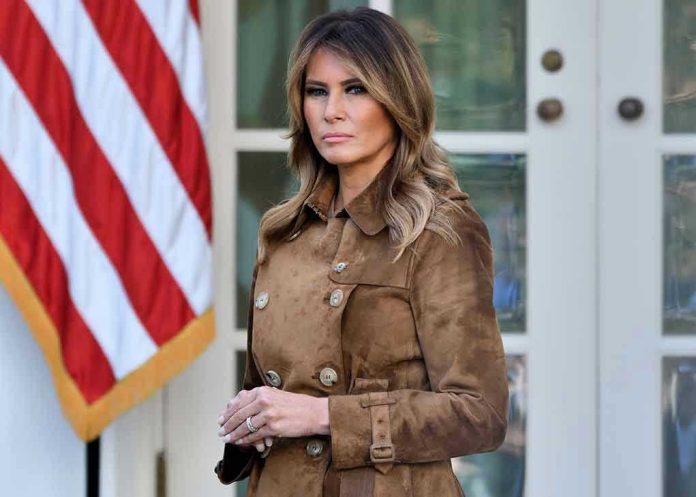
Melania Trump’s “Enough is enough” warning is forcing a national question: when violent imagery enters political comedy, who bears responsibility when the real world turns dangerous?
Story Snapshot
- Melania Trump criticized ABC and Jimmy Kimmel after a parody White House Correspondents’ Dinner joke describing her as having “a glow like an expectant widow.”
- The controversy intensified because a shooting occurred days later at the actual WHCD event attended by President Trump and the First Lady, raising alarms about political rhetoric and security.
- FCC Chairman Brendan Carr said publicly that ABC/Disney could take action on Kimmel and suggested the government may do “additional work” if the company does not respond.
- No response from ABC was reported in the available research, leaving uncertainty about whether the network will address the complaint or face regulatory pressure.
Melania Trump’s public rebuke puts ABC’s standards under a spotlight
Melania Trump used X to condemn Jimmy Kimmel’s “expectant widow” line from an “alternative” WHCD parody event and urged ABC to “take a stand.” The core complaint was not just insult comedy, but the insinuation of widowhood during a period when threats against President Trump have been a recurring public concern. The message framed the remark as “hateful and violent rhetoric,” pressing the network to draw clearer limits around political humor.
President Trump’s supporters see the episode as another example of elite media treating politics like blood sport, then demanding immunity when the backlash arrives. Critics of Kimmel argue that repeated personal attacks on public figures—especially involving death—normalize contempt and degrade civic culture. At the same time, the research does not establish a direct causal link between the joke and any specific act of violence; it shows proximity in timing and a heightened climate where security risks already exist.
Timeline matters: a joke, then a real WHCD shooting days later
Reporting described a tight sequence of events: the parody roast took place on April 23, 2026, and the real White House Correspondents’ Dinner followed shortly after, with a shooting reported on April 25 in Washington, D.C., while the Trumps were in attendance. Melania Trump’s response came on April 27. That timeline is why the controversy escalated from tasteless humor into a broader debate about whether cultural institutions are fueling instability.
Because the WHCD is a symbolic gathering where journalism, celebrity, and politics mix, any security incident carries outsized consequences. When a high-profile event tied to national leadership experiences violence, Americans across the spectrum often reassess what has become “normal” in political speech. Conservatives, in particular, tend to read the episode as proof that some corners of entertainment media profit from demonization, then shift blame to everyone else when the temperature rises.
The FCC angle raises high-stakes questions about speech and corporate accountability
The story took a sharper turn when FCC Chairman Brendan Carr, speaking on a prominent conservative podcast, described the conduct as among “the sickest” and indicated ABC/Disney could take action against Kimmel. The research also suggests Carr may pursue “additional work” if the company does not respond. That combination—cultural outrage plus regulatory leverage—creates a pressure campaign that could affect not only one host, but standards across broadcast media.
For many Americans wary of “deep state” behavior, the regulatory dimension cuts both ways. Conservatives may welcome accountability for rhetoric they view as reckless, while also worrying that a precedent of aggressive oversight could later be turned against conservative outlets and comedians. The most defensible takeaway from the available sources is narrow but important: a federal regulator is signaling scrutiny of a major broadcaster in response to a high-profile political controversy, and the network’s next move will shape perceptions of fairness.
What this fight reveals about trust, elites, and a country tired of performative politics
The reaction to this incident reflects a wider frustration that powerful institutions rarely police their own until public pressure becomes unavoidable. Conservative outlets have amplified the story as proof that mainstream entertainment routinely targets the Trumps with a level of personal malice that would be unacceptable if aimed at other families. Liberal-leaning audiences, meanwhile, often view attempts to discipline late-night comedy as a creeping threat to free expression—even when the humor is harsh.
What remains unclear, based on the research provided, is whether ABC will issue any formal response, change programming decisions, or face official FCC action. What is clear is why the story resonates: it sits at the intersection of political violence concerns, cultural contempt, and institutional power. In a country where many believe government and media elites protect their own, the controversy is less about one joke and more about whether anyone in authority can still draw lines that the public trusts.
Sources:
Jimmy Kimmel called out critics who say Trump, Melania digs at Oscars fell flat
Related coverage on the WHCD shooting and aftermath