Canada has poured billions into its military, yet leaked reports say almost half its gear cannot be used if NATO calls tomorrow.
Story Snapshot
- Only about 58 percent of Canadian forces are ready to respond to a NATO crisis, with nearly half of key equipment listed as unusable.
- Internal reports show all three branches of Canada’s military sitting around 45–49 percent readiness, far below a 90 percent goal.
- Canada has boosted defense spending and announced new ships and jets, but personnel shortages and maintenance problems still block real readiness gains.
- Experts warn this is part of a decades-long pattern: Ottawa opens the money taps, but broken systems keep the force hollow.
Leaked numbers show a hollow force behind rising defense budgets
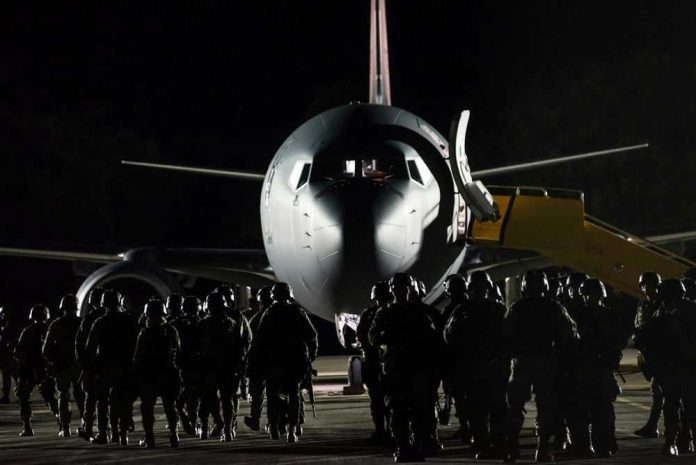
Internal documents obtained by Canadian reporters paint a stark picture of Canada’s military readiness today. One Department of National Defence presentation says only 58 percent of “force elements” Canada promised to NATO could actually deploy if a major crisis broke out. It adds that nearly half the equipment earmarked to defend Europe is “unavailable and unserviceable,” meaning it cannot be sent into action without major repairs. For citizens who assume higher budgets mean stronger forces, these numbers feel like a warning.
Breakdowns are spread across all parts of the Canadian Armed Forces, not just one aging fleet. The leaked briefing says 55 percent of fighters, maritime patrol aircraft, search and rescue planes, tactical aviation, training jets, and transports are unserviceable. Navy ships are in similar shape, with 54 percent of frigates, submarines, Arctic patrol ships, and other vessels unable to deploy. Even the army fares only slightly better, with 46 percent of its equipment listed as unserviceable. The result is a force that looks large on paper but struggles to move in practice.
Personnel shortages and historic low readiness rates
Canada’s problem is not only broken hardware; it is also missing people to fix and operate it. The same internal report says the military ended 2023 short 15,780 members across its regular and reserve ranks. A separate official readiness update confirms that actual strength sits about 15,000 below the authorized level of 71,500 regular and 30,000 reserve troops. As of July 31, 2024, only 52,539 regular members were fully trained and deployment-ready. Shortages of technicians and support staff make it even harder to keep complex systems working.
Another internal report, highlighted in a public video briefing, shows readiness scores at “historic lows” across the three services. The Royal Canadian Navy sits at about 45.7 percent readiness, the Royal Canadian Air Force at 48.9 percent, and the army at 49 percent. Just a year earlier, leaders were hoping to hit 90 percent readiness by March 2025. That goal has now slipped far into the future. Senior officials in that same briefing say the earliest realistic date to restore full operational readiness is 2032, at least seven years away.
Money flowing in, but maintenance and management lag behind
On the surface, Ottawa looks like it is finally taking defense seriously. Analysts note that Canadian defense spending has risen sharply since 2017, with plans for new submarines, fighter jets, and major upgrades to northern bases and Arctic defenses. A recent defense policy update sets aside billions to keep existing warships sailing and sustain key equipment fleets. The government’s public messaging focuses on “rebuilding, rearming, and reinvesting” in the Canadian Armed Forces and meeting NATO spending goals. This echoes debates in the United States, where many citizens feel elites chase big-ticket deals while basic readiness rots.
Yet the same policy documents quietly admit that readiness “has continued to decline,” even as budgets grow. The Departmental Plan reports that in 2022–23 only 61 percent of force elements met readiness targets, down 10 percentage points from the year before. Detailed figures show just 51.2 percent of maritime fleets, 56 percent of land fleets, and 43.9 percent of aerospace fleets were serviceable enough for training and operations. Outside experts argue this shows a deeper management problem: Canada keeps buying new platforms but underfunds spare parts, maintenance, and the people needed to keep them in the field.
Cyclical crisis, rising threats, and shared public frustration
Policy analysts say this is not a one-off failure; it matches a pattern that goes back decades. Earlier readiness crises in the 2000s and 2010s also saw internal reports warning of poor equipment serviceability and weak personnel levels, followed by waves of new spending that did not fully fix the problem. One think tank piece describes the Canadian Armed Forces as “under-prioritized” or “systematically neglected,” leading to steady decline in readiness, training, and sustainment. In plain terms, money went into the system, but the system itself stayed broken.
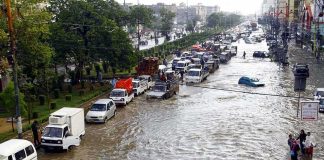
At the same time, demands on the military keep rising. Canadian troops are being pulled more often into domestic disaster response, from floods to wildfires, which consumes time, gear, and funding that could support training for war. Internationally, NATO expects Canada to keep thousands of troops at high readiness, even as key fleets remain unavailable and personnel are short. For many on both the left and right who already mistrust political elites, this story reinforces a familiar fear: governments can hit budget targets and sign big contracts, yet still fail to deliver a force that is truly ready when it counts.
Sources:
19fortyfive.com, telfer.uottawa.ca, warontherocks.com, cbc.ca, macdonaldlaurier.ca, youtube.com