
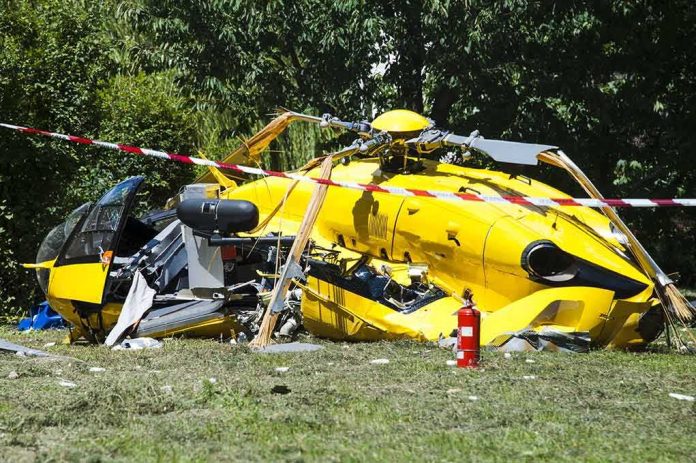
A sightseeing gyroplane in China lost control and crashed into two tourists during a low flight, yet both survived with non-life-threatening injuries.
Story Snapshot
- Local officials confirmed a gyroplane crashed at a Qinghai scenic site, injuring two people on the ground.
- Videos show a yellow aircraft spinning and dropping during a low-altitude demonstration flight.
- The site has been closed and the aircraft was sealed as investigators review the cause.
- The first reports point to loss of control, with the exact trigger still under investigation.
Crash Facts From Officials and On-Scene Footage
Ulan County officials in China said a gyroplane fell at the Chaka Sky No. 1 Scenic Area on July 21 at 12:08 local time, injuring two people on the ground and prompting a shutdown of the site while the aircraft was sealed for investigation. Media outlets shared video clips of a yellow aircraft flying low, spinning, and dropping near the lake, with witnesses saying it was part of a demonstration or sightseeing flight. Both injured tourists were taken to a hospital and were reported stable.
Foreign and regional outlets described the aircraft as a small rotorcraft used for short scenic rides, flying alongside other similar craft before it lost control. Several reports said the pilots walked away and helped at the scene, which suggests the aircraft’s impact energy was low enough to preserve the cabin space. Early headlines called it a helicopter, but the local notice identified it as a gyroplane, which has a free-spinning main rotor and a powered propeller. Specific cause details were not released.
What Investigators Are Likely Probing Now
Investigators typically start with pilot statements, maintenance logs, and weather data. They also review flight paths, video angles, and witness descriptions. When aircraft operate close to the ground, small changes in wind or wake from other aircraft can upset control. Reports noted this flight occurred at low altitude, where pilots have less room to recover from a spin or power loss. Officials said the aircraft is sealed and the site closed, which points to a structured evidence process.
Authorities often warn that early explanations are provisional. In past tourism crashes, first-day reports blamed weather, turbulence, pilot error, or mechanical failure, and those claims sometimes changed after deeper reviews. The pattern repeats because early video rarely shows cockpit indicators or control inputs. That is why the official notice stopped short of naming a cause and said the probe continues. This case fits that norm: clear loss of control, unclear trigger, evidence under seal, and a closed venue.
Why This Incident Drew Swift Global Attention
Sightseeing flights are rare compared with everyday travel, but they draw attention because they occur in scenic places and are often filmed. The dramatic spin and the impact near visitors made this case stand out online. Past high-profile tourist flights have shown how fast early narratives harden, even as facts are still forming. In those events, final answers often came weeks later after formal reports were issued, not from the first viral clip.
Global outlets also highlighted that both ground victims survived. That shaped the coverage tone, balancing shock with relief. Local reports said the two tourists had head injuries and needed hospital care but were not in critical danger. The pilots were reported unhurt and visible near the scene. That survival pattern fits many low-energy impacts during approach or demonstration flights, when speed may be lower than in cruise.
Safety Lessons for Scenic Flight Operators and Visitors
Operators who fly near crowds must plan escape routes and no-go zones. Low passes can please a crowd but reduce margins if the wind shifts or another aircraft’s wake lingers. Simple steps help: wider spacing between aircraft, higher minimum altitudes near people, clear ground perimeters, and rapid abort rules. Visitors can help by respecting barriers and staying alert to staff guidance, especially when multiple aircraft are in the air at once.
Regulators and park managers face a familiar trade-off. Tourism boosts local jobs, but safety lapses can cause injuries and erode trust fast. Swift site closures, sealed evidence, and public updates can rebuild confidence. Clear public language also matters. Calling the aircraft a gyroplane, not a helicopter, helps set correct expectations about how it flies and what can go wrong. That clarity supports better training and smarter rules as the investigation moves ahead.
Sources:
thegatewaypundit.com, aztecabajio.com, news.nextapple.com