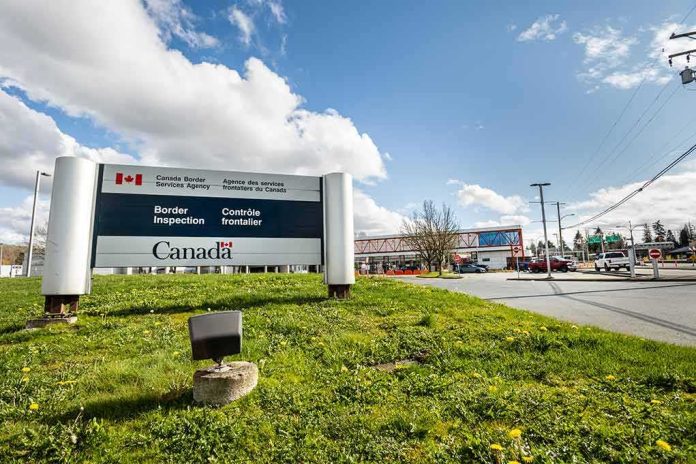
Faced with tighter U.S. immigration enforcement and long visa backlogs, more migrants already in America are heading to Canada to seek asylum or a fresh start.
Story Highlights
- Migrants cite U.S. deportation fears and long waits as reasons to go north.
- Canada’s reputation as fair and welcoming pulls some asylum seekers.
- Canadian data show large numbers of irregular claims in recent years.
- Skilled workers also shift to Canada due to visa limits and delays.
What Migrants Say Is Driving the Northbound Shift
Reporters in Canada and the United States interviewed migrants who said they feared deportation in the United States and believed Canada would treat them more fairly. Coverage described an “unwelcoming climate” tied to tough rhetoric and rules. People said they felt at risk of not getting a fair process and saw Canada as more open to claims. These accounts come from on-the-ground interviews and reflect a common theme among recent border crossers.
Public broadcasting reports documented a spike in asylum seekers leaving the United States for Canada. Journalists spoke with people from Africa, the Caribbean, and Latin America who said they had better odds in Canada. The reporting linked their choices to fear of being refused or deported in the United States. These stories stress that many left due to both danger back home and policy pressure where they had been living in America.
A lot of the illegal migrants that entered the US through Mexico eventually ended up in Canada seeking asylum and refuge. While living in the west now, they still support Hamas, IRGC and exploit the system that accepted them.
Their goal now is to get a Canadian passport and…
— Atomic One (@AtomicZKY) July 31, 2026
Pull Factors: Canada’s Image and Process
Major outlets reported that many travelers viewed Canada as more welcoming. Some believed Canada offers a fairer hearing for people fleeing war, gangs, or political violence. This image gained strength through word of mouth and social media, including messages that overstated how easy entry might be. While Canada runs a legal process and rejects many claims, the hope of fair treatment and safety continues to draw people northward in significant numbers.
At the same time, reporting from the border in Mexico found migrants discussing Canada as a better landing spot than the United States. People said getting into the United States, with or without papers, had become very hard. They believed Canada would treat people well and offer more opportunity. This perception shaped choices even when details of Canada’s rules were not well understood by those on the move.
Numbers and Outcomes: What Canadian Data Show
Canadian records list more than one hundred thousand irregular border crosser claims in recent years, with tens of thousands accepted and many rejected or withdrawn. These figures show a large flow, real screening, and many outcomes. They also show that not everyone who tries to claim asylum in Canada is allowed to stay. The data confirm that northbound crossings have been a persistent feature, not a one-week spike or rumor.
For families and individuals, the journey can be risky. News accounts described repeated attempts, long waits, and confusion about rules. Some succeeded after several tries, while others returned to the United States to face detention or removal. The process involves interviews, hearings, and background checks. Canada’s system is slower when claims surge, which can stretch housing and services in border communities and large cities.
Skilled Workers and the Visa Squeeze
A separate stream involves students and skilled workers who leave the United States for Canada. Analysts linked this to strict visa caps and long waits for green cards in the United States. Canada’s programs for skilled workers can be faster and more predictable. That shift suggests the trend is not only about asylum. It is also about where global talent sees a clearer path to stable status and work opportunities right now.
This mixed picture matters for both sides of the border. In the United States, strict enforcement and backlogs signal that the system cannot keep up. In Canada, a welcoming image meets real limits on housing and budgets. People on the right see broken enforcement and rising costs. People on the left see families stuck in limbo and uneven justice. Both sides see a system that feels rigged and slow, while ordinary communities carry the load.
Sources:
youtube.com, deeply.thenewhumanitarian.org, www150.statcan.gc.ca, theconversation.com, cbc.ca