

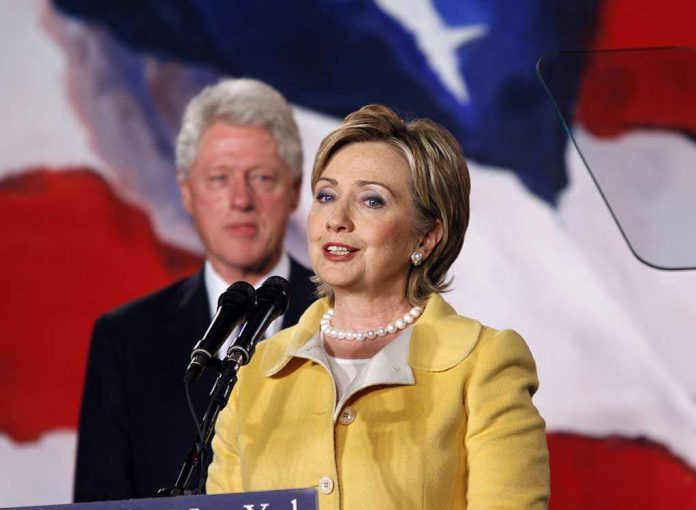
For the first time in American history, a former Democratic president and would‑be “first female president” are staring down contempt of Congress if they dodge questions about their ties to Jeffrey Epstein.
Story Highlights
- House Oversight has subpoenaed Bill and Hillary Clinton for closed‑door Epstein depositions on January 13 and 14.
- Republican leaders warn the Clintons could face contempt of Congress if they skip or stall again.
- The clash tests whether powerful Democrats are finally held to the same standard as ordinary Americans.
- The fight unfolds under a Trump administration that campaigned on ending two‑tier justice and D.C. cover‑ups.
Historic Showdown: Congress Demands Answers on Epstein Ties
The Republican‑led House Oversight and Government Reform Committee has ordered Bill and Hillary Clinton to appear for closed‑door depositions about their interactions with Jeffrey Epstein and Ghislaine Maxwell, after months of delay and legal maneuvering. The subpoenas, issued in August 2025, were part of a broader probe into how Epstein’s network operated and whether elites enjoyed protection that ordinary Americans never would. New dates now require Bill to appear January 13 and Hillary January 14, behind closed doors on Capitol Hill.
These depositions are not casual conversations; they focus on the Clintons’ personal interactions with Epstein and Maxwell, including documented flights on Epstein’s jet and appearances together in photographs and social settings. The committee’s mandate centers on law‑enforcement failures, but for many citizens who watched inflation soar, borders crumble, and institutions bend under woke politics, this is also about basic accountability. If the political class used influence to shield friends, that cuts directly against equal protection under the law.
Contempt Threats and a Long Pattern of Delay
Originally, the Clintons were scheduled for depositions in December 2025, but their attorney, David Kendall, cited a funeral conflict and secured a postponement. Since then, Chairman James Comer has said the pair have largely dragged their feet, rejecting multiple dates while pushing to answer only in writing. Written responses would let high‑priced lawyers scrub every word, limiting probing follow‑ups. Republicans insist that just like any other subpoenaed witness, the Clintons must show up, raise objections on the record, and testify under oath.
As of early January, a committee spokeswoman stated the Clintons have not firmly confirmed they will appear on the new January 13 and 14 dates, prompting Oversight to escalate. Comer has made it plain: if the Clintons do not appear or promptly reschedule within the same window, the committee will move to contempt of Congress proceedings. Criminal contempt can carry fines and even jail time, but it ultimately depends on the Department of Justice to prosecute. Many conservatives, burned by years of selective enforcement, will watch closely to see whether Trump’s DOJ treats these subpoenas as seriously as it did cases against Trump allies under past administrations.
Unprecedented Territory: A Former President Under the Microscope
No former president has ever been compelled by Congress to testify under threat of criminal sanctions, although Gerald Ford voluntarily answered questions about the Nixon pardon in 1983. The January 6 Committee once subpoenaed Donald Trump, then quietly let the order lapse without testimony. That history fed a sense among many on the right that Democrats wield subpoenas as political theater but close ranks when their own power brokers face scrutiny. This fight over the Clintons’ Epstein ties now tests whether that double standard is finally collapsing.
The scope of Oversight’s Epstein inquiry reaches beyond the Clintons. The committee also subpoenaed former Attorneys General from both parties, former FBI Directors James Comey and Robert Mueller, and other senior law‑enforcement officials. Lawmakers want to know how Epstein was able to secure a sweetheart plea deal back in 2008, why he remained free to operate for years afterward, and whether political pressure from powerful friends helped keep doors closed. For families watching crime spike and government overreach grow, the core question is simple: did the system protect predators while lecturing regular Americans about “equity” and “misinformation”?
Weaponization Claims Versus Demands for Equal Justice
Clinton attorney David Kendall accuses Comer and House Republicans of running “weaponized legislative investigations” and singling out the Clintons for a partisan spectacle. He argues other witnesses were allowed to avoid in‑person questioning and that written answers would be more efficient. That line may resonate with partisan media, but outside the Beltway, it reinforces the impression that there is always a special rule when powerful Democrats are in the hot seat. Everyday Americans called before a grand jury or court do not get to bargain for emailed questions.
PLEASE don't show up. I wanna see you go to jail like Bannon and Navarro did. 😎🇺🇸🇺🇸🇺🇸
Bill and Hillary Clinton Expected To Appear Before Congress Next Week To Testify on Epstein Ties – Dem Bigwigs Face Contempt of Congress Charges if They Don’t Show Uphttps://t.co/fiLJPAI0CZ
— xpeachx (@xpeachx_1) January 10, 2026
For conservative readers who endured years of Russia hoaxes, impeachment theatrics, and Biden‑era crackdowns on parents, this moment carries deeper meaning. If Congress backs down or DOJ refuses to act on a contempt referral, it will signal that, once again, there is one set of rules for connected elites and another for everyone else. If the Clintons appear and answer fully, it could pry open long‑sealed doors on how money, power, and globalist networks shielded a convicted sex offender while the same establishment preached morality to the rest of us.
Sources:
Oversight committee threatens Clintons with contempt if they don’t show up for Epstein hearing
Oversight committee threatens Clintons with contempt if they don’t show up for Epstein hearing
Chairman Comer: Clintons Must Appear for Depositions or Face Contempt of Congress
Clintons risk contempt in House Epstein investigation
House Oversight Chair Threatens Clintons with Contempt in Epstein Subpoena Feud
Clintons’ Epstein depositions delayed