Americans watched political anger cross another red line as violent anti-immigration enforcement rhetoric online spilled into real-world attacks and threats against Immigration and Customs Enforcement officers, raising hard questions about speech, accountability, and whether federal leaders are fixing or fueling the crisis [3].
Story Snapshot
- Federal Bureau of Investigation (FBI) officials reported anti-immigration enforcement messaging recovered after a deadly Dallas shooting at a federal facility [3].
- Viral protest clips show individuals urging guns and “bullet box” tactics against officers, amplifying calls to confront immigration enforcement aggressively [1].
- Conservative outlets highlight alleged surges in threats and assaults on officers, though independently verifiable data remain limited in public view [6].
- Partisan echo chambers and weak transparency risk eroding trust as claims outpace shared facts [3].
What Officials Say Happened In Dallas
Fox News reported that FBI officials recovered anti-immigration enforcement messaging after a deadly shooting at a Dallas immigration facility, describing the incident as targeted violence tied to political animus toward Immigration and Customs Enforcement [3]. The report cites law enforcement recovery of materials indicating motive but does not publish the underlying documents or forensic exhibits. Without a public case file, the account anchors debate while leaving verification gaps that fuel competing narratives and deepen skepticism among already polarized audiences [3].
Texas authorities and federal leaders framed the Dallas attack as part of a broader pattern of escalating threats toward immigration officers [3]. The framing aligns with a wider claim from conservative media that rhetoric has moved from protest to physical aggression. However, officials have not released comprehensive datasets that would let the public compare today’s threats and assaults with prior years on an apples-to-apples basis. The absence of transparent, historical baselines makes it easier for partisan actors to selectively emphasize anecdotes over trend clarity [3].
Rhetoric Online: From Outrage To Explicit Calls For Violence
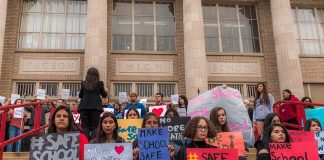
Videos and posts circulating across conservative platforms show protest participants urging armed confrontation, including statements about bringing guns and using the “bullet box” against immigration officers [1]. These clips, highlighted by The Gateway Pundit, present explicit calls to violence that go beyond policy criticism into criminal incitement. While the recordings capture real words, the available coverage does not establish how representative the speakers are of larger protest coalitions, nor whether recognized advocacy groups condone or reject the violent rhetoric [1].
Separate coverage collected by The Gateway Pundit alleges that a healthcare worker lost employment after social videos encouraging harm to immigration officers surfaced, underscoring how incendiary content can carry workplace consequences and feed claims of a rising threat environment [6]. These accounts document specific posts and a termination but do not include an independently verified archive or employer records beyond secondary reporting. The pattern still illustrates how social platforms can transform fringe statements into viral fuel that policymakers and media then cite as indicators of broader radicalization [6].
Data Discipline: What We Know And What We Do Not
Conservative outlets spotlight dramatic percentages alleging explosive increases in threats and assaults against immigration officers, attributing the numbers to Department of Homeland Security officials [6]. The reports, however, do not include raw datasets, methodology, or multi-year baselines that independent analysts could audit. That missing transparency complicates public understanding, leaving citizens to choose between trusting secondary summaries or dismissing the warnings outright—both paths that can harden cynicism toward institutions and weaken shared factual ground [6].
Calls for oversight and verification are warranted given the stakes. A clear, time-series release of threat logs, incident classifications, and adjudication outcomes would let communities assess whether the risk profile is deteriorating and which interventions work. In the absence of that sunlight, narratives race ahead of evidence, and both left and right find confirming examples to reinforce preexisting beliefs. That dynamic rewards outrage over accuracy, while officers and protesters face greater danger and less accountability [3].
Why This Matters For A Country On Edge
Americans across the spectrum worry that powerful interests exploit crises to expand control while failing to solve root problems like border insecurity, crime, and affordability. When violent rhetoric bleeds into attacks, authorities often respond with selective disclosures and televised soundbites rather than full data and measured corrective action. That approach deepens the sense that elites are stage-managing perception, not delivering results, and it sidelines the broad majority who reject violence yet demand enforcement that is both firm and lawful [3].
Restoring trust requires three concrete steps. First, federal leaders should publish audited, historical incident data for immigration officer threats and assaults, with definitions and sources, so the public can test claims. Second, protest organizers and public officials should issue unambiguous, on-record rejections of violence, regardless of policy stance. Third, platforms should apply consistent standards to explicit calls for harm. These steps would cool the temperature, improve accountability, and refocus debate on policy performance rather than performative rage [1].
Sources:
[1] Web – Victor Reacts: The Left is OPENLY Calling for Violence In Defense of …
[3] Web – Texas ICE attack caps escalating left-wing terror wave – Fox News
[6] Web – Violent Leftists Encourage Use of LETHAL FORCE Against ICE …