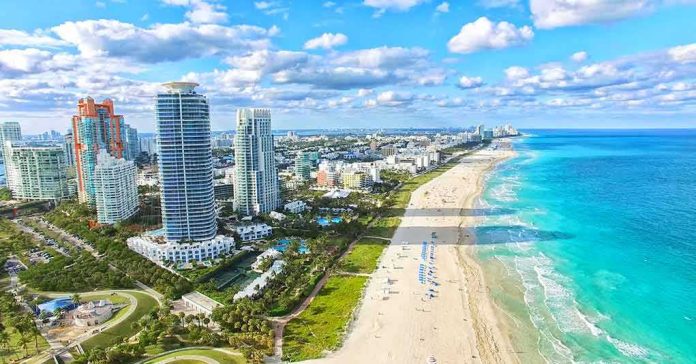
A war drone that likely aimed for a Russian defense target instead slammed into a crowded Black Sea beach, killing families who thought they were far from the front lines.
Story Snapshot
- A Ukrainian drone hit a packed beach near Russia’s Black Sea resort of Gelendzhik, killing at least seven people and injuring around 40.
- Russian officials say the drone was part of a wider attack but ended up striking civilian holidaymakers, including children.
- Video shows the drone descending into the resort area before exploding, raising fresh questions about air defense and warning systems.
- The tragic strike highlights how ordinary people, far from Washington or Moscow, pay the highest price when war and technology mix with government failure.
What Happened On The Beach In Gelendzhik
On Monday, Russian officials said debris from a Ukrainian drone fell onto a crowded beach near the Black Sea resort of Gelendzhik, in the village of Arkhipo-Osipovka. Governor Veniamin Kondratyev reported that seven people were killed, including three children, and around 40 others were injured. Earlier counts had listed fewer dead and injured, but the numbers rose as hospitals reported in and rescuers worked the scene. Videos posted online show beachgoers relaxing before a drone drops toward the sand and explodes.
Local authorities described the event as part of a broader night of Ukrainian drone attacks across southern Russia and annexed Crimea, but this strike stood out because it hit civilians on vacation. The crash took place at a popular summer resort area known for families and regular Russians trying to enjoy time off work, far from Moscow’s elite circles. The Russian Health Ministry said dozens needed medical care, with many rushed to hospitals and others treated at the beach itself. Rescue teams and disaster doctors were deployed on the governor’s orders.
How Russian And Foreign Media Framed The Strike
Russian state outlets and regional officials quickly called it a “targeted attack by the Kyiv regime” on civilian infrastructure near the sea. They stressed that the drone hit a beach, not a base, and cast the event as terrorism against ordinary Russians. Foreign outlets, including Reuters and the British Broadcasting Corporation (BBC), reported that Russia blamed Ukraine but also noted that Kyiv had not commented yet. Both countries publicly claim they do not deliberately target civilians, but this incident adds to a growing list of civilian deaths.
The description of how the drone caused the damage shifts across reports, which is common in fast war news. Some Russian statements say the drone was intercepted by air defenses and that falling debris killed people, while other coverage simply says the drone crashed directly onto the beach. A United States news network said it is not clear from available footage whether the drone was shot down first or just flew straight in. What is not in doubt is the outcome: a blast on a tourist beach that killed children and adults who had “no time to flee.”
Air Defenses, Missed Warnings, And A Broader Pattern Of Failure
Regional reporting and independent outlets highlight one detail that angers people on both sides: no air raid siren sounded before the drone hit the beach. That means hundreds of citizens were left lying on the sand with no warning, even though the area is close to strategic sites and President Vladimir Putin’s well-known palace residence on the coast. A specialized disaster medicine team only arrived after the explosion, once the damage was already done. For many Russians, that looks like a clear failure of the systems meant to protect them from war spilling into daily life.
Video: Ukrainian drone explosion on Russian beach kills seven people and leaves dozens injured https://t.co/akAnyo66Ch #conflict #droneattack #Gelendzhik #Russia pic.twitter.com/xQsFzeN1uL
— MixVale (@Mixvale) August 3, 2026
This pattern will feel familiar to Americans watching from afar. Many in the United States, whether conservative or liberal, already believe elites build defenses around themselves while leaving regular people exposed. Here, Russian leaders enjoy guarded compounds and advanced air defenses, yet families on a public beach near those same sites were left unprotected from a drone that everyone knew could be coming. The strike feeds a wider sense that governments talk about “security” while failing to provide it for ordinary citizens, at home and abroad.
Why This Matters Beyond Russia And Ukraine
For American readers, this tragedy is another sign of how modern wars and unmanned weapons ignore borders and vacation plans. A drone can be aimed at a defense factory or naval base, but if defenses fail or guidance goes off, it can land on children in the sand instead. That risk grows as more nations build drones and more leaders choose long, open-ended conflicts over hard peace talks. Each step up the ladder of “advanced weapons” seems to push the real costs down onto everyday people, not the elites who order the strikes.
There is also a lesson about information. Russian state media moved fast to frame the blast as proof of Ukrainian terror, while Western outlets rushed their own versions with shaky casualty numbers. In that rush, key questions get lost: why was there no warning, why were civilians crowded near possible military targets, and who is truly accountable when a guided weapon ends in a sunbather’s towel? Those questions echo complaints many Americans have about their own leaders, who fight over blame on cable news while leaving real safety gaps unsolved.
Sources:
facebook.com, bbc.com, reuters.com, english.pravda.ru, themoscowtimes.com, zamon.uz, youtube.com, nine.com.au, bbc.co.uk, telesurenglish.net