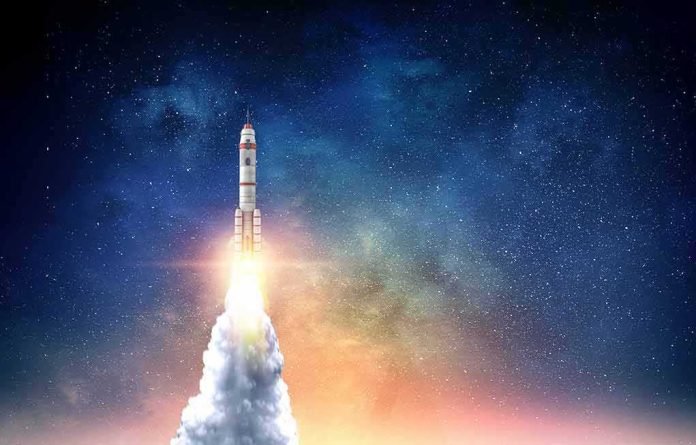
SpaceX’s Starship, the largest rocket ever built, reached orbit around Earth for the first time on a flight that launched Monday, September 28, at 8:48 a.m. Eastern. It matters because NASA picked Starship as the lander meant to put Americans back on the moon, and reaching orbit is a key step toward that job.
Quick Take
- Flight 14 lifted off from Starbase in South Texas, and mission control confirmed, “Starship is orbital.”
- On the climb to orbit, one of the ship’s engines quit early.
- The ship released 26 Starlink V3 internet satellites, three of them carrying cameras to inspect its heat shield.
- The Super Heavy booster made a controlled splashdown in the Gulf of Mexico; SpaceX did not try to catch it.
- SpaceX brought the ship home early. It splashed down in the North Pacific at about 11:58 a.m. Eastern, roughly three hours after liftoff instead of the nearly 10 hours planned.
Rocket Reaches Real Orbit After Years Of Testing
This was Starship’s 14th test flight and the first to reach a full orbit. Earlier flights followed shorter, suborbital paths, and several ended in explosions. About 25 minutes after liftoff, mission control confirmed, “Starship is orbital.” Elon Musk posted, “First orbital flight of Starship successful!”
The climb to orbit was not perfect. One of the ship’s Raptor 3 engines shut down early on the way up, but the ship made up for it and finished its burn. After engineers checked the problem, SpaceX gave the go for orbit. The ship then fired a single engine to settle into orbit about 170 miles (275 kilometers) above Earth.
Starlink Satellites Reach Orbit For The First Time
Starship released all 26 of its upgraded Version 3 Starlink satellites for SpaceX’s satellite internet network. Three of them carried cameras pointed back at the ship to check its heat shield tiles for damage. Starship also carried V3 satellites on Flight 13 in July, but that flight was suborbital and the satellites soon fell back to Earth. This time they reached orbit, which turns Starship from a pure test rocket into a working delivery vehicle.
Ship Heads Home Early
The flight plan called for about six orbits and a trip of about 9 hours and 50 minutes, the longest Starship test yet, ending with a splashdown in the Pacific off the coast of Chile on Monday evening. That is not how it ended. After checking the ship’s condition at its first orbital checkpoint, SpaceX decided to bring it back to Earth early. It splashed down in the North Pacific at about 11:58 a.m. Eastern, about 3 hours and 9 minutes after liftoff, nearly seven hours short of the plan. SpaceX has not said what it saw at that checkpoint that led to the change.
No Booster Catch This Time Around
SpaceX did not try to catch either the Super Heavy booster or the ship on this flight. The booster fired its engines for a landing burn over the Gulf of Mexico and made a controlled splashdown about seven minutes after liftoff. It had several engine shutdowns during the flight, but none serious enough to affect its landing.
The bigger prize is the moon. NASA selected Starship as the crewed lander for its Artemis program, which aims to return Americans to the lunar surface and set up a base near the moon’s south pole. A ship that can reach orbit is a needed step before it can carry astronauts. After 13 earlier test flights, SpaceX now has an orbital flight on the record.
Sources:
teslaoracle.com, en.wikipedia.org, techtimes.com, nextspaceflight.com, teslarati.com