
By refusing to rehear Peter Navarro’s case, the D.C. Circuit made clear that ignoring a congressional subpoena is perilous even for senior White House aides.
Story Snapshot
- The D.C. Circuit denied Peter Navarro’s request for a full-court rehearing, keeping his contempt conviction intact.
- Judges said only a president or an authorized designee can invoke executive privilege for a subpoena, not the witness.
- The court emphasized that belief in privilege does not excuse skipping testimony or withholding all documents.
- Navarro’s next step is the Supreme Court, where he argues the lower courts used the wrong standard.
What The Court Decided And Why It Matters
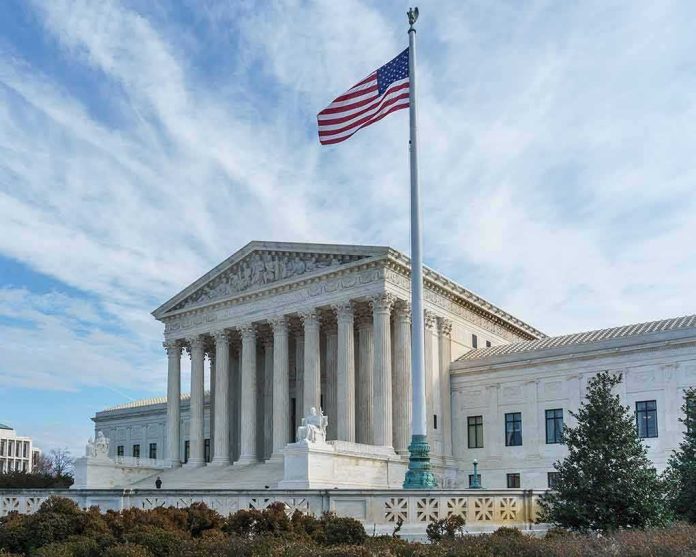
The United States Court of Appeals for the District of Columbia Circuit rejected Peter Navarro’s bid for a full-court rehearing. The order left in place a panel ruling that upheld his two-count contempt of Congress conviction tied to the January 6 committee subpoena. The panel held that executive privilege must be invoked by the president or an authorized official. A witness’s personal belief about privilege is not a legal shield for total noncompliance with a subpoena.
Judges also underscored a basic rule of the contempt statute. Prosecutors need to show that a person deliberately refused to appear or produce records, not that the person had a bad motive. The reason for the refusal is generally immaterial once a jury finds willful noncompliance. That framing narrows defenses based on subjective beliefs and warns future witnesses that non-engagement is risky even in separation-of-powers fights.
How Navarro’s Executive-Privilege Argument Fell Short
Navarro argued that President Trump had invoked executive privilege for him. The panel disagreed, saying Navarro failed to prove a formal invocation by Trump or an authorized designee for the subpoena at issue. Reporting notes that Navarro submitted phone records to back up a claimed call, but he did not produce any document showing Trump directed him to assert privilege, and he skipped the scheduled deposition. The court said that gap doomed his defense under established standards.
The panel further explained that even a proper privilege claim would not excuse blanket refusal. Subpoenas often seek both privileged and non-privileged material. Courts expect witnesses to appear, assert privilege where it applies, and provide what is not protected. A categorical refusal forfeits that balance and supports a contempt verdict, according to the panel’s reasoning and summaries of the decision. That approach pressures both Congress and the executive branch to sort disputes item by item.
What Comes Next And The Bigger Stakes
With rehearing denied, Navarro’s path runs to the Supreme Court. His filings argue the government blocked his privilege defense and that lower courts applied the wrong legal test. The Supreme Court has never squarely decided how executive privilege works when Congress demands information from a presidential aide. Analysts note that only a handful of cases reach the merits in this area, which leaves gray zones that can trap witnesses who guess wrong.
This case cuts across familiar partisan lines. Conservatives see a Congress that overreaches and a court that shrugs at presidential confidentiality. Liberals see a witness defying lawful oversight during a national crisis. Many Americans see something else: a system that punishes noncompliance but still offers little clear guidance to avoid the next showdown. The court’s message is simple and stern—show up, engage, and assert privilege the right way—or face criminal risk.
Sources:
courthousenews.com, washingtonexaminer.com, apnews.com, thehill.com, en.wikipedia.org, supremecourt.gov, cnn.com, justice.gov, hklaw.com, politico.com