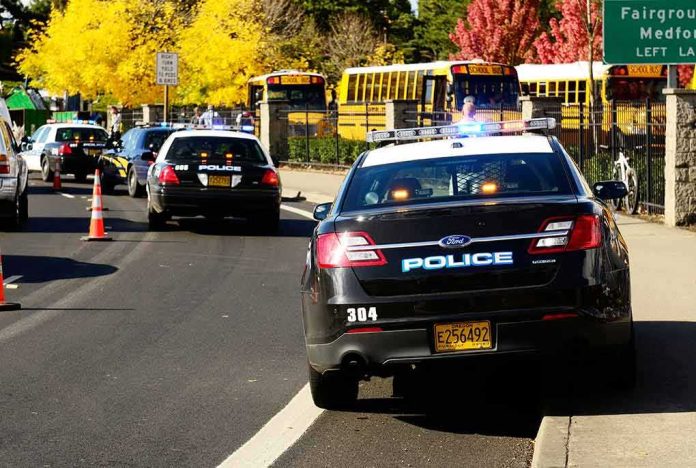
A school shooting in Thailand’s Nonthaburi province left at least six people dead and turned a normal school morning into a crime scene under investigation.
Quick Take
- Police said the shooting happened at Debsirin Nonthaburi School in Bang Kruai district, northwest of Bangkok.
- Authorities identified the gunman as a student, and reports said he was later found dead.
- Early casualty counts varied across outlets, but all pointed to multiple deaths and injuries.
- The attack added to rising worry about school safety, fast-moving news, and weak public trust in official systems.
What Authorities Said
Reuters reported that police identified the perpetrator as a student and said the shooting took place at a school in Bang Kruai district. The Associated Press also confirmed the location and said Thai news outlets reported injuries and that the shooter remained inside the school during the early response. That basic outline was repeated across live coverage from the British Broadcasting Corporation and other outlets as the event unfolded.
🚨 TRAGEDY IN THAILAND: Teen Gunman Kills Students, Teachers and Grandparents
A horrifying shooting unfolded at Debsirin Nonthaburi School, just outside Bangkok, after a 14-year-old gunman allegedly opened fire on students and teachers.
According to police, the teenager is… pic.twitter.com/HdQIv6vzP5
— mala (@mala_ghazal1) August 7, 2026
What made the story so volatile was the changing toll. Some reports described six dead, while others later said seven or more were killed, including the shooter. Thai Rath said reporters later counted 21 injured and named six of the dead, not including the gunman in that list. That kind of shifting count is common in the first hours of a mass shooting, when hospitals, police, and reporters are still sorting the facts.
How The Story Changed Hour By Hour
Early reports did not agree on whether the suspect died by suicide, was shot by police, or died later from wounds. Nation Thailand said the teenager was found dead at the scene after taking his own life, while Thai Rath also reported that the suspect died after being taken to the hospital. Malay Mail and The Guardian both said the suspect had killed his grandparents before going to the school, but the exact sequence still varied across outlets.
That uncertainty matters because it shapes public trust. When people see one report say four killed, another say six, and another say seven, they often assume the entire story is shaky. The stronger reading is simpler: the attack clearly happened, the school was the scene, and the final numbers were still being pinned down as responders worked. The instability is a warning sign about how quickly rumor can fill gaps before official records are released.
Why This Shooting Hit A Nerve
School attacks cut across politics because they touch a basic fear: parents want schools to be safe, and most people expect government to protect children. This case also fed broader public frustration with slow, fragmented official communication. The public saw multiple versions of the death toll, different accounts of the suspect’s death, and repeated references to a wider family killing before the school attack. That mix gives the public little confidence that institutions can deliver clean answers in real time.
The larger problem is not only violence, but the way modern news spreads before the facts settle. Reuters and the Associated Press gave the most solid early picture because both tied their reports to police and district officials. Even so, later updates still shifted the numbers. For readers, that is the hard lesson: in a fast crisis, the first account is often directionally right, but the final version can take hours to lock in.
Sources:
youtube.com, en.wikipedia.org, theguardian.com, en.thairath.co.th, bbc.com, thaiexaminer.com, malaymail.com, english.mathrubhumi.com, outlookindia.com, nytimes.com, facebook.com