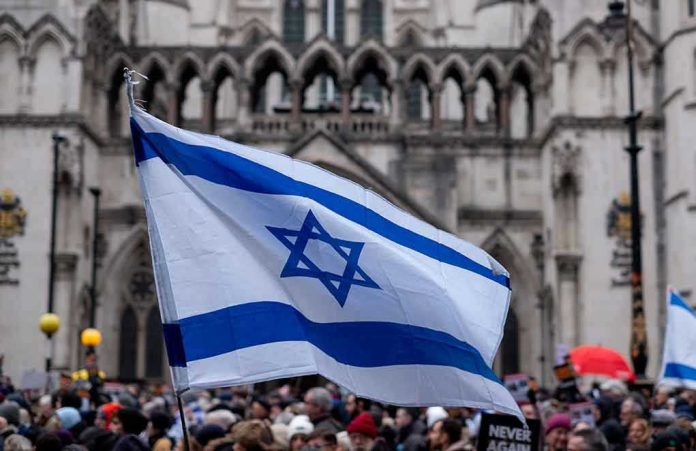
The first New York City mayor in six decades skipped the Israel Day Parade, and the silence on “why” is shaping the loudest story of all.
Story Snapshot
- A six-decade tradition broke when Mayor Zohran Mamdani did not attend the Israel Day Parade [1][3].
- The parade is described as a major civic celebration for New York’s large Jewish community [1].
- Rep. Mike Lawler warned the absence sends a negative message amid rising antisemitism [1].
- No direct mayoral explanation appears in the record provided, leaving a vacuum for rival narratives [1][3].
What Broke: A Tradition That Signaled Civic Belonging
New York City mayors have shown up for the Israel Day Parade since the mid-1960s, treating the event as a civic rite that affirms the city’s bond with its Jewish community [1][3]. This year’s break in attendance stands out because traditions become expectations when they endure for generations. The parade is publicly framed as a major celebration of the largest Jewish community outside Israel, which elevates any mayoral absence from a calendar footnote to a cultural headline [1]. Symbolism does not require a press release to land; it speaks on its own.
Rep. Mike Lawler called the mayor’s decision “extremely unfortunate,” arguing that the no-show delivers a negative message to Jewish New Yorkers and, by extension, to the entire city [1]. Lawler tied the decision to heightened concern over antisemitism, contending that leadership should demonstrate presence precisely when tensions rise [1]. That argument aligns with a common-sense civic instinct: show up when your neighbors feel targeted. Attendance at ceremonial cornerstones rarely fixes policy problems, but it often prevents unnecessary wounds.
The Missing Why: A Vacuum That Invites Contention
No direct explanation from the mayor appears in the supplied record—no scheduling note, security assessment, or principled statement is cited to account for the decision [1][3]. That gap matters. Without an on-the-record rationale, audiences default to inference. Cable-news framing excels at turning a symbolic absence into a settled story about motive, quickly and often durably [1]. Leaders usually know that ceremonial gaps get filled by opponents; leaving a vacuum concedes narrative ground before facts can compete.
The reporting also does not show any law or charter provision obligating attendance [1][3]. That makes this a norms fight, not a legal breach. Yet norms shape trust, and trust governs how communities hear hard news tomorrow. When a mayor joins other cultural celebrations but not this one, critics can argue the choice carries intentional weight unless the mayor provides credible, timely context [3]. In politics, explanations do not guarantee agreement, but they set the table for fair judgment.
The Community Signal: Presence Amid Rising Antisemitism
Coverage sets this controversy against a backdrop of rising antisemitism and ongoing Middle East tensions, which intensifies the optics of absence [1]. Civic events like the Israel Day Parade function as communal reassurances—public promises that the city sees, values, and stands with a community under pressure. Conservative readers will recognize the principle: leaders owe equal representation to all constituents, especially when safety and dignity feel uncertain. In that frame, choosing to attend is not performative; it is protective.
REP. MIKE LAWLER TORCHES MAYOR MAMDANI
Congressman Mike Lawler just ripped into NYC Mayor Zohran Mamdani for skipping the Israel Day Parade:
The fact that for the first time in decades, the Mayor of New York City is refusing to attend the Israel Day Parade… just speaks volumes… pic.twitter.com/oYyaH9iNDX— NewYork-Insight (@NewYork_Insight) May 30, 2026
Lawler’s harsher attribution—that many believe the mayor is antisemitic—reflects political combat rather than proof of intent [1]. The strength of that charge rests on evidence, not volume. The record provided establishes a break with tradition and a missed moment, not an admission of animus. Yet politics rarely waits for perfect evidence. If the mayor had security, scheduling, or diplomatic reasons, putting them on the record would blunt the hardest edges of the critique. Silence cedes the field to suspicion.
What Competent Leadership Would Do Next
Recenter the discussion on facts that withstand scrutiny. First, publish the mayor’s schedule for the event window and any relevant safety or operational assessments. Second, articulate a consistent standard for attending major ethnic, religious, and civic celebrations, then apply it evenly. Third, meet community leaders from the parade’s organizing network and communicate a forward plan—attend related events, make clear statements condemning antisemitism, and back them with visible actions. None of this requires partisanship; it requires stewardship.
The Bottom Line: Symbols Are Policy Adjacent
City leaders govern budgets and police, not parades, but symbols are the scaffolding that lets policy stand without wobbling. Skipping one event may be legal and even defensible on private facts. However, in New York’s plural civic house, showing up is the floor, not the ceiling. If you break a 60-year signal without explanation, you do not just change your Sunday plans—you change how a million neighbors hear you the next time you say, “I’ve got your back” [1][3].
Sources:
[1] YouTube – Mike Lawler slams NYC Mayor Mamdani for skipping Israel Day Parade | …
[3] Web – Mike Lawler slams NYC Mayor Mamdani for skipping Israel Day …