

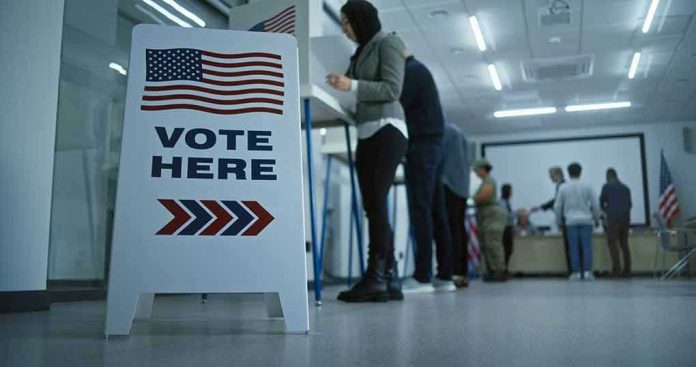
The Safeguard American Voter Eligibility (SAVE) Act aims to fortify election integrity but is facing fierce opposition from those who argue it threatens disenfranchisement.
Story Highlights
- The SAVE Act requires proof of U.S. citizenship for voter registration.
- Donald Trump supports the SAVE Act as a key legislative priority.
- Opponents claim the act could disenfranchise millions of eligible voters.
- The act has passed the House but awaits Senate approval.
Trump’s Push for Election Integrity
Donald Trump, now back in the White House following his 2024 victory, has thrown his support behind the Safeguard American Voter Eligibility (SAVE) Act. The act requires documentary proof of citizenship for federal voter registration, a move Trump argues is essential to maintaining election integrity. Republicans have long voiced concerns about noncitizen voting, although evidence of widespread issues remains scarce.
The SAVE Act, championed by Rep. Chip Roy, was introduced in 2024 and passed the House but was stalled in the Democrat-controlled Senate. With Republicans now in control of Congress, the act has been reintroduced and prioritized. Trump and his allies believe this legislation counters narratives of election fraud and restores confidence among voters.
Concerns of Disenfranchisement
Despite its intentions, the SAVE Act has drawn criticism from voting rights groups and Democrats who warn it could disenfranchise millions. They argue that as many as 10% of eligible voters lack the necessary documents, disproportionately affecting minority groups and low-income citizens. Critics fear the act could disrupt mail and online voter registration systems, creating barriers for many Americans.
Past experiences with similar measures have shown significant errors, where citizens were mistakenly purged from voter rolls. Critics also highlight that noncitizen voting is already illegal and punished by fines and deportation, questioning the need for additional measures.
Implications and Future Prospects
As the SAVE Act progresses through Congress, its implications are being closely monitored. While it could potentially tighten voter registration processes, there are concerns about the administrative burden it imposes. State election officials face increased liability, with the risk of prosecution for errors.
The act’s passage would mark a significant victory for Republicans under Trump’s leadership, aligning with their agenda of strengthening election security. However, the debate over its necessity and impact on voter access remains contentious.
Sources:
WHYY: SAVE Act and Voter Registration
Democracy Docket: SAVE Act Prioritization
Congress.gov: Details on H.R. 22
American Progress: Critique of the SAVE Act