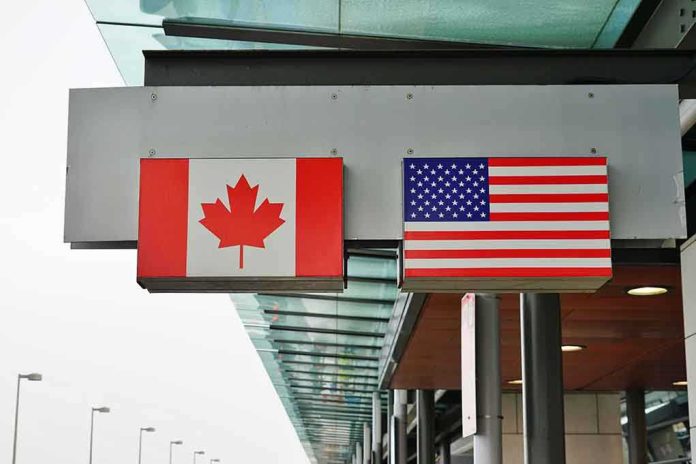
With days left before August 19, Washington and Ottawa are racing to avert 50% U.S. tariffs on Canadian goods that officials say will hit even some items covered by the North American trade pact.
Story Snapshot
- President Trump signed proclamations to add 50% tariffs on many Canadian goods starting August 19.
- U.S. and Canadian negotiators are holding last-minute talks to reach a deal before the deadline.
- Canada says the sides remain far apart on a draft agreement even as meetings continue.
- The move uses a rarely cited U.S. law, signaling hard leverage and raising costs for cross-border trade.
What Washington Triggered and When It Bites
On July 20, President Trump signed actions to impose additional 50% tariffs on a wide set of Canadian products. The White House said the tariffs would take effect 30 days after signing to counter harm from Canadian discrimination against U.S. commerce. Reuters reported the new levies are due August 19 and would apply even if goods otherwise qualify under the United States–Mexico–Canada Agreement, with some exemptions such as energy and certain minerals. These steps set a firm clock and raised pressure on talks.
Trade lawyers say the proclamations rely on Section 338 of the Tariff Act of 1930, which allows duties up to 50% in response to unequal treatment of U.S. trade. Industry briefs describe this as an “opening bid,” covering targeted sectors like motor vehicles and alcoholic beverages. Analysts note Section 338 had not been referenced for generations, making this a notable reactivation of an old tool to gain leverage over a close ally. That rarity has sharpened attention in both capitals.
Where Talks Stand in the Final Stretch
Canadian and U.S. officials have met repeatedly in Washington to avoid a cliff-edge outcome. Reuters reported Canada’s minister Dominic LeBlanc met the United States Trade Representative, Jamieson Greer, for the third time in as many weeks as the deadline neared. Another Reuters account said a Canadian source saw progress and indicated Washington also wants a deal before August 19, suggesting both sides seek an off-ramp. These signals show urgency and shared interest in a negotiated fix.
Still, Canadian officials warn gaps remain. Reuters reported LeBlanc told an advisory panel the countries are still far from a draft deal, despite regular meetings. The Washington Post said industry observers see movement toward a pact that could spare items like hockey sticks, wine, and cement, but outcome and scope are not settled. The mixed messages suggest real momentum but persistent sticking points on market access, retaliation limits, and sector carve-outs.
Why This Matters for Families, Workers, and Small Firms
Tariffs raise import prices first, then costs spread through supply chains. A 50% duty on inputs can hit U.S. builders, retailers, and manufacturers that rely on Canadian parts, while Canadian suppliers lose sales and cut orders to their own workers. Past U.S.–Canada trade fights show a back-and-forth cycle that can last months and leave both sides paying more at the register or the job site. That is why many voters see trade brinkmanship as another way the system squeezes regular people.
#IGR: Canadian Prime Minister Mark Carney says he plans to speak with US President Donald Trump before the August 19 tariff deadline. Canada is stepping up trade talks with Washington as it seeks to avert new 50% tariffs on a range of Canadian goods. pic.twitter.com/NovpUQUb6t
— India Global Review (@IGR_Media) August 18, 2026
Both the left and the right worry that powerful insiders play by special rules while small shops and hourly workers eat the costs. This clash fits that fear. A rarely used law from 1930 is now steering prices for wood, beverages, and gear families buy, while negotiators trade sector favors behind closed doors. If talks succeed, relief could be narrow and temporary. If they fail, the hit lands fast on August 19. Either way, public patience with government brinkmanship is running thin.
Sources:
cbsnews.com, reuters.com, pwc.com, ustr.gov, hklaw.com, honigman.com, cbc.ca, apnews.com