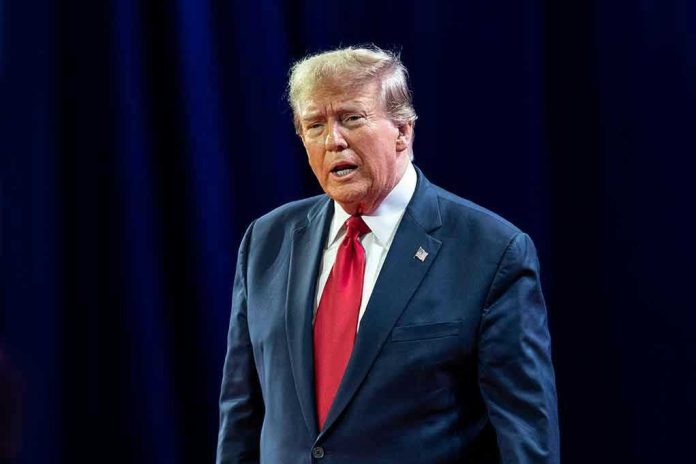
President Trump’s recent threat to invoke the Insurrection Act has stirred the nation, as tensions rise in Minneapolis over ICE-related shootings.
Story Highlights
- President Trump places 1,500 active-duty soldiers on standby, threatening Insurrection Act.
- Governor Tim Walz mobilizes Minnesota National Guard amidst protests.
- Federal probe launched into Walz and Minneapolis Mayor Frey for allegedly impeding ICE.
- Protesters and counterprotesters clash, highlighting deep political divides.
Trump’s Insurrection Act Threat
Following the fatal shooting of Renee Good by an ICE officer on January 7, President Trump has placed 1,500 soldiers from Alaska’s 11th Airborne Division on standby. This bold move follows ongoing protests in Minneapolis, where tensions have flared between ICE, local law enforcement, and demonstrators. The President’s potential use of the Insurrection Act aims to assert federal authority in a city long known for its progressive resistance to federal immigration enforcement.
Governor Tim Walz has responded by mobilizing the Minnesota National Guard, keeping them on standby yet refraining from street deployment. This strategic move emphasizes his commitment to maintaining public safety while supporting the right to peaceful assembly. As protests continue, the National Guard’s social media posts signaling readiness have raised eyebrows, reflecting the complex dynamics at play in the state’s response to federal actions.
Clashes and Political Tensions
Protests at the Whipple federal building, which houses ICE and DHS headquarters, have seen multiple clashes between demonstrators, counterprotesters, and law enforcement. These confrontations have highlighted the deep political divides that exist within the city. While protesters rally against federal immigration tactics, counterprotesters support Trump’s crackdown, resulting in a volatile mix that threatens to escalate further.
The Justice Department has announced a probe into Governor Walz and Minneapolis Mayor Jacob Frey, investigating allegations of a conspiracy to impede federal agents. This scrutiny could have significant political repercussions, potentially eroding trust in local leadership while bolstering conservative narratives around law and order.
Implications for the Future
The ongoing situation in Minneapolis serves as a critical test of federal and state power dynamics. Should Trump proceed with deploying federal troops, it could set a new precedent for federal intervention in state matters, particularly concerning immigration enforcement. The political fallout could influence national debates on the limits of executive power and the role of federal agencies in local governance.
Trump and Walz Both Make Moves on Chaos in Minneapolis, As MN National Guard Post Raises Eyebrowshttps://t.co/03AXiq9QsX
— RedState Updates (@RedStateUpdates) January 18, 2026
As Minneapolis braces for potential escalation, the events unfolding may shape the political landscape leading into the 2026 midterms. Both parties have much at stake, with Republicans likely to emphasize law and order, while Democrats may focus on protecting civil liberties. The outcome of this confrontation could have far-reaching implications for the balance of power and the future of American governance.
Sources:
Minnesota protests over ICE shooting; law enforcement on alert