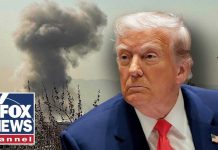
Brit Hume’s blunt read on the Geneva Iran talks is that President Trump is showing diplomacy on camera while quietly preparing for the possibility that Tehran won’t give an inch.
Story Snapshot
- Brit Hume told Fox News the Geneva negotiations are likely “going through the motions” because Iran has historically resisted real limits on enrichment.
- U.S. negotiators Steve Witkoff and Jared Kushner are involved as the administration tests whether Iran will accept verifiable constraints.
- Hume argued deeply buried nuclear facilities are hard to square with Iran’s claim that its program is purely peaceful.
- Trump is using talks alongside military pressure, aiming to avoid war while keeping credible options on the table if diplomacy fails.
Hume’s Core Point: Diplomacy Without Illusions
Brit Hume’s February 26 analysis on Fox’s Special Report framed the Geneva talks as a necessary step, not a likely breakthrough. Hume said Trump appears determined to demonstrate he pursued a diplomatic path before escalating. The segment emphasized that Iran has made verbal claims about peaceful intent before, yet has resisted the kinds of verifiable concessions—especially on enrichment—that would meaningfully reduce nuclear risk.
President Trump referenced the Iran file in his State of the Union remarks, warning about Tehran’s ongoing nuclear activity while pointing to negotiations as the near-term channel for resolving it. Hume also corrected the idea that statements alone settle anything, stressing the gap between rhetoric and verification. That distinction matters because nuclear disputes hinge on inspection access, limits that can be measured, and compliance that can be enforced—not diplomatic slogans.
What the U.S. Is Seeking in Geneva
The reporting summarized a familiar set of U.S. goals: restricting Iran’s uranium enrichment and pressing Tehran toward arrangements that reduce breakout capability. Hume’s commentary highlighted two particular sticking points: whether Iran would halt enrichment outright or accept externally supplied enriched uranium for civilian use. Both would represent a major shift from Iran’s longstanding insistence that enrichment is its right under the Nuclear Non-Proliferation Treaty.
Iran’s foreign minister, as described in the research, has defended enrichment as legitimate while offering assurances about peaceful purpose. Hume’s skepticism centered on whether Iran would accept a deal that can be verified in a way that actually blocks a weapons pathway. The distinction is the heart of the controversy that surrounded the Obama-era deal: opponents argued it left Iran too much room, too much infrastructure, and too many ways to stall inspectors.
Why Underground Facilities Keep Driving Suspicion
Hume pointed to the “palpably obvious” problem of deeply buried nuclear work—an issue that repeatedly fuels U.S. and allied alarm. Building sensitive facilities far underground can complicate monitoring and raise the question of why extreme hardening is necessary if the mission is purely energy-related. The research notes Hume’s argument that this physical reality undercuts Iran’s talking points and makes sweeping trust-based agreements unrealistic.
Maximum Pressure Meets “No Rush to War” Politics
The segment’s broader context described an approach that pairs diplomacy with leverage: negotiations beginning while the U.S. maintains a deterrent posture in the region. That balance is politically significant at home. After years of public frustration with elite foreign-policy “process” that produces weak results, Trump’s team appears intent on showing voters that talks are not the same thing as concessions—and that American power is not being put on the shelf while diplomats meet.
At the same time, the research also flags a key limitation: the “Dems have screwed themselves” framing is not something Hume explicitly argued in the cited segment. What the sources do support is a narrower conclusion: Hume believes the odds of Iran agreeing to major, verifiable enrichment concessions are low. Any larger domestic political takeaway goes beyond what is directly documented in the provided material.
Brit Hume Explains How Dems Have SCREWED Themselves (Especially on Iran) With Their Trump-Hate Agenda https://t.co/uBMMKAn0xf
— BREAKING NEWZ Alert (@MustReadNewz) March 1, 2026
For U.S. families watching from home, the immediate stakes are not abstract. A failed round of talks can raise the risk of escalation, threaten oil-market stability, and put U.S. forces and allies in the region on higher alert. The research does not include post-February 26 outcomes from Geneva, so the best-supported conclusion for now is simply that the administration is testing diplomacy while planning for the possibility that deterrence—and potentially force—becomes the next chapter.
Sources:
Trump is ‘going through the motions’ of diplomacy with Iran: Brit Hume
RealClearPolitics stream: Brit Hume
Fox News video: Trump is ‘going through the motions’ of diplomacy with Iran: Brit Hume