U.S. foreign policy in Venezuela may be a guise for cultural intervention, stirring conservative criticism.
Story Highlights
- Tucker Carlson claims U.S. ousted Maduro for social policy changes.
- Maduro banned gay marriage, abortion, and other progressive agendas.
- Opposition leader Machado supports gay marriage, fueling conspiracy theories.
- Conservative media split on intervention: culture vs. strategy.
Cultural Warfare in Foreign Policy
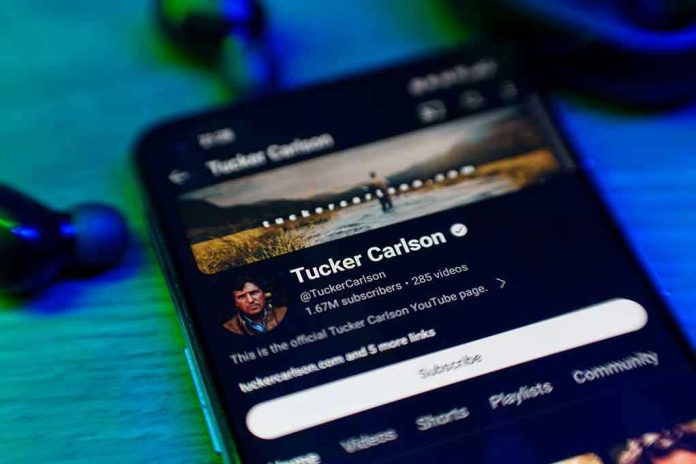
Tucker Carlson, a prominent conservative commentator, has sparked a debate by claiming that the U.S. involvement in Venezuela’s regime change is driven by a progressive social agenda. According to Carlson, the ousting of Nicolás Maduro is less about political or economic stability and more about imposing liberal values such as gay marriage, which Maduro had staunchly opposed. This claim has resonated with some conservatives who view U.S. foreign policy as increasingly entangled with cultural warfare.
Carlson’s assertion aligns with his broader critique of “globo homo,” a term he uses to describe global elites promoting progressive social policies. He points to opposition leader María Corina Machado’s support for gay marriage as evidence of a cultural agenda. Despite criticisms, Carlson maintains that Venezuela’s social conservatism made it a target for these elites, framing the regime change as a cultural imposition rather than a strategic necessity.
Maduro’s Social Conservatism
Under Maduro’s leadership, Venezuela has been one of the most socially conservative countries in the Western Hemisphere. The nation has banned abortion, gay marriage, sex changes, pornography, and usury, policies that Carlson defends as aligning with traditional family values. This extreme conservatism, however, has not shielded Maduro from international scrutiny and sanctions, primarily driven by allegations of election fraud, human rights abuses, and strategic alliances with adversaries like Russia and China.
Critics argue that Carlson’s focus on social issues oversimplifies the complexities of U.S.-Venezuelan relations. They suggest that the real motives behind the regime change are rooted in concerns over authoritarian governance and regional stability, rather than cultural imposition. Nonetheless, Carlson’s narrative continues to find traction among those wary of globalism and cultural degradation.
Conservative Media Division
The controversy has highlighted a rift within conservative media circles. While Carlson promotes an isolationist, culture-focused perspective, others like commentator Ben Shapiro emphasize national security and strategic interests. Shapiro has openly mocked Carlson’s theories, attributing the U.S. actions to conservative Republican leadership focused on countering Maduro’s alliances rather than promoting social liberalism.
This divide underscores a broader debate within the conservative movement about the role of cultural values in shaping foreign policy. As the situation in Venezuela unfolds, the implications of these differing perspectives may influence the direction of conservative thought and U.S. diplomacy.
Sources:
Tucker Carlson’s “Homo” Theory on Maduro
Carlson’s Defense of His Venezuela Stance
AOL’s Coverage of Carlson’s Claims