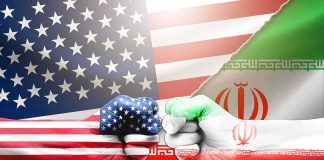
Iran’s military is openly warning that the “ceasefire” could be nothing more than a pause before the next round of fighting—while Washington and Tehran talk past each other.
Quick Take
- Senior Iranian commander Mohammad Jafar Asadi said renewed war with the U.S. is “likely,” citing mistrust and alleged bad-faith negotiations aired through Iran’s Fars News.
- President Trump publicly rejected an Iranian proposal relayed through Pakistan and described the talks as “disjointed,” underscoring how fragile the pause in fighting remains.
- Iranian officials have signaled a willingness to endure a long conflict and use economic pressure—especially energy disruption—to force outside intervention.
- Separate Iranian and proxy messaging has included threats against U.S. warships and continued regional tensions that could drag allies and Gulf partners back into escalation.
Iran’s “War Likely” Warning Tests a Paper Ceasefire
Mohammad Jafar Asadi, described as a senior Iranian military commander, warned via Iran’s Fars News Agency that a resumption of war with the United States is “likely.” The warning comes as a ceasefire remains in place largely “on paper,” with both sides still trading accusations about who violated what and why. Iran’s messaging stressed readiness and framed renewed conflict as the natural outcome of negotiations it says the U.S. approaches as optics rather than commitments.
President Trump’s side of the story, as reflected in public remarks cited in the research, is that negotiations have been muddled and unproductive. Trump rejected a recent Iranian proposal reportedly passed through Pakistani mediators and criticized Iranian leadership as confused. The immediate significance is not the rhetoric itself—both countries use it—but that the rhetoric is arriving after open fighting and under a ceasefire that depends on clarity, verification, and enforceable steps.
Negotiations, Distrust, and the Limits of “Deal” Diplomacy
Iran’s stated rationale for escalation centers on mistrust: officials argue Washington does not honor commitments and negotiates in bad faith. U.S. actions during earlier talks—described in the research as strikes that occurred during negotiations—are cited as a key reason Iran views diplomacy as unreliable. For conservative readers, that’s a familiar problem in foreign policy: adversaries treat pauses as opportunities, while American leaders face pressure to “end it” without creating incentives for repeat crises.
One Iranian voice highlighted in the research, Kamal Kharazi, told CNN that Iran is prepared for a long war and believes “only economic pain” will end it. That claim matters because it describes a strategy aimed beyond the battlefield. Iran’s theory, as presented, is that pressure on U.S. partners and global markets—especially energy—can force third-party intervention and change U.S. choices. The evidence here is largely based on reported interviews and state-linked messaging, not independently verifiable operational details.
Energy Leverage and Domestic Stakes Americans Can Feel
Iran’s communication, according to the research summary, links the diplomatic posture to oil-market optics and stabilization efforts. In practical terms, any hint of renewed hostilities tends to inject risk premiums into energy prices, which can ripple into inflation. That is where foreign policy stops being abstract. Conservatives frustrated by high costs and fiscal strain tend to see overseas instability as another driver of domestic pain—particularly when adversaries openly describe “economic pain” as the lever to move U.S. policy.
Warship Threats, Proxies, and the Risk of Regional Spillover
Beyond the headline warning, Iranian and aligned messaging has included threats that U.S. warships could face serious consequences and that any strike could trigger “prolonged, painful blows.” The research also notes proxy-linked pressure, including a Hezbollah drone attack in Lebanon that reportedly killed an Israeli soldier—an example of how quickly this file can widen. Each additional front increases the chances of miscalculation, while also complicating any attempt to produce a narrowly tailored, enforceable ceasefire.
Iran’s internal politics also appear to be hardening. The research references a leadership shift elevating Mojtaba Khamenei, suggesting continuity with hardline priorities and close alignment between political leadership and the IRGC. If accurate, that consolidation reduces the odds that Tehran will compromise quickly under outside pressure. It also reinforces why Americans across the spectrum increasingly distrust “process” diplomacy that lacks clear enforcement: without verifiable steps, a ceasefire can become a waiting period before the next strike cycle.
Senior Iran Official Warns War with U.S. 'Likely' To Restart Soon As Trump Struggles To Make a Deal https://t.co/0to4EapLMj
— Mediaite (@Mediaite) May 2, 2026
For the Trump administration and a Republican-controlled Congress, the next test is whether policy can balance deterrence with constitutional clarity and public accountability. The available reporting emphasizes rhetoric, interviews, and state-linked outlets, so hard operational facts remain limited. Still, the pattern is clear: Iran is signaling readiness, tying its strategy to economic disruption, and casting U.S. diplomacy as unreliable. In that environment, “making a deal” becomes less about headlines and more about enforceable terms—and consequences when they are broken.
Sources:
Iran warns US of ‘prolonged, painful blows’ amid reports of potential strike plans
Iran says US warships could be hit hard in chilling warning as Trump weighs military action