

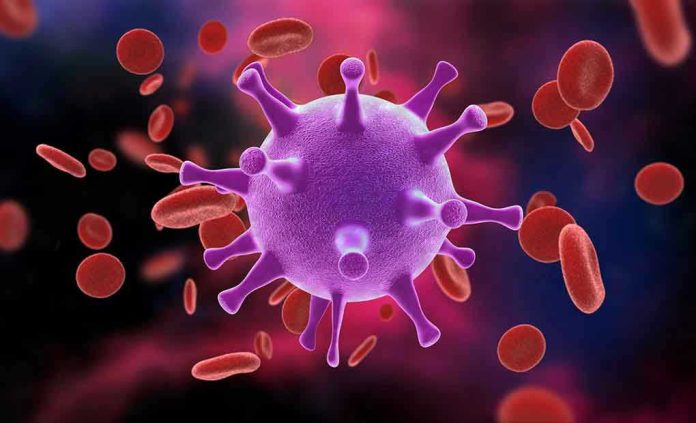
A little-known virus with a death rate up to 75% is driving a new global vaccine push that many Americans will recognize from the COVID playbook.
Story Snapshot
- A new Oxford-led Nipah virus vaccine has moved into phase II human trials in Bangladesh, billed as the most advanced candidate worldwide.
- Global health groups frame the project as a “Disease X” preparedness model, echoing the same pandemic narratives many Americans grew skeptical of during COVID.
- Nipah’s high fatality rate and spillover risk are real, but there are still no approved vaccines or drugs, and all products remain experimental.
- International funders and institutions, not U.S. voters, are steering priorities, raising questions about transparency, sovereignty, and accountability.
Deadly Nipah Virus Spurs New Global Vaccine Race
Nipah virus is a bat-borne pathogen first identified in 1999 among pig farmers in Malaysia, causing severe brain inflammation and respiratory failure. With an estimated case fatality between 40 and 75 percent, it has repeatedly struck Bangladesh and parts of India, often through contaminated date palm sap or close contact with infected animals and patients. Since the late 1990s, roughly 750 human cases and over 400 deaths have been recorded, mostly in South Asia, with no licensed vaccines or antiviral drugs available.
Outbreaks in Bangladesh and India have forced aggressive public-health measures, from contact tracing and isolation to localized lockdowns in areas that already lack strong hospital systems. Families have seen loved ones move from fever and headache to encephalitis and respiratory distress in days, overwhelming limited intensive-care capacity. To contain spread, authorities have relied on behavior changes, including discouraging raw date palm sap consumption and improving infection control in clinics, while scientists searched for longer-term tools against this deadly henipavirus threat.
Oxford’s ChAdOx1 NipahB Vaccine Reaches Phase II Trials
The University of Oxford’s Vaccine Group, led by scientists behind the Oxford–AstraZeneca COVID shot, developed a ChAdOx1 NipahB vaccine using the same adenovirus platform deployed globally in 2020–2021. Phase I human trials began in Oxford, UK, in January 2024, enrolling 51 adults aged 18 to 55. After one year of follow-up, researchers reported an acceptable safety profile in preliminary communications, with detailed immune-response data expected in scientific publications as the program advances.
Building on those early findings, Oxford and its partners have now launched a phase II trial in Bangladesh, where Nipah outbreaks recur almost yearly. About 306 healthy adults between 18 and 55 will receive the experimental vaccine under the supervision of the International Centre for Diarrhoeal Disease Research, Bangladesh, working with national health authorities. The Coalition for Epidemic Preparedness Innovations is funding the effort and describes the project as the world’s most advanced Nipah vaccine candidate, highlighting it as a “first of its kind” trial in an endemic country.
Pandemic Preparedness Narratives and Conservative Concerns
Global health agencies and major funders frame the Nipah vaccine as a breakthrough against a high-mortality virus and a flagship example of “Disease X” preparedness. They argue that investing in vaccines before a global emergency hits will prevent the type of chaos seen during COVID. For many American conservatives, that language raises familiar questions about who defines emergencies, how data are communicated, and whether unelected international bodies can end up driving policies that affect freedoms, economies, and national decision-making.
While Nipah’s danger is real, the vaccine remains investigational, with no phase III efficacy data and no regulatory approval anywhere. Because outbreaks are sporadic and localized, traditional large-scale field trials may be difficult, and regulators may be asked to rely on immune markers, modeling, or emergency-use pathways. That approach, already controversial during COVID, increases the need for transparency, independent review, and respect for national sovereignty—especially as powerful organizations shape priorities that go well beyond their own borders.
Who Holds the Power in the Nipah Vaccine Push?
The key players in this program are familiar names in global health. Oxford’s Vaccine Group and Pandemic Sciences Institute provide scientific leadership, while CEPI supplies major financing and helps steer long-term strategy under its broader “100 Days Mission.” Bangladesh’s research center icddr,b and local health authorities implement the trial on the ground, recruiting volunteers and working with affected communities. The World Health Organization sets norms by labeling Nipah a priority pathogen and outlining research and regulatory roadmaps.
These relationships mean technical and financial power largely rests with high-income institutions and international funders, even as lower-income countries provide the trial participants and real-world disease exposure. CEPI’s access conditions aim to keep eventual vaccines affordable and available in poorer nations, but the underlying contracts are not public. For conservatives who favor accountable, limited government, this dynamic underscores why rigorous oversight, clear consent, and open data are crucial whenever experimental products and far-reaching health narratives intersect.
Beyond Vaccines: Other Countermeasures and Future Risks
Alongside the Nipah vaccine, scientists are exploring antibody-based treatments that might help patients once they are already infected. Recent animal studies of a nanobody–monoclonal antibody combination have shown full protection when given before exposure and partial benefit when administered after infection, though this work remains at the preclinical or early-clinical stage. As with the vaccine, none of these tools is licensed yet, and Nipah remains a World Health Organization priority disease with no approved countermeasures on the market.
For Americans watching from a distance, Nipah’s story is a reminder that dangerous pathogens exist and must be taken seriously, but also that crisis language can be used to justify sweeping programs with limited debate. Under the new administration in Washington, many voters expect health policy to protect public safety without repeating the overreach, censorship, and one-size-fits-all mandates they associate with the previous era. Tracking how Nipah research unfolds abroad will help citizens insist on both preparedness and constitutional safeguards at home.
Sources:
Nipah virus vaccine developed by Oxford University amid pandemic preparedness push
US$7.3 million supports ChAdOx1 NipahB vaccine candidate development
Scientists close in on vaccine against lethal Nipah virus
Major breakthrough in vaccine development for deadly virus with 75% fatality rate
Oxford–Bangladesh trial marks key step on Nipah virus vaccine