
Washington just signaled it would rather keep airports in chaos than accept a billionaire’s stopgap—raising fresh questions about who’s really protecting travelers and constitutional guardrails during a shutdown.
Story Snapshot
- The White House rejected Elon Musk’s offer to personally cover TSA salaries during the Department of Homeland Security funding lapse.
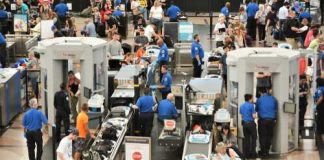
- TSA officers have continued screening roughly 2.5 million daily travelers while going unpaid, worsening staffing strain and delays.
- President Trump threatened to send ICE agents to airports if Democrats did not end the funding impasse, a move critics say lacks precedent for screening roles.
- Reports flagged legal and practical uncertainty around a private citizen directly paying federal compensation, even if the weekly cost is feasible for Musk.
White House rejection sharpens the shutdown’s real-world costs
On March 21, 2026, Elon Musk posted that he wanted to pay TSA personnel during the DHS funding impasse, describing airport disruptions affecting Americans nationwide. Multiple reports now say the White House turned down the idea, leaving TSA’s frontline workforce stuck in the same shutdown reality: essential staff still reporting while pay is delayed. With peak travel demand colliding with staffing shortages, the decision keeps pressure on families and workers just trying to move safely through airports.
The deeper problem is not a single rejected offer; it is the way shutdowns turn basic governance into brinkmanship that punishes ordinary citizens first. TSA agents are central to daily aviation security, yet they are among the easiest to squeeze because they cannot simply stop showing up. Past shutdowns have pushed workers toward food banks and community assistance, and current reporting echoes that same pattern. For conservatives who want a government that performs core functions reliably, this is the opposite of competence.
What Musk’s offer exposed: legal limits and a precedent question
Musk’s proposal was unusual precisely because it tried to bypass Washington’s stalemate with private money. Axios estimated the cost could exceed $40 million per week based on TSA staffing—an amount described as manageable for Musk—but multiple outlets also emphasized legal uncertainty. Federal compensation is governed by rules meant to prevent influence, favoritism, and off-the-books arrangements. Even supporters who like the “get it done” instinct should recognize the constitutional tension: private payroll for federal duties can blur accountability and invite future pay-to-play expectations.
That constitutional concern cuts both ways, and the White House rejection does not automatically prove sound stewardship. A firm “no” still leaves the administration responsible for explaining what replaces the lost pay and how aviation security remains resilient under strain. If the government blocks an emergency workaround, it owes the public a plan that protects travelers, respects federal labor obligations, and ends the shutdown fast. Otherwise, the result is predictable: delays, morale damage, and another lesson that Washington can’t manage basics.
Trump’s ICE-at-airports threat raises mission and training issues
President Trump responded to the same shutdown pressures by warning that ICE could be deployed to airports if Democrats did not agree to a funding deal. Reports noted the idea’s lack of precedent for passenger screening roles and raised questions about training and logistics. ICE agents have a different mission set than TSA screening, and swapping roles during a staffing crisis risks confusion at checkpoints. Conservatives typically support strong border and immigration enforcement, but mission clarity matters in aviation security.
Congressional gridlock leaves travelers and workers as leverage
Reporting described Democrats pressing a TSA-only funding approach in a rare weekend session, while Republicans argued Democrats were creating “real difficulties” by blocking full DHS funding. Meanwhile, the shutdown has already stretched beyond a month, and the practical effect is visible at airports: longer lines, disrupted travel, and workforce stress. The lesson is uncomfortable for voters across the right: shutdown politics can function like a tax on time and patience, with families paying the price in missed connections and uncertainty.
No matter where readers land on Musk’s offer, the episode highlights two conservative priorities that are now colliding: limited-government guardrails and functional government delivery. Private funding of federal payroll raises legitimate rule-of-law concerns, yet shutdown governance that forces essential workers to go unpaid is equally hard to defend. If Washington wants trust, it needs a durable funding path for core security agencies—one that ends the cycle of using everyday Americans as bargaining chips.
Sources:
Musk offers to pay TSA salaries amid DHS shutdown, as Trump floats ICE at airports
Elon Musk offers to pay TSA workers’ salaries amid DHS budget standoff
Musk offers to pay TSA employees’ salaries during partial government shutdown
Musk offers to pay TSA employees’ salaries during partial government shutdown