

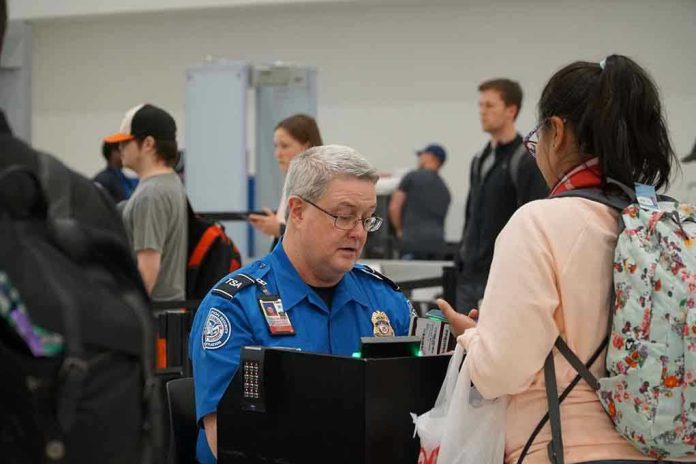
A Sacramento airport security stop has turned into a federal explosives case, and prosecutors say the items in one carry-on bag were dangerous enough to threaten an aircraft.
Quick Take
- Federal prosecutors say Kimani Osayande Jones was charged with unlawfully possessing explosive material in Sacramento International Airport.
- Reporting says Transportation Security Administration screening found an explosive device in his carry-on bag, along with other items prosecutors viewed as suspicious.[1][2]
- Media accounts say investigators later tested the device and described it as viable or capable of causing damage.[1][2]
- The public record currently leans heavily on the prosecution’s version, with no defense-side technical rebuttal yet visible in the cited material.[1][2]
What Prosecutors Say Happened
According to the United States Attorney’s Office for the Eastern District of California, a criminal complaint was filed against Kimani Osayande Jones, also known as Kimani Osayande Jackson, after the government says he tried to bring explosive material through Sacramento International Airport. News reports say the arrest followed a Transportation Security Administration checkpoint screening on May 30, 2026.[1][2] The complaint is the first formal public charging document, not a trial finding.
Available reporting says investigators found more than one troubling item in the bag, including an explosive device, a torch lighter, and additional tools or materials that drew scrutiny.[1][2] One report says the bag also contained a knife, scissors or scissor blades, an aerosol can, zip ties, and five cell phones.[2] Another report says one of the phones had a 15-minute timer ready to start.[1] Those details matter because prosecutors can use them to argue knowledge and intent, not just possession.[1][2]
Why The Case Feels Bigger Than One Arrest
This case lands in a setting that magnifies fear: an airport checkpoint. Even before a courtroom hears expert testimony, the phrase “explosive device” inside a carry-on bag can shape public opinion fast, especially when initial reports repeat law-enforcement claims rather than defense objections.[1][2] That dynamic often leaves citizens with a one-sided picture in the earliest hours of a case, which is one reason explosive allegations generate immediate alarm.
The broader concern is not limited to one suspect. Public trust depends on whether federal agencies can explain dangerous findings clearly, preserve evidence carefully, and prove their case without inflating assumptions from circumstantial items alone. The cited material shows the government’s theory, but it does not show a sworn defense challenge to the device’s condition, the ownership of the electronics, or the meaning of the timer allegation.[1][2] That gap is what keeps the case unsettled.
What Is Still Unknown
The available record does not include a defense filing disputing the complaint, a lab report challenging the device analysis, or testimony that would explain the items in the bag in an innocent way.[1][2] The prosecution’s account is therefore the dominant public narrative, but it remains a complaint-stage narrative. In federal criminal cases, that distinction matters because complaints establish probable cause, while guilt must still be proved later through admissible evidence.
For now, the public can only say that prosecutors have accused Jones of bringing explosive material into a major airport, and that reporters say the alleged device was removed safely by bomb technicians.[2] The next important developments will be whether prosecutors file additional charges, whether a grand jury acts, and whether the defense produces evidence that changes the meaning of the bag’s contents. Until then, the case stands as another example of how fast a federal security story can harden before the full facts are tested in court.[1][2]
Sources:
[1] Web – Man nabbed with bomb in California airport
[2] Web – Sacramento man facing explosives charge after SMF arrest