
As Washington quietly weighs buying a remote island chain from a small Indian Ocean nation, many Americans see yet another deal over their heads between powerful governments, global militaries, and shadowy elites.
Story Snapshot
- The White House is reportedly studying a plan to buy the Chagos Islands directly from Mauritius to lock in control of the Diego Garcia base.[1][2]
- The idea would sidestep a United Kingdom–Mauritius sovereignty deal that Washington has slowed or frozen in recent months.[1][2][3]
- Mauritius says it has not received any formal proposal from the United States, highlighting how early and opaque these talks are.
- The fight blends real security concerns with long-running grievances about colonial abuses and displaced islanders who still cannot go home.[3]
Reported U.S. Plan To Buy The Chagos Islands
British reporting and follow‑on coverage in Asia and the United States state that President Donald Trump’s team has drawn up options for the United States to purchase the Chagos Islands from Mauritius, rather than rely only on a United Kingdom–Mauritius sovereignty swap with a leaseback of Diego Garcia.[1][2] These reports describe an internal White House paper listing a direct deal with Mauritius as one of several ways to secure long‑term control of the base if the British handover stalls or collapses.[1]
Accounts in outlets such as The Telegraph and the South China Morning Post say the proposal would “bypass Britain” and give Washington a clean title over the islands, instead of depending on a three‑way arrangement in which London formally cedes sovereignty to Mauritius, then Mauritius leases Diego Garcia back to the United States and the United Kingdom.[1][2] One report notes that no price tag has been set and that the purchase is not yet the primary option, underlining how fluid the internal debate remains.[1]
Why Diego Garcia Matters So Much To Washington
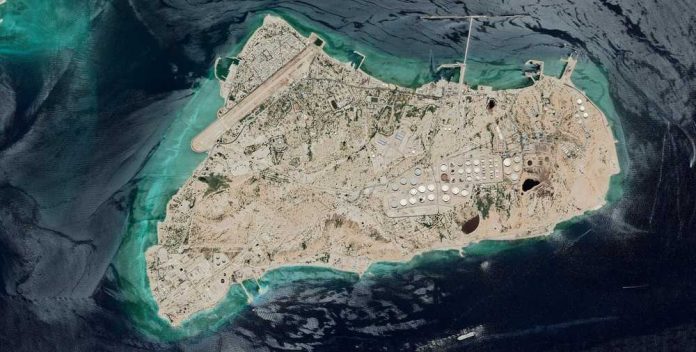
Defense‑focused coverage stresses that Diego Garcia is a critical launching pad for United States air and naval operations across the Middle East, East Africa, and the broader Indo‑Pacific region, including deterrence missions aimed at Iran and major power rivals such as China.[3] For decades, the United States has operated the base under a 1966 defense agreement with the United Kingdom, treating the atoll as a reliable “unsinkable aircraft carrier” isolated from domestic politics and foreign leverage.[3]
Mauritius said on Monday that it had not received any proposal from the Trump administration on the Chagos Islands, after the Telegraph reported that the White House was considering a plan to buy the islands from Mauritius. https://t.co/3ySr1mb6up
— Reuters Africa (@ReutersAfrica) June 8, 2026
The 2025 United Kingdom–Mauritius agreement would have shifted formal sovereignty over the whole archipelago to Mauritius while letting London and Washington keep Diego Garcia under a long renewable lease, initially for ninety‑nine years.[2][3] International legal pressure, including a non‑binding opinion from the International Court of Justice and a United Nations General Assembly resolution calling the British presence unlawful, pushed London toward that deal and framed Mauritius as the rightful sovereign.[3] United States planners now worry that any change in title could eventually weaken the long‑term stability of their military footprint, especially if future Mauritian governments face pressure from China, domestic politics, or anti‑base activists.[1][2][3]
How The UK–Mauritius Deal Stalled And U.S. Politics Took Over
Analysis of British and Indian media indicates the sovereignty transfer deal, signed in 2025 and headed for United Kingdom legislation, has been effectively frozen after the Trump administration refused to complete the required exchange of diplomatic letters to update the 1966 treaty.[3] Without that United States sign‑off, British lawmakers could not finalize the legal changes needed to hand the islands to Mauritius while keeping the base arrangement intact, forcing London to drop its Chagos bill from the current parliamentary agenda.[3]
Mauritian officials publicly acknowledge that talks with the United Kingdom are now in limbo and explicitly link the delay to deteriorating relations between Prime Minister Keir Starmer and President Trump, as well as Washington’s harder line on base security.[3] At the same time, statements shared by international newswires on social media show Mauritius saying it has not received any formal purchase offer from the United States, even as foreign press reports describe American internal plans to approach Port Louis directly. That gap between leaks and diplomacy reinforces how little transparency ordinary citizens have into decisions that could reshape a whole region’s security architecture.
Colonial Baggage, Displaced Islanders, And Public Distrust
Background reporting on the Chagos dispute recalls that Britain detached the archipelago from Mauritius before Mauritian independence and forcibly removed the Chagossian population in the late 1960s and early 1970s to clear space for the base.[2][3] The International Court of Justice later concluded that the detachment violated the right of self‑determination and that the United Kingdom is obliged to end its administration of the islands “as rapidly as possible,” a view endorsed by the United Nations General Assembly.[3]
For many Americans watching from the left and the right, the idea of the United States buying islands whose people were expelled by a colonial power feeds a familiar narrative: great powers trading territory like real estate while displaced communities, working families, and taxpayers have almost no say. Conservatives wary of endless overseas commitments see another potentially open‑ended security guarantee layered on top of record debt. Liberals alarmed by militarization and inequality see Washington once again prioritizing bases and geopolitical games over justice for uprooted islanders, all negotiated behind closed doors among elites.
What This Fight Reveals About Power And Accountability
The Chagos story highlights how sovereignty, security, and elite deal‑making collide far from public scrutiny. On paper, the Trump administration says it is trying to “preserve viability” of a key regional security platform by keeping Diego Garcia insulated from shifting politics in London, Port Louis, or the United Nations.[1][2] In practice, the United States appears willing to override an international legal process, pressure a close ally, and consider buying land with a contested colonial history in order to lock in its strategic advantage.[1][3]
Citizens across the spectrum who already feel that Washington listens more to defense planners, financiers, and foreign governments than to voters may see this as one more example of a foreign policy establishment operating on autopilot. Whether the United States ultimately backs the United Kingdom–Mauritius deal, pursues a direct purchase, or sticks with the status quo, the decisions will likely be made in small rooms by a handful of officials. The real test will be whether anyone in power is willing to confront the colonial legacy, the rights of the displaced, and the costs to ordinary Americans—not just the Pentagon’s wish list.
Sources:
[1] Web – Chagos Islands Bombshell: Trump Now Wants to Buy Out Mauritius …
[2] Web – Trump considers buying Chagos Islands from Mauritius, Telegraph …
[3] Web – White House considering plan to buy Chagos Islands – The Telegraph