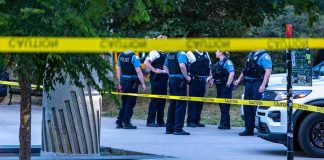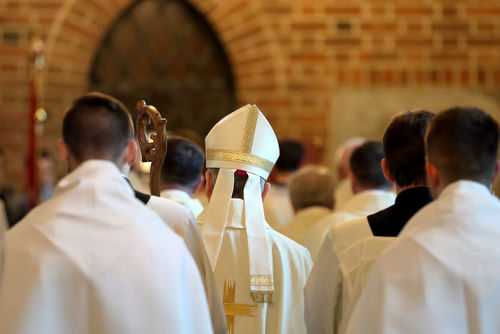
A Catholic bishop shot dead in his own residence in Mozambique has become the latest grim symbol of how violence, weak institutions, and opaque investigations can leave ordinary believers wondering who is really in charge and whether anyone will ever be held accountable.
Story Snapshot
- A 54‑year‑old Catholic bishop in Mozambique was shot and killed inside his official residence, and investigators have not yet identified a motive.[2][3]
- Early reports describe intruders scaling the walls and disabling security before shooting him in the chest, suggesting a planned attack rather than an accident.[2]
- Religious outlets quickly framed the killing against a backdrop of growing violence against Christians in Mozambique, even as authorities publicly admit they do not know why he was targeted.[1][3][4]
- The information vacuum around the murder feeds broader distrust of institutions and echoes worries shared by Americans across the political spectrum about elites who fail to protect ordinary people.
Bishop killed at home in an apparent targeted shooting
Bishop Osório Citora Afonso of the Diocese of Quelimane in Mozambique was found dead in his official residence after a shooting in the early hours of June 6, 2026.[1][3] Reports from Catholic news organizations say the 54‑year‑old bishop, a Consolata missionary, was allegedly shot in the chest, near the heart, and died at the scene.[3] The National Criminal Investigation Service in Zambézia Province confirmed that he succumbed to gunshot wounds and launched a homicide investigation, giving the case formal status rather than rumor.[3]
Initial accounts from investigators and church sources describe intruders entering the episcopal compound by scaling walls and disabling parts of the security system before confronting the bishop.[2] The attackers reportedly opened fire and struck him in the chest, consistent with a close‑range assault rather than stray gunfire or accidental discharge.[2][3] Authorities have not announced any arrests, suspect descriptions, or recovered weapons, and they have not said whether anything was stolen from the residence.[2][3]
Violence, anti‑Christian fears, and a dangerous motive vacuum
Coverage in Vatican News and other Catholic outlets quickly placed the killing in the wider context of insecurity and anti‑Christian violence in Mozambique, a country that has seen brutal extremist attacks in its northern Cabo Delgado region.[1][6] Bishops there have previously described a “cyclone” of assaults against Christian communities, with churches and villages attacked by insurgents claiming Islamist motives.[6] Against that backdrop, the murder of a bishop inside his own residence naturally raised fears among local believers that church leaders themselves are becoming high‑value targets.[1][3]
Despite those fears, the most detailed reporting available stresses that the motive for the assassination remains unknown and unproven.[2][3] The Pillar, which interviewed church figures and cited law‑enforcement sources, notes that no suspects have been identified and that “motives remain unknown,” pushing back against early narratives that immediately tied the attack to anti‑Christian hatred.[2] None of the reports in the record quote a specific recent sermon, letter, or statement in which the bishop warned about anti‑Christian violence, and none cite threats made against him personally.[1][2][3][4] That gap highlights how quickly a story can shift from facts to speculation when officials provide few details.
Opaque investigations fuel global distrust in institutions
The response from Mozambican authorities so far looks familiar to Americans who have watched their own government handle crises with slow disclosures and limited transparency.[2][3] Officials confirmed the basic outline—a bishop shot by intruders in a “grave act of violence”—but have offered no public forensic evidence, no clear timeline of the attack, and no explanation of why security at the residence failed.[3][5] When governments release only fragments of information after a shocking killing, people across the political spectrum often assume the worst, whether that means corruption, incompetence, or a desire to shield powerful interests.
For many conservative and liberal Americans alike, the assassination reinforces a broader worry that religious leaders, journalists, and ordinary citizens who speak about uncomfortable truths can become expendable in systems dominated by entrenched elites. Mozambique is far from Washington, but the pattern is recognizable: a high‑profile figure is killed, authorities urge patience, outside media fill the vacuum with competing narratives, and the public may never get a complete answer.[1][2][3][4] That dynamic mirrors domestic frustrations with what many call the “deep state,” where unaccountable officials seem better at protecting their own positions than protecting the vulnerable.
What this case reveals about narrative fights after violence
The bishop’s murder also shows how quickly tragedy becomes raw material in larger ideological battles.[1][2][3] Religion‑focused outlets understandably emphasize persecution and courage under fire, while others focus on crime and instability, and still others question whether the killing was tied to religion at all.[1][2][3][4][6] Without firm facts, these narratives compete for attention and can harden into political talking points—on one side, proof that Christians are under coordinated attack; on another, an example of how violence in poor countries is instrumentalized by Western culture wars.
For Americans trying to make sense of this kind of story, two truths can coexist. First, the murder of a bishop in his own home after intruders allegedly bypassed security is a serious warning sign about law and order, corruption, and the safety of people who challenge violent actors.[2][3][6] Second, the public still lacks hard evidence about exactly who ordered or carried out the attack and why.[2][3] Demanding fuller investigations, transparent reporting, and respect for religious freedom abroad aligns with concerns on both the right and the left about institutions that too often answer to themselves instead of to the people they are supposed to serve.
Sources:
[1] Web – Catholic bishop shot dead at home after warning against anti-Christian …
[2] Web – Pope mourns death of Mozambican Bishop Citora Afonso
[3] Web – Mozambique bishop killed – by Filipe d’Avillez – The Pillar
[4] Web – Mozambique bishop found dead at residence after gunshot incident
[5] Web – Bishop of Quelimane, Mozambique, shot dead at his residence
[6] YouTube – Bishop Osório Citora Afonso has been killed. The 2024 interview.