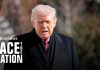

Republican governors are publicly threatening to sue the Trump administration over a federal power grab that violates the Constitution’s guarantee of state-controlled elections, exposing a critical fracture in GOP unity over sacred principles of federalism.
Story Snapshot
- Utah Governor Spencer Cox and Oklahoma Governor Kevin Stitt openly defied Trump’s attempts to centralize state election systems, vowing legal battles to protect states’ rights
- Trump’s push to nationalize elections through executive action is legally baseless without congressional approval, according to constitutional experts
- Up to 18 governors threatened boycotts after Trump excluded Democratic governors from traditional White House NGA meetings
- The confrontation highlights a rare Republican-on-Republican clash over the 10th Amendment and constitutional limits on federal power
Republican Governors Draw Constitutional Line Against Federal Overreach
Utah Governor Spencer Cox issued a stark warning to the Trump administration during a February 18, 2026 appearance at the Pew Research “Disagree Better” event in Washington, D.C. Cox declared that the federal government has grown too powerful and emphasized governors must push back, stating it was “never meant to be that way.” Oklahoma Governor Kevin Stitt, serving as National Governors Association chair, stood alongside Cox in defending state sovereignty over election administration. This confrontation stems from Trump’s social media demands to federalize state elections and create a national voter database, moves legal analysts deem flatly illegal without congressional authorization under the 10th Amendment.
White House Snubs Democratic Governors in Breach of Tradition
President Trump broke decades of bipartisan protocol by initially excluding Democratic governors Wes Moore of Maryland and Jared Polis of Colorado from White House dinner invitations during the NGA winter meeting. The National Governors Association canceled its scheduled White House business meeting on February 11, 2026, after receiving incomplete invitations. Even after Trump extended invites to “all governors” except Moore and Polis, up to 18 governors from both parties threatened boycotts in solidarity. This unprecedented divisiveness fractures the institutional integrity of the NGA, an organization designed to foster cross-party collaboration on state governance issues regardless of Washington politics.
States Hold Constitutional Authority Over Elections
The U.S. Constitution explicitly reserves election administration to states through the 10th Amendment, with federal involvement limited by existing statutes. Trump’s proposed executive orders to compel states to surrender voter data for a national database lack any legal mechanism for enforcement. States maintain voluntary compliance authority, meaning governors can simply refuse federal demands without consequence. Legal experts confirm that any attempt to force state compliance would trigger immediate lawsuits, with states virtually certain to prevail in court. This represents a fundamental constitutional principle that conservatives have historically championed: limiting federal power and preserving state sovereignty against Washington’s centralizing tendencies.
GOP Unity Fractures Over Federalism Principles
The confrontation reveals deep tensions within Republican ranks over constitutional principles versus political loyalty. Governor Cox emphasized that Oklahoma doesn’t want to become California, defending each state’s right to manage elections according to local preferences and values. Governor Stitt reinforced that the NGA stands together with all governors, refusing to facilitate exclusionary White House events despite facing Trump’s social media criticism. Meanwhile, Maryland’s Democratic Governor Moore invoked the Founding Fathers’ deliberate design to prevent monarchical power concentration, noting that “governors are just built different” in their commitment to institutional traditions. This bipartisan unity against federal overreach strengthens governors’ legal standing while exposing the administration’s constitutional vulnerability on election centralization efforts.
Republican Gov Hits Back At Trump Official Trying to Limit States’ Rights: I’ll ‘Beat You In Court’ https://t.co/mvPvvzvfcS via @@YahooNews @GOP #MAGA @JesseBWatters @greggutfeld @kilmeade @joerogan
— VFran- Pro Free Speech, Pro Democracy (@vrkrb2) February 19, 2026
The brewing confrontation between Republican governors and the Trump administration over election federalization represents more than political theater. It tests whether constitutional federalism principles can survive partisan pressures. Legal battles appear inevitable if Trump proceeds with executive orders compelling state compliance on voter data, with governors from both parties signaling readiness to defend the 10th Amendment in court. For conservatives who have long warned against federal overreach and championed states’ rights as essential checks on centralized power, this represents a defining moment to uphold constitutional limits regardless of which party occupies the White House.
Sources:
Spencer Cox Pushes Back on Federal Overreach at Pew Research Event