
Federal agents say “Operation Broken Blade” just exposed how a street gang turned a South Los Angeles corridor into a marketplace for children’s bodies and broken lives.
Story Snapshot
- Eleven alleged Hoover Criminal Gang members are charged in a 31‑count federal indictment tied to sex trafficking along South Los Angeles’ Figueroa Corridor.
- Prosecutors say victims, including girls as young as 14, were recruited on social media, branded with tattoos, drugged, and beaten to keep them in line.
- Operation Broken Blade arrested 10 of 11 suspects and rescued four victims, but one defendant remains at large and no one has yet been convicted.
- The case shows both the need for strong action against trafficking and the deeper problem of a system that lets vulnerable kids fall into gang hands in the first place.
What Operation Broken Blade Claims to Have Stopped
Federal prosecutors say members and associates of the Hoover Criminal Gang controlled sex trafficking and street prostitution along about three and a half miles of Figueroa Street in South Los Angeles from February 2021 to August 2025. The new 155‑page indictment charges eleven people with racketeering conspiracy and related crimes, including sex trafficking of children and adults through force, fraud, or coercion. Officials describe this as the first major federal takedown focused on that corridor, an area long known for open sex selling and violence.
🚨 Big win against trafficking: ‘Operation Broken Blade’ just dismantled another sex trafficking ring in South LA’s Figueroa Corridor.
Multi-agency raids (FBI, HSI, LAPD, IRS) led to 18 arrests, targeting Hoover Gang members exploiting minors as young as 14.
Keep the arrests… https://t.co/C3MHkMOOFh
— RedPillPatriot (@RpPatriot1776) July 1, 2026
According to the indictment and news reports, gang members allegedly acted as pimps, pooling money to rent motel rooms, driving victims to and from the strip, and coordinating online ads to sell sex. They are accused of forcing victims to hand over tens of thousands of dollars earned from sex acts, and punishing anyone who refused with threats or beatings. Prosecutors say many of the victims were runaways or kids from the foster care system, already failed once by the institutions meant to protect them.
How Victims Were Allegedly Controlled and Branded
Authorities say victims were recruited both face‑to‑face and through platforms like Instagram and TikTok, using promises of money, romance, and a “lavish lifestyle.” Once pulled in, many were allegedly given drugs, including strong painkillers and amphetamines, to keep them dependent and compliant. Federal documents describe victims being beaten, raped, locked in rooms, and threatened if they tried to leave or did not earn enough each night. Prosecutors say some victims were literally branded with tattoos of their traffickers’ street names as a mark of ownership.
One young woman was reportedly stabbed with scissors, had her earrings ripped out until she bled, and was driven to remote locations where she was beaten and locked inside a bedroom with no way out. The indictment also says two underage victims, ages fifteen and seventeen, were sexually exploited in this same Figueroa Corridor. These details match what experts have seen in other gang‑related trafficking cases, where vulnerable youth are trapped through a mix of fake love, addiction, violence, and fear.
The Lead Defendant, the Arrests, and What Still Has Not Happened
Prosecutors identify twenty‑five‑year‑old Amaya Armstead, known as “Lady Duck,” as the de facto leader of a Hoover subgroup called the 112 set. She is accused of sex trafficking a fourteen‑year‑old girl over several days at a South Los Angeles motel and of branding multiple victims with tattoos of her street name. If convicted, she and her co‑defendants face decades behind bars and, for some counts, possible life sentences. Their charges include sex trafficking of minors, transportation of minors for sex, sexual exploitation of a child, drug trafficking conspiracy, and money laundering.
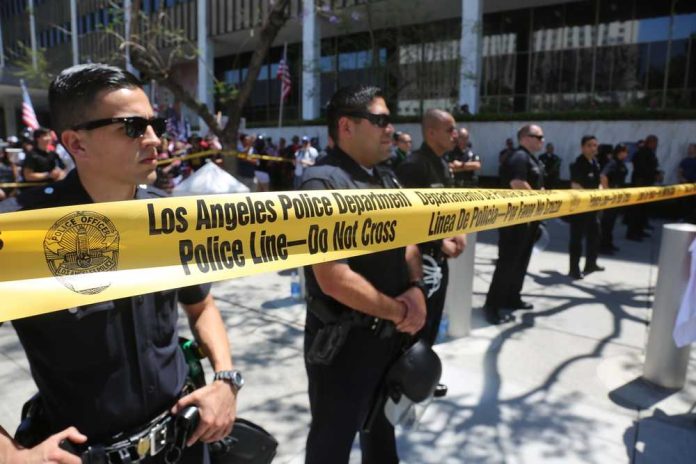
Operation Broken Blade, the joint sweep by federal agents and the Los Angeles Police Department, took ten of the eleven named suspects into custody and rescued four victims, including one minor. One defendant, thirty‑one‑year‑old Bryan Isrel, remains a fugitive, which means this alleged ring is not fully shut down. Just as important, all eleven defendants are still legally presumed innocent. No trial verdict has been reached, and much of the detailed evidence — such as victim testimony, financial records, or surveillance video — has not yet been presented in open court.
Justice, Politics, and a System That Failed Vulnerable Kids
For many Americans, especially parents and grandparents, the idea of gangs selling foster children on a city street confirms their worst fears about a government that cannot keep kids safe. This case also fits a wider national pattern: over the past fifteen years, federal officials have filed several similar gang trafficking indictments in major cities, some ending in convictions and others collapsing over weak or mishandled evidence. That record fuels anger on both the right and the left — anger at gangs, but also at institutions that seem reactive, chasing headlines instead of fixing root problems.
🚨🇺🇸 Feds just raided LA's most notorious sex trafficking corridor before dawn, and what they found inside was worse than you can imagine…
Operation Broken Blade targeted the Figueroa Corridor, known locally as "the Blade," a stretch of LA infamous for street prostitution.… pic.twitter.com/x8MuQM7PVl
— Mario Nawfal (@MarioNawfal) July 1, 2026
Political figures have already framed Operation Broken Blade as a “massive federal takedown,” turning a complex criminal case into a talking point about law‑and‑order success. Supporters see that as long‑overdue toughness; critics worry it pressures agencies to chase big splashy busts tied to funding and performance metrics instead of building steady protections for at‑risk youth. What is clear from the record is that vulnerable kids — runaways, foster youth, teens seeking love and stability — have been left exposed on the Figueroa Corridor for years, while gangs and buyers treated their bodies as business. Whether this operation marks real change or just another headline bust will depend on what the courts, the community, and the government do next.
Sources:
redstate.com, latimes.com, cbsnews.com, da.lacounty.gov, aerialrecovery.org, x.com, facebook.com, trngcmd.marines.mil, oag.ca.gov, courts.michigan.gov, courts.ms.gov